
Nicaragua suspends future elections extending Ortega's rule
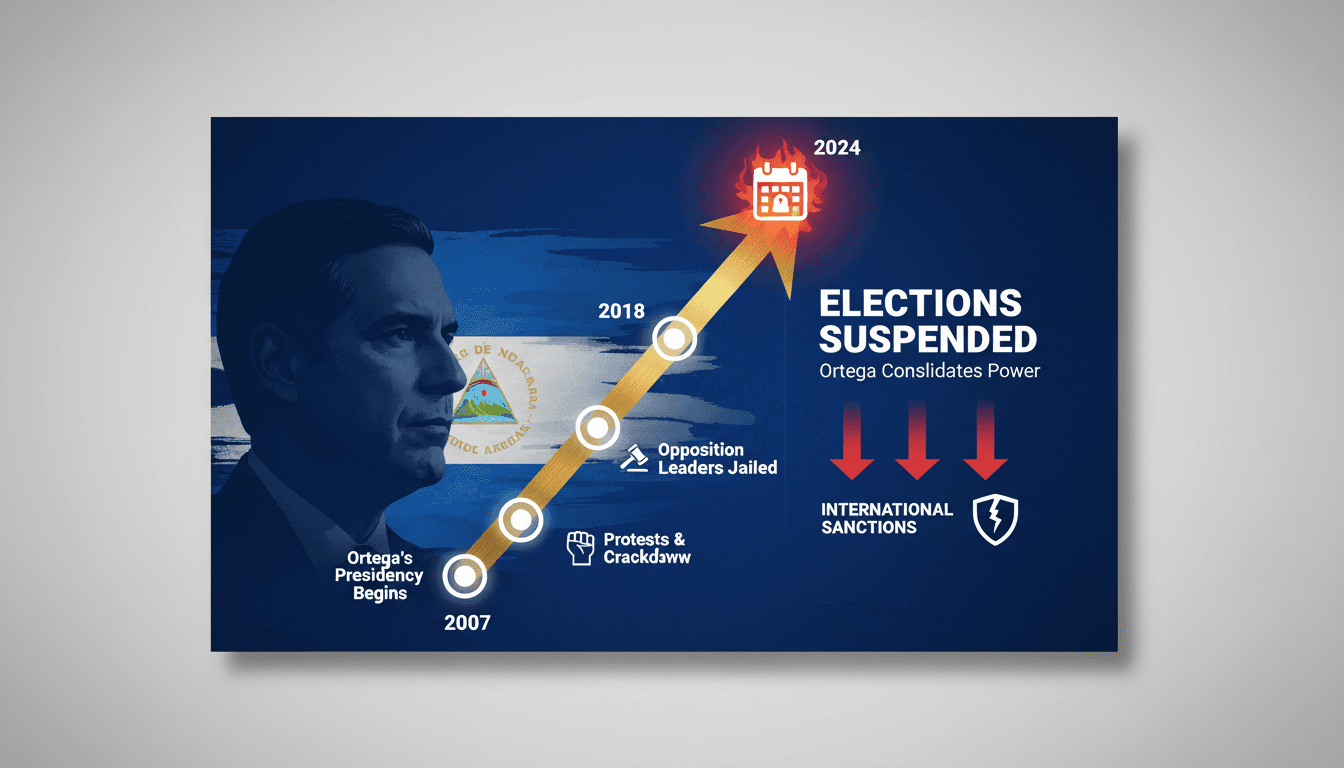
Here's what it means for you.
The suspension of future elections in Nicaragua marks a significant shift towards authoritarianism under President Daniel Ortega. This move not only consolidates his power but also raises concerns about the stability of the region and the potential for increased repression of dissent. Stakeholders, including international governments and organizations, are likely to respond with diplomatic and economic measures aimed at countering Ortega's actions. As the political landscape evolves, businesses and investors should remain vigilant about the implications for regional security and governance. The potential for international sanctions could further isolate Nicaragua economically, impacting trade and investment opportunities.
What happened
Nicaragua's congress has enacted a plan to suspend future elections as directed by President Ortega. This decision effectively extends Ortega's rule and blocks any opposition from participating in the political process. The announcement was made on July 20, 2026, and has drawn strong condemnation from the international community, including the United Nations and the United States.
Ortega has been in power since 2007 and has recently altered the constitution to strengthen his authority. The next elections were originally scheduled for November 2027, but this suspension raises serious questions about the future of democracy in Nicaragua.
The Context
The political situation in Nicaragua has been deteriorating, with Ortega's regime facing increasing scrutiny from global powers. US officials have expressed concerns that the suspension of elections threatens not only regional stability but also US national security interests. The consolidation of power is further exemplified by Ortega's wife, Rosario Murillo, serving as co-president, which centralizes authority within the executive branch.
This decision comes at a time when the international community is closely monitoring Nicaragua's political developments. The implications of Ortega's actions could lead to heightened tensions and a potential backlash from foreign governments.
Takeaway
The cancellation of elections in Nicaragua signals a troubling trend towards authoritarianism in the region. The international community is likely to respond with diplomatic efforts and possibly economic sanctions against Ortega's regime. Increased repression of dissenting voices within Nicaragua may also follow, further complicating the political landscape.
As the situation unfolds, stakeholders should watch for potential international sanctions and increased diplomatic efforts by the US and its allies to address the growing authoritarianism in Nicaragua. The future of democracy in the country hangs in the balance, with significant implications for both domestic and international stakeholders.
Top international stories selected by The Guardian editors.
"The Guardian is known for its progressive editorial stance and in-depth analysis."
— A47 Editor
Nicaragua’s congress announces ‘work plan’ to suspend elections
Nicaragua's congress, under the control of President Daniel Ortega, has announced a 'work plan' to suspend future elections, following Ortega's declaration that the country will no longer hold elections. This decision is seen as a significant step to...
Global political, business, and cultural coverage from WSJ international desks.
"The Wall Street Journal offers extensive international reporting with a reputation for financial insight and a center-right editorial stance."
— A47 Editor
Rubio Says Nicaragua’s Plans to Cancel Elections Threaten U.S. National Security
U.S. Senator Marco Rubio has expressed concerns regarding Nicaragua's President Daniel Ortega's recent announcement to cancel all future elections, a move that solidifies Ortega's long-standing rule and deepens the country's political repression. Thi...
International stories from NPR’s global desk.
"NPR is an American public media organization known for thoughtful reporting and a slightly left-leaning editorial tone."
— A47 Editor
Nicaragua's President Ortega says no more elections, extending his 20-year rule
Nicaragua's President Daniel Ortega has announced that the country will not hold any more elections, effectively canceling the upcoming elections scheduled for November 2027. This decision marks a significant extension of Ortega's rule, which has las...
International news, politics, and culture.
"Sky News is a UK-based 24-hour channel known for fast-breaking news and political coverage."
— A47 Editor
We'll never have elections again, says long-serving president
Nicaragua's President Daniel Ortega has announced that the country will no longer hold elections, a move that consolidates his power and limits political competition. This declaration marks a significant shift in the political landscape of Nicaragua,...
Global news coverage with extensive reporting on Middle Eastern conflicts and geopolitics.
"Al Jazeera is a Qatar-based broadcaster known for wide regional coverage and alternative perspectives."
— A47 Editor
Ortega insists no more elections for Nicaragua
Nicaragua's President Daniel Ortega has declared that the country will not hold any more elections, a decision aimed at stifling opposition challenges to his long-standing rule. This announcement reinforces Ortega's grip on power, which he has mainta...
Comprehensive coverage of Middle Eastern and global issues.
"Al Jazeera is a prominent voice from the Global South, especially the Middle East, with an emphasis on underreported stories."
— A47 Editor
Ortega insists no more elections for Nicaragua
Nicaragua's President Daniel Ortega has declared that the country will not hold any more elections, a decision aimed at stifling opposition challenges to his long-standing rule. This announcement reinforces Ortega's grip on power, which he has mainta...