
French Government Enacts Protest Bans and Curfews Following Weekend Riots
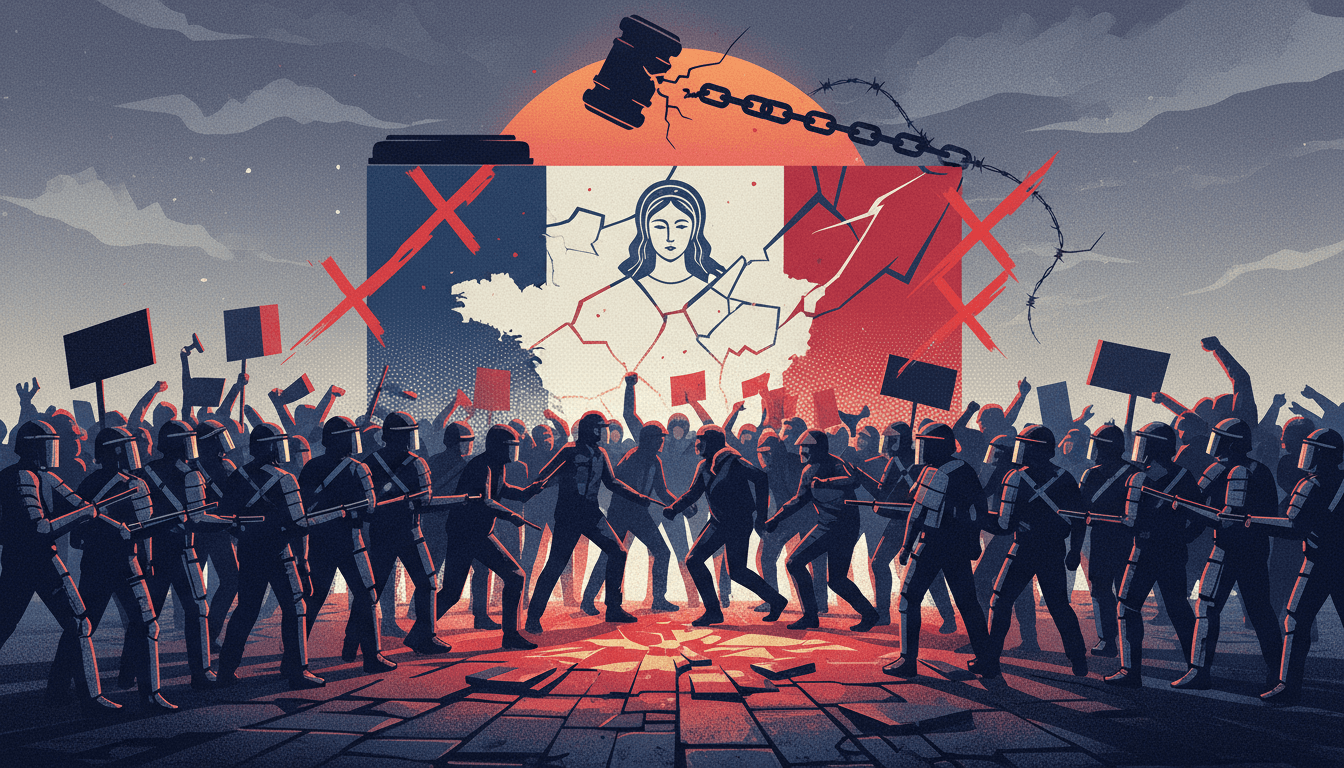
The Vibe
France is tightening its grip on public protests, signaling a shift towards stricter control over civil liberties amid growing unrest.
What it signals
This trend reflects a broader societal anxiety about stability and order. As economic pressures mount, governments may prioritize security over individual freedoms, reshaping the landscape of civic engagement and public discourse.
Why it's happening now
1. Escalating economic grievances: The protests stem from rising living costs and underfunded education, highlighting a growing divide between the populace and the government. 2. Increased public disorder: The violent clashes during recent demonstrations, which involved over 500,000 participants, have prompted authorities to act decisively to restore order. 3. Political maneuvering: President Macron's administration is responding to perceived threats to stability, aiming to consolidate power and maintain control in a volatile environment.
Who it's for (and who it leaves out)
The core beneficiaries of these measures are businesses and government entities seeking to maintain order and protect assets. Conversely, the measures marginalize grassroots movements and individuals advocating for change, particularly those without union backing.
What to watch next
1. The response from civil society: Watch for potential backlash from trade unions and student groups, which could lead to further unrest or alternative forms of protest. 2. Economic impacts: Monitor how these restrictions affect local businesses and tourism, particularly in major cities like Paris and Marseille.
French authorities have imposed protest bans and extended curfews in response to recent riots.
Increased security measures will remain in place as tensions persist.
The long-term impact on civic engagement and public sentiment remains to be seen.
24/7 international news from a French perspective in multiple languages.
"France 24 is viewed as a globally focused outlet with balanced coverage and a European perspective."
— A47 Editor
French authorities tighten restrictions and ban specific protests
French authorities have tightened restrictions ahead of anticipated protests, extending a partial curfew in Paris and banning protests in Marseille and Lyon due to recent violent demonstrations. The government has deployed 70,000 security personnel t...
International coverage of politics, culture, and current affairs.
"BBC News is widely regarded as a reputable international news organization, known for its impartial tone and public service mandate."
— A47 Editor
Paris extends curfew as Marseille and Lyon ban protests after riots
In response to violent protests and riots across France, authorities have extended the curfew in Paris and banned protests in Marseille and Lyon. Protests will only be permitted if organized by unions, and major museums will remain closed on Saturday...
International coverage of politics, security, and social issues.
"Global News is a mainstream Canadian outlet with a centrist editorial stance, focusing on factual reporting."
— A47 Editor
France announces nightly curfews ‘for as long as necessary’ in Paris
French authorities have announced the implementation of nightly curfews in Paris, Lyon, and Marseille, stating that these measures will remain in effect 'for as long as necessary' following a weekend of violent protests and looting. The curfews are s...
International stories from NPR’s global desk.
"NPR is an American public media organization known for thoughtful reporting and a slightly left-leaning editorial tone."
— A47 Editor
France announces nightly curfews 'for as long as necessary' in Paris and other cities
French authorities have imposed nightly curfews in Paris, Lyon, and Marseille following a weekend of violent protests and looting, marking a significant response to the unrest that has left the nation in turmoil. The curfews are set to remain in effe...