
France's Education Protests Escalate Amid Bond Market Turmoil
Why it matters
The intertwining of political instability and rising bond yields in France signals potential volatility across European markets.
What happened (in 30 seconds)
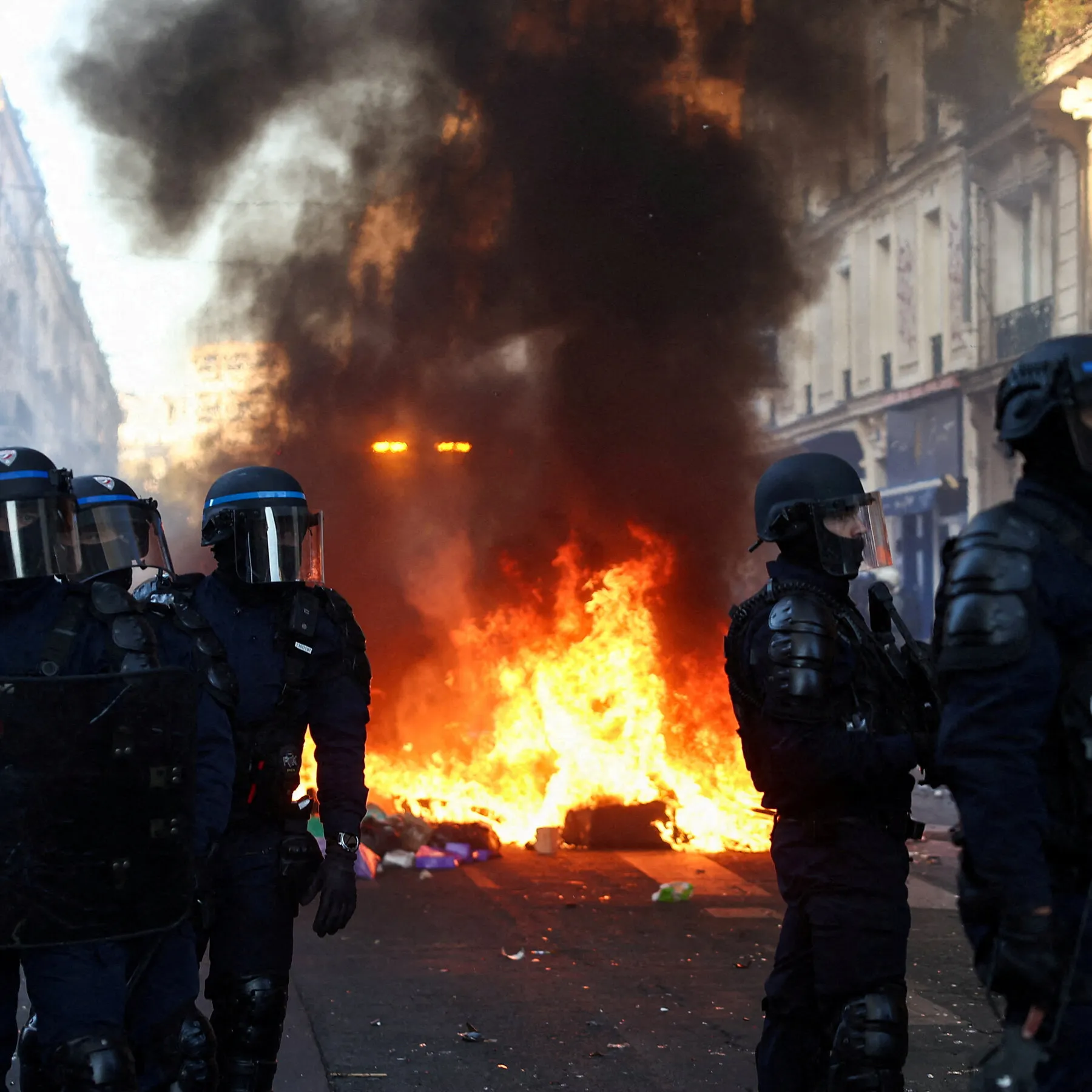
- Protests escalated into violent unrest from October 17-19, 2026, as citizens demanded better school funding and addressed rising living costs.
- Bond markets reacted sharply, with 10-year French government bond yields peaking at 4.94%, the highest since 2002, amid fears of fiscal instability.
- Macron's government faces constraints on fiscal responses due to a lack of parliamentary majority, creating a self-reinforcing cycle of unrest and market sell-off.
The context you actually need
- Public debt in France exceeds 115% of GDP, with a deficit around 5.1%, raising concerns among investors about fiscal sustainability.
- Political paralysis followed the 2024 parliamentary elections, leaving Macron's centrists without a majority, which has stoked public discontent and unrest.
- Populist parties are gaining traction as voters express frustration, complicating the political landscape ahead of the 2027 presidential election.
What's really happening
The recent protests in France are not just a reaction to immediate grievances but are symptomatic of deeper systemic issues. The country’s public debt has soared to over 115% of GDP, with a deficit hovering around 5.1%. This fiscal strain is exacerbated by high interest rates, which have made borrowing more expensive and raised alarms among investors. The political landscape has become increasingly unstable since the 2024 parliamentary elections, where President Emmanuel Macron's centrist party lost its majority. This has left the government unable to pass significant budgetary measures, further fueling public frustration.
The protests, which began as demonstrations over underfunded schools and the rising cost of living, quickly escalated into violent riots, with reports of arson and looting. The unrest has drawn parallels to the 2018 Yellow Vest movement, where Macron had to deploy approximately $11 billion in concessions to quell similar discontent. However, the current situation is markedly different; the government is constrained by fiscal pressures that limit its ability to respond effectively without alarming bond markets further.
As bond investors reacted to the unrest, the yield on 10-year French government bonds surged to 4.94%, the highest level since 2002. This spike reflects a growing fear among investors that the French government may struggle to manage its fiscal responsibilities, especially with the looming 2027 presidential election. The widening spread between French and German bonds indicates a lack of confidence in France's economic stability, which could lead to a broader sell-off in European markets.
This creates a 'doom loop' where political instability feeds market turmoil, and vice versa. The government’s inability to address public grievances without incurring further debt risks alienating voters and empowering populist figures like Marine Le Pen and Jean-Luc Mélenchon. As these dynamics unfold, the potential for a fiscal crisis looms, with analysts warning that the deficit could exceed 6% of GDP if the budget fails to pass.
Who feels it first (and how)
- Students and educators: Directly impacted by funding cuts and deteriorating school conditions.
- Public sector workers: Facing job insecurity and potential layoffs due to budget constraints.
- Investors and financial markets: Experiencing volatility and increased borrowing costs, affecting investment strategies.
- Populist political figures: Gaining support as they capitalize on public discontent and unrest.
What to watch next
- Bond yield trends: Watch for fluctuations in French government bond yields, as sustained high rates could signal deeper fiscal issues.
- Public sentiment: Monitor opinion polls and protest activity to gauge the public's response to government actions and potential concessions.
- Political developments: Keep an eye on the positioning of populist parties as the 2027 presidential election approaches, which could reshape France's political landscape.
Protests are ongoing, and bond yields have reached their highest levels in over two decades.
Continued unrest and political instability will pressure the French government to act, but fiscal constraints will limit options.
The long-term impact on the euro and broader European markets remains uncertain as investor confidence fluctuates.
Frequently Asked Questions
- Why it matters?
- The intertwining of political instability and rising bond yields in France signals potential volatility across European markets.
- What happened (in 30 seconds)?
- Protests escalated into violent unrest from October 17-19, 2026, as citizens demanded better school funding and addressed rising living costs. Bond markets reacted sharply, with 10-year French government bond yields peaking at 4.94%, the highest since 2002, amid fears of fiscal instability. Macron's government faces constraints on fiscal responses due to a lack of parliamentary majority, creating a self-reinforcing cycle of unrest and market sell-off.
- What's really happening?
- The recent protests in France are not just a reaction to immediate grievances but are symptomatic of deeper systemic issues. The country’s public debt has soared to over 115% of GDP, with a deficit hovering around 5.1%. This fiscal strain is exacerbated by high interest rates, which have made borrowing more expensive and raised alarms among investors. The political landscape has become increasingly unstable since the 2024 parliamentary elections, where President Emmanuel Macron's centrist party
- Who feels it first (and how)?
- Students and educators: Directly impacted by funding cuts and deteriorating school conditions. Public sector workers: Facing job insecurity and potential layoffs due to budget constraints. Investors and financial markets: Experiencing volatility and increased borrowing costs, affecting investment strategies. Populist political figures: Gaining support as they capitalize on public discontent and unrest.
- What to watch next?
- Bond yield trends: Watch for fluctuations in French government bond yields, as sustained high rates could signal deeper fiscal issues. Public sentiment: Monitor opinion polls and protest activity to gauge the public's response to government actions and potential concessions. Political developments: Keep an eye on the positioning of populist parties as the 2027 presidential election approaches, which could reshape France's political landscape.
Markets, economy, and company analysis from NYT’s business desk.
"The New York Times is a globally recognized newspaper offering authoritative reporting with a center-left editorial stance."
— A47 Editor
A ‘Doom Loop’ Threatens France as Populism Confronts Markets
France is currently facing significant turmoil as violent protests erupt across the country, leading to a sell-off in its bond and stock markets. The unrest, fueled by dissatisfaction over high living costs and government spending, has resulted in cl...
Editor-curated FT homepage stories spanning markets, business, world, and opinion.
"The Financial Times is a globally respected business publication with a centrist/center-left tone and strong markets focus."
— A47 Editor
France’s riots expose the impotence of its political class
France is currently experiencing widespread riots, highlighting significant social divisions and a crisis of leadership amid escalating public dissatisfaction over high living costs and educational conditions. The protests have turned violent, with c...
UK and international business news, economics, and corporate coverage.
"The Guardian’s business section covers finance and markets with a progressive editorial tone."
— A47 Editor
France hit by debt sell-off as violent protests unnerve investors
France is experiencing a significant sell-off in its bond and stock markets following violent protests that erupted over the weekend, resulting in thousands of arrests, burned public buildings, and looted shops across the country. This unrest has rai...