
Trump Suspends New Russia Sanctions to Facilitate Ukraine Peace Negotiations
Why it matters
This decision could reshape global energy markets and influence geopolitical stability, affecting prices and supply chains.
What happened (in 30 seconds)
- On October 17, 2026, President Trump waived new sanctions on Russia that were set to take effect under the Lindsey Graham Act.
- The waiver aims to facilitate peace negotiations regarding the ongoing Ukraine conflict, which has seen stalled talks and rising tensions.
- Ukrainian President Zelenskyy and some U.S. lawmakers criticized the move, arguing it rewards Russia and undermines efforts to pressure the Kremlin.
The context you actually need
- The Lindsey Graham Act, signed in September 2026, was designed to impose significant economic pressure on Russia by targeting its energy exports and financial institutions.
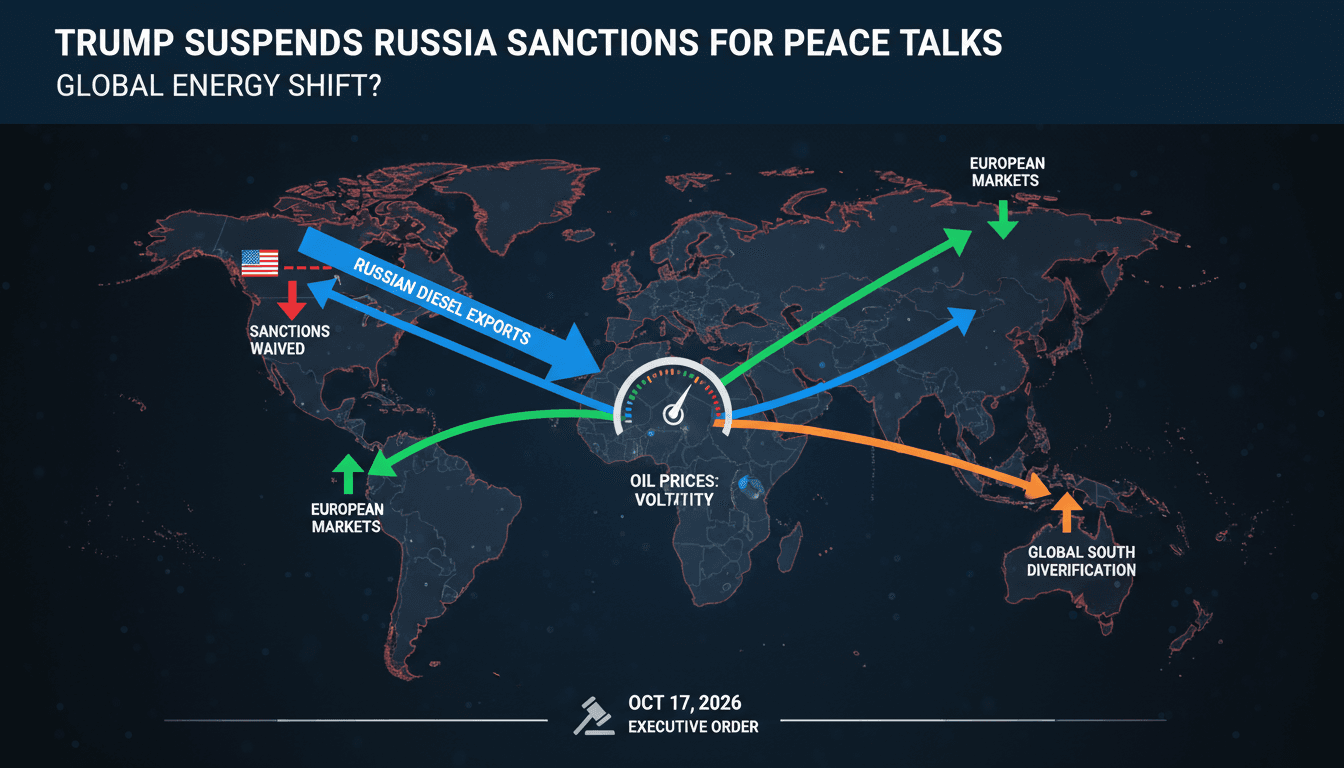
- Trump's decision comes amid a diesel import agreement, which allows for over 800,000 tons of Russian diesel to enter global markets, potentially easing energy prices.
- Bipartisan concerns in the U.S. Congress reflect a growing unease about the implications of this waiver on the conflict and U.S. foreign policy.
What's really happening
On October 16-17, 2026, President Trump signed an executive order that suspended key provisions of the Lindsey Graham Act just hours before they were set to take effect. This act was intended to intensify economic sanctions against Russia in response to its ongoing invasion of Ukraine. By waiving these sanctions, Trump justified his decision as being in the U.S. national interest, emphasizing the need to keep Russia engaged in peace negotiations.
The Graham Act aimed to impose tariffs of up to 100% on Russian energy exports, targeting major buyers like China and India. However, Trump's waiver indicates a strategic pivot, prioritizing diplomatic engagement over economic pressure. This decision follows a recent diesel supply agreement that allows for significant Russian diesel exports, which could stabilize global energy prices.
Critics, including Ukrainian President Zelenskyy, have condemned the waiver as a reward for Russia, arguing it undermines the pressure needed to compel Moscow to negotiate seriously. Bipartisan criticism from U.S. lawmakers highlights concerns that this move could prolong the conflict, as it may embolden Russia by alleviating some of the economic pressures intended to deter its aggression.
The implications of this waiver extend beyond immediate diplomatic relations. By potentially increasing the supply of Russian diesel in global markets, energy prices may moderate, which could benefit various sectors reliant on stable fuel costs. However, the broader geopolitical landscape remains fraught with uncertainty, as the waiver could be perceived as a weakening of U.S. resolve against Russian aggression.
In essence, this decision reflects a complex balancing act between immediate diplomatic needs and long-term strategic goals. The U.S. administration appears to be navigating a delicate situation where the stakes are high, and the outcomes uncertain. The suspension of sanctions could lead to a temporary easing of tensions, but it also risks sending mixed signals about U.S. commitment to supporting Ukraine and countering Russian expansionism.
Who feels it first (and how)
- Energy Sector Professionals: Those involved in oil and gas may see fluctuations in market prices and supply chains.
- Logistics and Transportation Companies: A potential decrease in fuel costs could impact operational expenses.
- Expatriate Households in Dubai: Families reliant on stable fuel prices for transportation and living costs may benefit from moderated energy prices.
- U.S. Lawmakers and Policy Analysts: They will closely monitor the political ramifications and public sentiment regarding U.S. foreign policy.
What to watch next
- Energy Price Trends: Monitor how global energy prices react to increased Russian diesel supply and its impact on markets.
- Diplomatic Engagements: Watch for developments in peace negotiations between Russia and Ukraine, particularly any shifts in U.S. policy.
- Congressional Reactions: Pay attention to bipartisan responses in Congress, as they may influence future U.S. foreign policy decisions regarding Russia.
The waiver of sanctions is currently in effect, pending further presidential review.
Increased Russian diesel exports may lead to moderated global energy prices.
The long-term impact on U.S.-Russia relations and the Ukraine conflict remains uncertain.
Frequently Asked Questions
- Why it matters?
- This decision could reshape global energy markets and influence geopolitical stability, affecting prices and supply chains.
- What happened (in 30 seconds)?
- On October 17, 2026, President Trump waived new sanctions on Russia that were set to take effect under the Lindsey Graham Act. The waiver aims to facilitate peace negotiations regarding the ongoing Ukraine conflict, which has seen stalled talks and rising tensions. Ukrainian President Zelenskyy and some U.S. lawmakers criticized the move, arguing it rewards Russia and undermines efforts to pressure the Kremlin.
- What's really happening?
- On October 16-17, 2026, President Trump signed an executive order that suspended key provisions of the Lindsey Graham Act just hours before they were set to take effect. This act was intended to intensify economic sanctions against Russia in response to its ongoing invasion of Ukraine. By waiving these sanctions, Trump justified his decision as being in the U.S. national interest, emphasizing the need to keep Russia engaged in peace negotiations. The Graham Act aimed to impose tariffs of up to
- Who feels it first (and how)?
- Energy Sector Professionals: Those involved in oil and gas may see fluctuations in market prices and supply chains. Logistics and Transportation Companies: A potential decrease in fuel costs could impact operational expenses. Expatriate Households in Dubai: Families reliant on stable fuel prices for transportation and living costs may benefit from moderated energy prices. U.S. Lawmakers and Policy Analysts: They will closely monitor the political ramifications and public sentiment regardin
- What to watch next?
- Energy Price Trends: Monitor how global energy prices react to increased Russian diesel supply and its impact on markets. Diplomatic Engagements: Watch for developments in peace negotiations between Russia and Ukraine, particularly any shifts in U.S. policy. Congressional Reactions: Pay attention to bipartisan responses in Congress, as they may influence future U.S. foreign policy decisions regarding Russia.
Arabic-language coverage of international news and geopolitics.
"RT Arabic is a Russian state-funded outlet often criticized for promoting Kremlin-aligned narratives."
— A47 Editor
ترامب: لن نشدد العقوبات ضد روسيا الآن
U.S. President Donald Trump announced that he does not intend to tighten sanctions against Russia while negotiations are ongoing regarding the resolution of the conflict in Ukraine. This statement reflects the current diplomatic efforts aimed at addr...
Arabic-language coverage of political affairs and current events.
"Okaz political coverage typically follows mainstream Saudi framing on national and regional affairs."
— A47 Editor
ترمب: نوجه ضربات قاسية لإيران.. ونتفاوض مع روسيا بشأنها
U.S. President Donald Trump stated that the United States is delivering severe economic and military strikes against Iran, expressing optimism about the situation regarding Iran. He mentioned ongoing negotiations with Russia concerning Iran, Ukraine,...
Arabic-language coverage of political affairs and current events.
"Okaz political coverage typically follows mainstream Saudi framing on national and regional affairs."
— A47 Editor
روبيو: ترمب منفتح على إنهاء حرب أوكرانيا
U.S. Secretary of State Marco Rubio stated that President Donald Trump is open to any steps that could lead to the end of the Russia-Ukraine war, emphasizing that the U.S. priority is to put an end to the conflict. Rubio denied claims made by Ukraini...