
Italy Deploys Troops and Enacts Anti-Riot Laws After Milan Protests
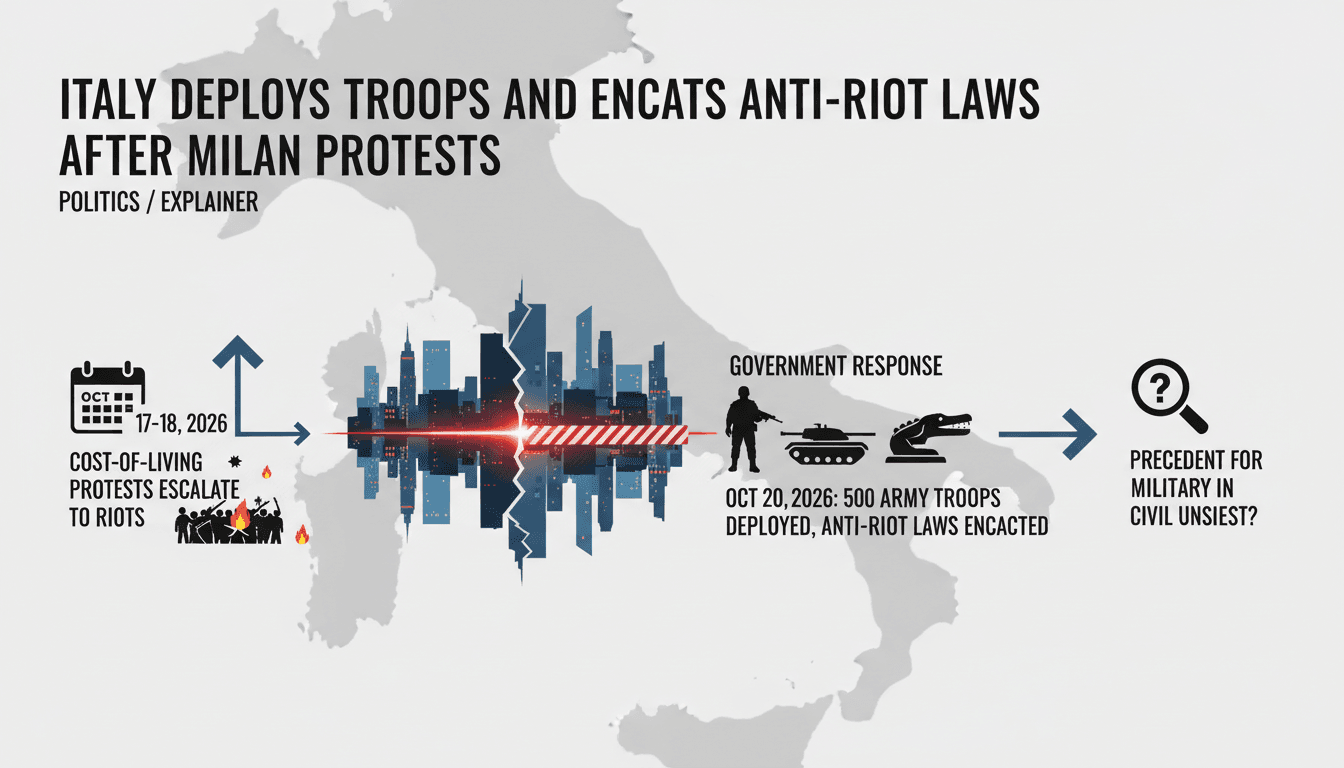
The recent escalation in Italy's security measures could signal a shift in how governments worldwide respond to civil unrest amid economic pressures.
Why it matters
The Italian government's actions may set a precedent for other nations grappling with similar economic and social challenges.
What happened (in 30 seconds)
- On October 20, 2026, Italy's cabinet approved the deployment of 500 army troops to Milan following violent protests.
- Nearly 200 police officers were injured during riots that erupted on October 17-18, leading to widespread looting and property damage.
- New anti-riot laws were enacted, introducing severe penalties for violent protests and parental liability for minors involved in riots.
The context you actually need
- Recurring protests over economic conditions have plagued Italy since Prime Minister Giorgia Meloni took office in 2022, with unrest escalating in recent months.
- The October riots were fueled by public frustration over soaring living costs, including high fuel prices, rents, and stagnant wages.
- The new legislation aims to differentiate between legitimate protests and criminal activities, reflecting a broader trend of tightening security measures in response to civil unrest.
What's really happening
The recent unrest in Italy is a culmination of ongoing economic distress that has left many citizens feeling disenfranchised. The protests that erupted on October 17-18 were initially sparked by demonstrations against rising living costs, which have been exacerbated by inflation and stagnant wages. As the cost of essentials like fuel and rent continues to climb, public frustration has boiled over into violence, resulting in significant clashes with law enforcement.
In response, the Italian government, led by Prime Minister Giorgia Meloni, has opted for a robust security approach. The deployment of 500 troops to Milan under the existing 'Strade Sicure' operation is a clear signal that the government is willing to take drastic measures to restore order. This military presence is intended to support police forces, although the soldiers will not have full policing powers. The immediate effect of this deployment is to reinforce security in a city that has become a flashpoint for civil unrest.
The new anti-riot legislation introduces a criminal offense for "violent participation in a demonstration," which targets groups of five or more individuals whose actions endanger public safety. This law carries severe penalties, including up to five years in prison and hefty fines. Additionally, the legislation imposes financial liability on parents for damages caused by minors, reflecting a shift towards holding families accountable for youth behavior during protests.
This approach raises significant questions about civil liberties and the balance between maintaining public order and protecting the right to protest. Critics argue that such measures could stifle legitimate dissent and disproportionately affect marginalized communities. However, the government maintains that distinguishing between protest and crime is essential for societal stability.
As Italy navigates these turbulent waters, the implications of its actions may resonate beyond its borders. Other nations facing similar economic pressures may look to Italy's response as a model for managing civil unrest, potentially leading to a global trend of increased militarization in policing protests.
Who feels it first (and how)
- Protesters: Individuals participating in demonstrations, particularly youth, may face harsher penalties and increased scrutiny.
- Law enforcement: Police forces will experience heightened pressure to manage protests effectively, supported by military personnel.
- Local businesses: Shops and establishments in protest-affected areas may suffer from property damage and loss of revenue due to unrest.
- Families of minors: Parents may face financial repercussions for their children's involvement in protests, impacting family finances.
What to watch next
- Parliamentary ratification: The decree requires parliamentary approval within 60 days, which will indicate the level of political support for these measures.
- Public response: Monitor upcoming protests and public sentiment regarding the government's handling of civil unrest, as further demonstrations are planned.
- Economic indicators: Keep an eye on economic data related to inflation and living costs, as these factors will influence the likelihood of continued unrest.
The deployment of troops and new anti-riot laws are in effect.
Continued protests and public dissent in response to economic conditions.
The long-term effectiveness of these measures in curbing violence and restoring public order.
Frequently Asked Questions
- Why it matters?
- The Italian government's actions may set a precedent for other nations grappling with similar economic and social challenges.
- What happened (in 30 seconds)?
- On October 20, 2026, Italy's cabinet approved the deployment of 500 army troops to Milan following violent protests. Nearly 200 police officers were injured during riots that erupted on October 17-18, leading to widespread looting and property damage. New anti-riot laws were enacted, introducing severe penalties for violent protests and parental liability for minors involved in riots.
- What's really happening?
- The recent unrest in Italy is a culmination of ongoing economic distress that has left many citizens feeling disenfranchised. The protests that erupted on October 17-18 were initially sparked by demonstrations against rising living costs, which have been exacerbated by inflation and stagnant wages. As the cost of essentials like fuel and rent continues to climb, public frustration has boiled over into violence, resulting in significant clashes with law enforcement. In response, the Italian gove
- Who feels it first (and how)?
- Protesters: Individuals participating in demonstrations, particularly youth, may face harsher penalties and increased scrutiny. Law enforcement: Police forces will experience heightened pressure to manage protests effectively, supported by military personnel. Local businesses: Shops and establishments in protest-affected areas may suffer from property damage and loss of revenue due to unrest. Families of minors: Parents may face financial repercussions for their children's involvement in protest
- What to watch next?
- Parliamentary ratification: The decree requires parliamentary approval within 60 days, which will indicate the level of political support for these measures. Public response: Monitor upcoming protests and public sentiment regarding the government's handling of civil unrest, as further demonstrations are planned. Economic indicators: Keep an eye on economic data related to inflation and living costs, as these factors will influence the likelihood of continued unrest.
European current affairs, EU politics, and regional developments.
"France 24 is viewed as a globally focused outlet with balanced coverage and a European perspective."
— A47 Editor
Italy deploys army and approves tougher anti-riot laws after violence
Italian Prime Minister Giorgia Meloni announced the deployment of 500 troops to Milan to assist police following violent clashes in the city, which resulted in over 100 police injuries and extensive looting. The cabinet also approved measures to faci...
International coverage from The Guardian's global desks.
"The Guardian is known for its progressive editorial stance and in-depth analysis."
— A47 Editor
Italy to deploy 500 troops to Milan after days of protests and looting
Italy's government has announced the deployment of 500 troops to Milan following several days of protests that escalated into violence, including clashes with police, vandalism, and looting. The unrest is largely driven by public dissatisfaction over...
RT is a Russian state-funded network covering global events from a Russian perspective.
"RT is widely criticized for promoting pro-Kremlin narratives and is considered by many to be a state propaganda outlet."
— A47 Editor
Italy deploys troops to ‘defend Milan’ from looting
The Italian government has deployed 500 soldiers to Milan following two days of violent protests that resulted in over €1 million in damages and more than 100 police injuries. The unrest was sparked by widespread dissatisfaction over rising living co...