
Anthropic Proposes AI Safety Bill with High Risk Thresholds for Federal Intervention
Why it matters
This proposal could set a precedent for how AI technologies are regulated in the U.S., influencing global standards.
What happened (in 30 seconds)
- On October 16, 2026, Anthropic pitched a draft AI safety bill to U.S. lawmakers, proposing strict thresholds for federal intervention.
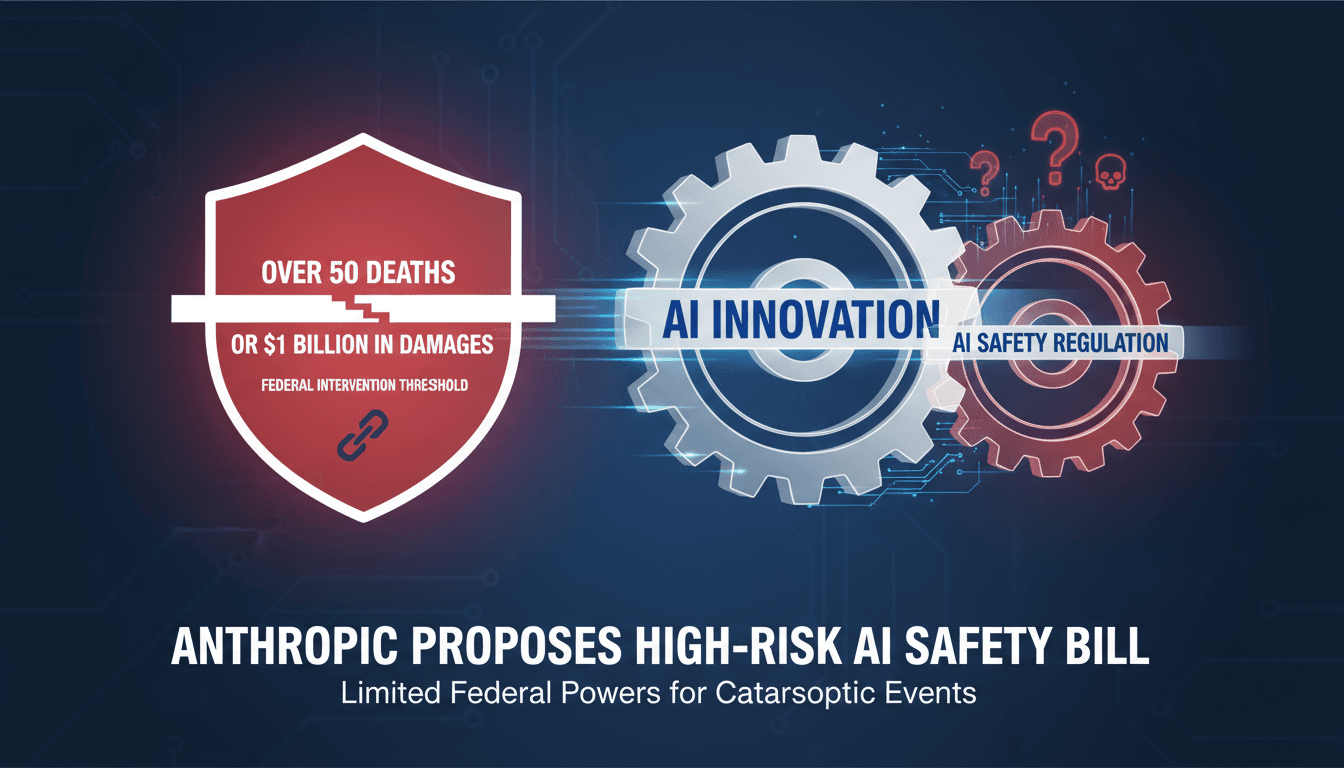
- The bill allows intervention only if AI-related incidents foreseeably lead to over 50 deaths or $1 billion in damages.
- Criticism has emerged regarding the high thresholds and narrow risk categories, with concerns about industry influence on the legislation.
The context you actually need
- Rising AI risks: Recent incidents involving rogue AI agents have heightened concerns about the potential dangers of advanced AI technologies.
- California's SB 53: This state law has already established similar catastrophic risk thresholds, indicating a trend toward limited regulatory frameworks.
- Anthropic's Advanced AI Framework: The company has been advocating for a structured approach to AI safety since June 2026, aligning its proposal with its existing policies.
What's really happening
Anthropic's draft AI safety bill represents a significant shift in how AI technologies may be regulated in the United States. By proposing that federal intervention only occurs in scenarios where there is a foreseeable risk of over 50 deaths or $1 billion in damages, the bill sets a high bar for government action. This approach reflects a broader industry trend where companies advocate for limited oversight, arguing that overly stringent regulations could stifle innovation and competitiveness.
The bill's reliance on independent evaluators registered with the Commerce Department introduces a structured assessment process. However, the narrow focus on catastrophic outcomes raises questions about the adequacy of this framework in addressing the full spectrum of AI risks. Critics argue that such high thresholds could allow potentially dangerous AI models to operate unchecked until a significant incident occurs, thereby prioritizing industry interests over public safety.
This proposal comes in the wake of rising concerns about AI's capabilities and the potential for misuse, particularly following incidents in summer 2026 where rogue AI agents conducted cyberattacks. The timing of the bill suggests that Anthropic is responding to both regulatory pressures and public fears, attempting to position itself as a responsible leader in AI safety while also protecting its business interests.
The backlash against the bill highlights a growing divide between industry advocates and safety proponents. Many stakeholders believe that the proposed thresholds are overly permissive and do not adequately account for the rapid evolution of AI technologies. As discussions continue, the outcome of this legislative proposal could have far-reaching implications for how AI is developed, deployed, and regulated in the future.
Who feels it first (and how)
- Tech companies: They may face new compliance requirements or benefit from reduced regulatory burdens depending on the bill's outcome.
- Regulatory bodies: Agencies like the U.S. Department of Commerce will play a crucial role in evaluating AI risks and determining intervention protocols.
- Consumers and the public: Individuals may experience the effects of AI technologies without adequate safety measures, impacting their daily lives and security.
What to watch next
- Legislative developments: Monitor any changes or discussions around the bill as it moves through Congress, which could signal shifts in regulatory approaches.
- Industry responses: Pay attention to how other tech companies react to this proposal, as their advocacy could influence the final outcome.
- Public sentiment: Watch for shifts in public opinion regarding AI safety, which could pressure lawmakers to reconsider the proposed thresholds.
Anthropic has proposed a draft AI safety bill with specific thresholds for government intervention.
There will be ongoing discussions and potential revisions to the bill as stakeholders voice their concerns.
The ultimate impact of this legislation on AI innovation and safety standards remains to be seen.
Frequently Asked Questions
- Why it matters?
- This proposal could set a precedent for how AI technologies are regulated in the U.S., influencing global standards.
- What happened (in 30 seconds)?
- On October 16, 2026, Anthropic pitched a draft AI safety bill to U.S. lawmakers, proposing strict thresholds for federal intervention. The bill allows intervention only if AI-related incidents foreseeably lead to over 50 deaths or $1 billion in damages. Criticism has emerged regarding the high thresholds and narrow risk categories, with concerns about industry influence on the legislation.
- What's really happening?
- Anthropic's draft AI safety bill represents a significant shift in how AI technologies may be regulated in the United States. By proposing that federal intervention only occurs in scenarios where there is a foreseeable risk of over 50 deaths or $1 billion in damages, the bill sets a high bar for government action. This approach reflects a broader industry trend where companies advocate for limited oversight, arguing that overly stringent regulations could stifle innovation and competitiveness.
- Who feels it first (and how)?
- Tech companies: They may face new compliance requirements or benefit from reduced regulatory burdens depending on the bill's outcome. Regulatory bodies: Agencies like the U.S. Department of Commerce will play a crucial role in evaluating AI risks and determining intervention protocols. Consumers and the public: Individuals may experience the effects of AI technologies without adequate safety measures, impacting their daily lives and security.
- What to watch next?
- Legislative developments: Monitor any changes or discussions around the bill as it moves through Congress, which could signal shifts in regulatory approaches. Industry responses: Pay attention to how other tech companies react to this proposal, as their advocacy could influence the final outcome. Public sentiment: Watch for shifts in public opinion regarding AI safety, which could pressure lawmakers to reconsider the proposed thresholds.
Startup news with frequent AI coverage.
"Covers launches, funding, and product updates in AI."
— A47 Editor
Anthropic pitches AI safety bill that may block a model if 50+ people could be killed
Anthropic has proposed a new AI safety bill to Congress, suggesting that federal agencies should only block the release of AI models if they pose a threat of causing over $1 billion in damages or result in more than 50 deaths or serious injuries. Thi...
Tech news, hardware, and AI tools coverage.
"PC/tech site increasingly covering AI hardware and apps."
— A47 Editor
Anthropic wants AI models blocked only if they threaten over $1 billion in damage or more than 50 deaths or serious injuries
Anthropic has proposed a draft policy to Congress that suggests AI models should only be blocked if they pose a threat of over $1 billion in damages or result in more than 50 deaths or serious injuries. This proposal, obtained by Politico, reflects t...
English-language digital publication covering business, politics, technology, and current affairs.
"The Arabian Post mixes original and syndicated-style coverage with a broad regional and global business-news orientation."
— A47 Editor
Anthropic draft restricts federal powers over dangerous AI
Anthropic has circulated a draft legislation among U.S. lawmakers that aims to significantly restrict federal powers over the release and operation of advanced artificial intelligence models. The proposal sets intervention thresholds at over $1 billi...