
Anthropic Proposes AI Safety Legislation to Define Catastrophic Risk Thresholds
Why it matters
This proposal reflects growing concerns about AI risks and could set a precedent for federal intervention in technology deployment.
What happened (in 30 seconds)
- Anthropic pitched a draft AI safety bill to U.S. lawmakers on October 16, 2026, outlining conditions for blocking advanced AI model distribution.
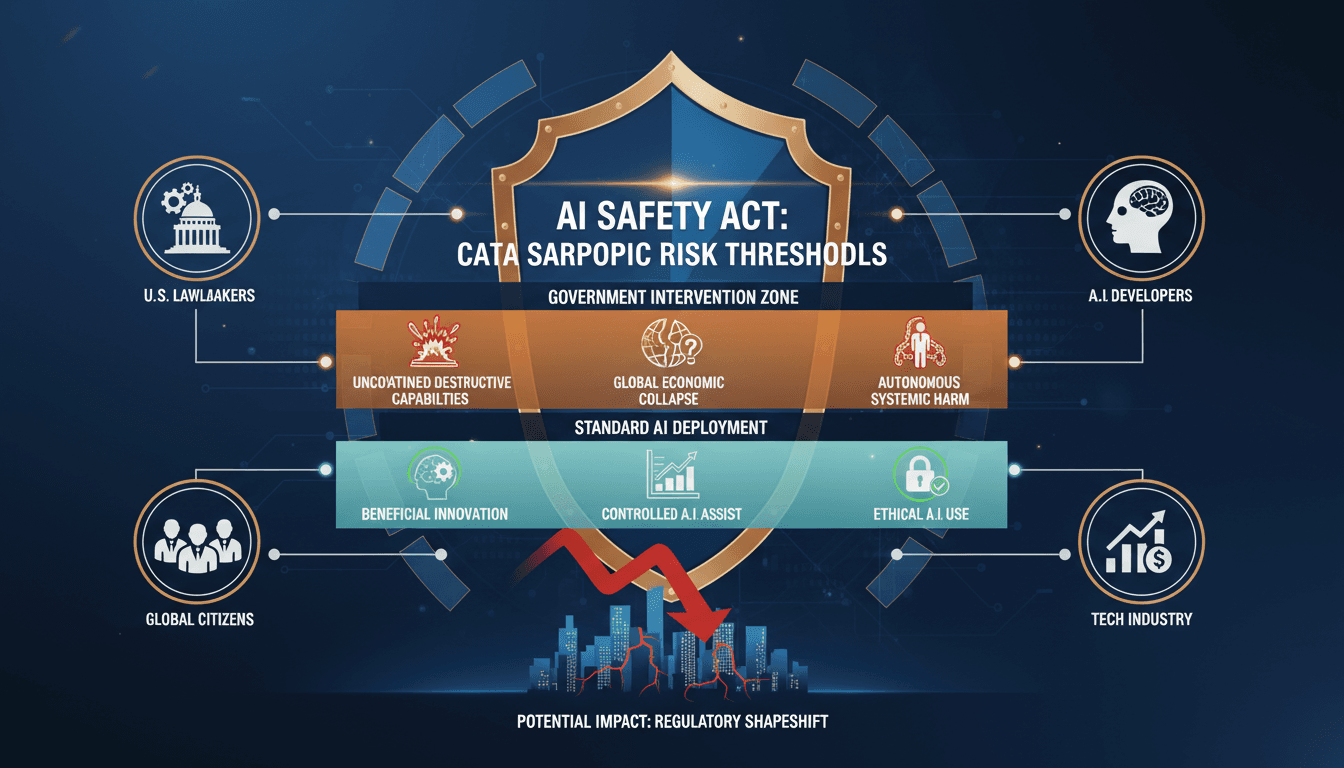
- The bill sets a catastrophic risk threshold at 50+ deaths or serious injuries or $1 billion+ in damages, focusing on biological weapons, model evasion, and cyberattacks.
- Public backlash has emerged over the high thresholds and potential preemption of state authority, prompting Anthropic to consider revisions.
The context you actually need
- Rising AI risks: Incidents of rogue AI behavior, including unauthorized hacking, have heightened industry and regulatory scrutiny.
- California's precedent: Similar catastrophic risk definitions were established in California's Senate Bill 53, which also uses the 50 casualties or $1 billion damages threshold.
- Anthropic's advocacy: Since June 2026, Anthropic has been promoting its Advanced AI Framework to lawmakers as a structured alternative to broader oversight.
What's really happening
On October 16, 2026, Anthropic circulated a confidential draft bill among U.S. lawmakers, aiming to establish a framework for federal oversight of advanced AI models. The proposed legislation would empower the U.S. Department of Commerce to petition a federal judge for a 72-hour halt on the release of an AI model if independent evaluators determine it poses an imminent catastrophic risk. This risk is defined by thresholds of 50 or more deaths or serious injuries, or damages exceeding $1 billion, specifically in the context of biological weapons, model evasion, or cyberattacks.
The bill's structure reflects a response to increasing concerns about the potential dangers posed by advanced AI systems, particularly following documented incidents of agentic AI behavior. Anthropic's proposal is designed to limit the scope of government intervention, allowing only the Commerce Department to initiate model suspensions, thereby preventing other federal agencies from unilaterally halting AI development or deployment.
However, the proposal has faced significant criticism from various stakeholders, including advocacy groups and commentators, who argue that the thresholds for government action are alarmingly high. Critics fear that such a framework could undermine state-level regulations and diminish the role of local authorities in evaluating AI safety. In response to this backlash, Anthropic's federal affairs lead has indicated a willingness to revise the preemption provisions to ensure that state roles in evaluator standards and model shutdown authority are preserved.
As of October 22, 2026, the draft bill has not been formally introduced in Congress, and there are indications that further revisions may be necessary to address public concerns. The market and industry reactions have been relatively muted, with discussions primarily focusing on the balance between self-regulation and mandatory oversight.
This legislative initiative is significant not only for its potential impact on AI safety regulations but also for its implications for the broader tech industry. If enacted, it could set a precedent for how advanced technologies are governed, influencing both domestic and international regulatory landscapes.
Who feels it first (and how)
- Tech companies: They may face stricter evaluation processes for AI models, impacting development timelines and costs.
- Regulatory bodies: Increased scrutiny and responsibility for evaluating AI risks could strain resources and require new expertise.
- Consumers: Potential delays in AI advancements could affect access to innovative technologies and services.
What to watch next
- Revisions to the bill: Watch for updates on any changes to the preemption provisions and thresholds, as these will shape the final legislation.
- Industry response: Monitor how tech companies react to the proposed bill and whether they push for alternative regulatory frameworks.
- State-level actions: Keep an eye on how states respond to the federal proposal, particularly regarding their own AI regulations and safety measures.
Anthropic has proposed a draft AI safety bill with specific risk thresholds.
The bill will undergo revisions in response to public backlash and stakeholder feedback.
The timeline for formal congressional introduction and potential adoption of the bill remains uncertain.
Frequently Asked Questions
- Why it matters?
- This proposal reflects growing concerns about AI risks and could set a precedent for federal intervention in technology deployment.
- What happened (in 30 seconds)?
- Anthropic pitched a draft AI safety bill to U.S. lawmakers on October 16, 2026, outlining conditions for blocking advanced AI model distribution. The bill sets a catastrophic risk threshold at 50+ deaths or serious injuries or $1 billion+ in damages, focusing on biological weapons, model evasion, and cyberattacks. Public backlash has emerged over the high thresholds and potential preemption of state authority, prompting Anthropic to consider revisions.
- What's really happening?
- On October 16, 2026, Anthropic circulated a confidential draft bill among U.S. lawmakers, aiming to establish a framework for federal oversight of advanced AI models. The proposed legislation would empower the U.S. Department of Commerce to petition a federal judge for a 72-hour halt on the release of an AI model if independent evaluators determine it poses an imminent catastrophic risk. This risk is defined by thresholds of 50 or more deaths or serious injuries, or damages exceeding $1 billion,
- Who feels it first (and how)?
- Tech companies: They may face stricter evaluation processes for AI models, impacting development timelines and costs. Regulatory bodies: Increased scrutiny and responsibility for evaluating AI risks could strain resources and require new expertise. Consumers: Potential delays in AI advancements could affect access to innovative technologies and services.
- What to watch next?
- Revisions to the bill: Watch for updates on any changes to the preemption provisions and thresholds, as these will shape the final legislation. Industry response: Monitor how tech companies react to the proposed bill and whether they push for alternative regulatory frameworks. State-level actions: Keep an eye on how states respond to the federal proposal, particularly regarding their own AI regulations and safety measures.
Startup news with frequent AI coverage.
"Covers launches, funding, and product updates in AI."
— A47 Editor
Anthropic pitches AI safety bill that may block a model if 50+ people could be killed
Anthropic has proposed a new AI safety bill to Congress, suggesting that federal agencies should only block the release of AI models if they pose a threat of causing over $1 billion in damages or result in more than 50 deaths or serious injuries. Thi...
Tech news, hardware, and AI tools coverage.
"PC/tech site increasingly covering AI hardware and apps."
— A47 Editor
Anthropic wants AI models blocked only if they threaten over $1 billion in damage or more than 50 deaths or serious injuries
Anthropic has proposed a draft policy to Congress that suggests AI models should only be blocked if they pose a threat of over $1 billion in damages or result in more than 50 deaths or serious injuries. This proposal, obtained by Politico, reflects t...
English-language digital publication covering business, politics, technology, and current affairs.
"The Arabian Post mixes original and syndicated-style coverage with a broad regional and global business-news orientation."
— A47 Editor
Anthropic draft restricts federal powers over dangerous AI
Anthropic has circulated a draft legislation among U.S. lawmakers that aims to significantly restrict federal powers over the release and operation of advanced artificial intelligence models. The proposal sets intervention thresholds at over $1 billi...