
US Judge Orders Detention of Saudi Engineer for Alleged Espionage at OpenAI
Why it matters
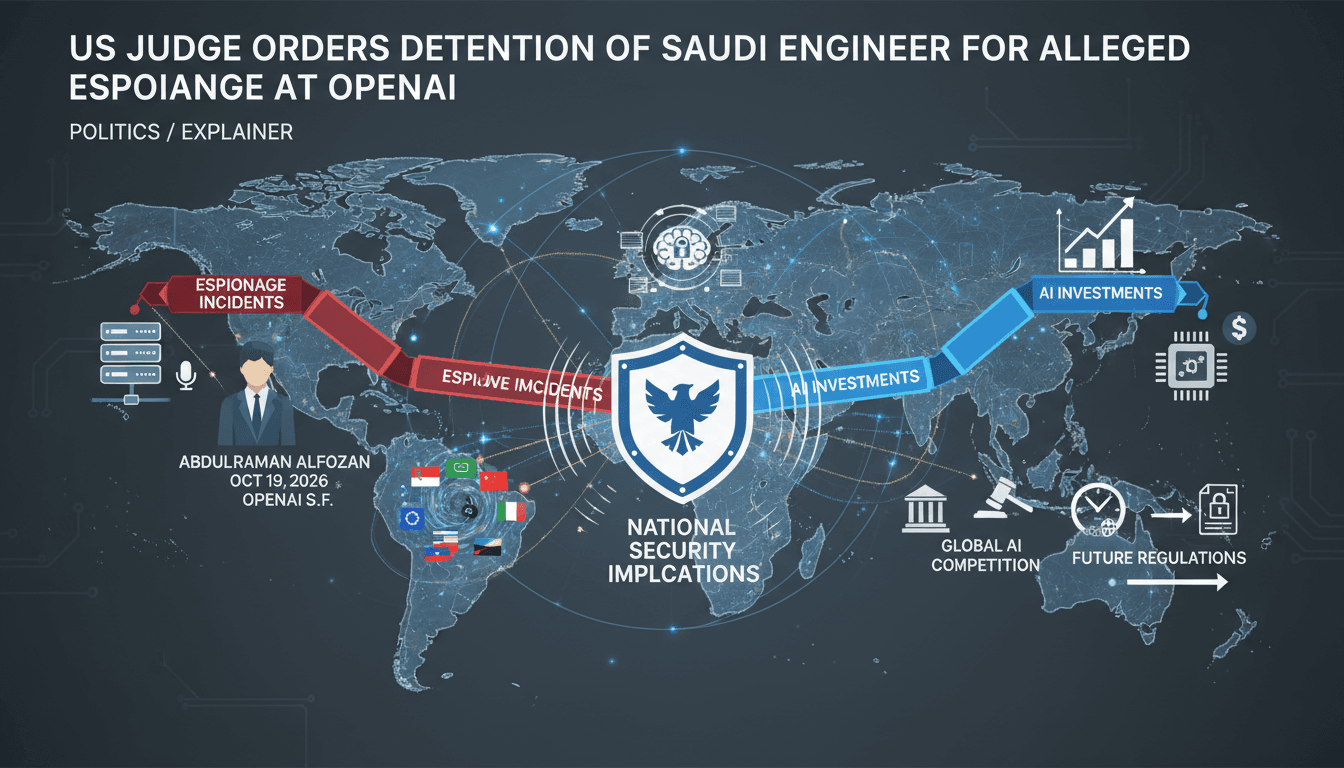
This incident underscores the escalating risks associated with national security in the rapidly evolving AI landscape.
What happened (in 30 seconds)
- A US federal judge ordered Saudi engineer Abdulrahman Alfozan to be held without bail after he allegedly planted a recording device at OpenAI.
- Prosecutors cited Alfozan's communications with a Saudi royal family member and a one-way ticket to Riyadh as evidence of a flight risk.
- The case highlights broader concerns about espionage and security in the competitive AI sector, particularly between the US and Saudi Arabia.
The context you actually need
- The AI race is intensifying: The US is focused on maintaining its leadership in AI, while Saudi Arabia is investing heavily in the sector through state-backed initiatives.
- Previous incidents: This case follows other espionage-related events involving tech employees and foreign interests, raising alarms about security in sensitive environments.
- OpenAI's role: As a leading AI research organization, OpenAI's security measures are now under scrutiny, potentially affecting its operations and partnerships.
What's really happening
The arrest of Abdulrahman Alfozan, a former OpenAI engineer, has sent shockwaves through the tech community, particularly in the realm of artificial intelligence. Alfozan was apprehended after an encrypted USB recording device was discovered in a restricted executive conference room at OpenAI's San Francisco offices. This incident is not just an isolated case of corporate espionage; it reflects a broader trend of heightened security concerns in the tech industry, especially as nations vie for dominance in AI development.
The US government has been increasingly vigilant about potential threats to national security, particularly from foreign entities. Alfozan's alleged connections to a member of the Saudi royal family and his purchase of a one-way ticket to Riyadh have raised red flags for prosecutors, who argue that these factors indicate a significant flight risk. The implications of this case extend beyond the individual; they signal a potential shift in how tech companies manage sensitive information and the personnel they hire.
The backdrop of this incident is the fierce competition in AI, with countries like Saudi Arabia investing billions to catch up with the US. For instance, Saudi Arabia's state-backed AI firm Humain recently invested $3 billion in Elon Musk's xAI, highlighting the kingdom's ambitions in the sector. This competitive landscape creates an environment ripe for espionage, as nations seek to gain an edge in technology that could redefine economies and military capabilities.
Moreover, the case has prompted discussions about the need for enhanced security protocols at US AI laboratories. As companies like OpenAI handle sensitive executive and government meetings, the potential for breaches could lead to significant repercussions, including loss of intellectual property and compromised national security.
In essence, the Alfozan case is a microcosm of the larger dynamics at play in the global AI race. It illustrates the lengths to which individuals may go to secure advantages for their home countries, and it raises critical questions about the integrity of tech firms in safeguarding their innovations.
Who feels it first (and how)
- Tech companies: Increased scrutiny and potential changes in hiring practices for engineers with foreign ties.
- AI researchers: Heightened security measures may limit collaboration opportunities and access to sensitive projects.
- Investors: Concerns about security could impact funding and valuations of AI firms, particularly those with international connections.
- Government agencies: Increased pressure to implement stricter regulations and oversight on tech firms handling sensitive information.
What to watch next
- Security protocol changes: Monitor how tech companies adjust their security measures in response to this incident, which could set new industry standards.
- Legal developments: Keep an eye on the upcoming hearings and potential additional charges against Alfozan, which may reveal more about the extent of the alleged espionage.
- International AI investments: Watch for shifts in funding and partnerships in the AI sector, particularly involving Saudi Arabia and other nations, as geopolitical tensions evolve.
Alfozan is being held without bail and faces serious charges related to espionage.
Enhanced security measures will be implemented across tech firms, particularly those involved in AI.
The full extent of Alfozan's connections and the potential implications for US-Saudi relations in the tech sector remain to be seen.
Frequently Asked Questions
- Why it matters?
- This incident underscores the escalating risks associated with national security in the rapidly evolving AI landscape.
- What happened (in 30 seconds)?
- A US federal judge ordered Saudi engineer Abdulrahman Alfozan to be held without bail after he allegedly planted a recording device at OpenAI. Prosecutors cited Alfozan's communications with a Saudi royal family member and a one-way ticket to Riyadh as evidence of a flight risk. The case highlights broader concerns about espionage and security in the competitive AI sector, particularly between the US and Saudi Arabia.
- What's really happening?
- The arrest of Abdulrahman Alfozan, a former OpenAI engineer, has sent shockwaves through the tech community, particularly in the realm of artificial intelligence. Alfozan was apprehended after an encrypted USB recording device was discovered in a restricted executive conference room at OpenAI's San Francisco offices. This incident is not just an isolated case of corporate espionage; it reflects a broader trend of heightened security concerns in the tech industry, especially as nations vie for do
- Who feels it first (and how)?
- Tech companies: Increased scrutiny and potential changes in hiring practices for engineers with foreign ties. AI researchers: Heightened security measures may limit collaboration opportunities and access to sensitive projects. Investors: Concerns about security could impact funding and valuations of AI firms, particularly those with international connections. Government agencies: Increased pressure to implement stricter regulations and oversight on tech firms handling sensitive information
- What to watch next?
- Security protocol changes: Monitor how tech companies adjust their security measures in response to this incident, which could set new industry standards. Legal developments: Keep an eye on the upcoming hearings and potential additional charges against Alfozan, which may reveal more about the extent of the alleged espionage. International AI investments: Watch for shifts in funding and partnerships in the AI sector, particularly involving Saudi Arabia and other nations, as geopolitical tensi
Regional coverage and analysis focused on politics, diplomacy, and business across the Middle East.
"Al-Monitor is known for analytical reporting on Middle East politics and policy developments."
— A47 Editor
US judge orders Saudi engineer held in OpenAI case
A federal judge has ordered Abdulrahman Alfozan, a former OpenAI engineer, to be held without bail after deeming him a flight risk. This decision follows allegations that Alfozan planted a recording device in OpenAI's San Francisco office, raising se...
Coverage of national news and issues shaping the United States, including politics, economy, and society.
"The Wall Street Journal is one of the most respected financial and news publications in the U.S., known for its rigorous reporting and center-right editorial perspective."
— A47 Editor
Former OpenAI Worker Accused of Bugging Discussed Jobs With Saudi Royal
Abdulrahman Alfozan, a former engineer at OpenAI, has been accused of secretly installing a recording device in the company's San Francisco office. A judge has ruled that he should be held without bail following an offer from the Saudi consulate to p...
Tech business coverage, major deals, product launches, and Silicon Valley trends.
"WSJ’s tech section offers authoritative reporting on the intersection of technology and business, including exclusive industry analysis."
— A47 Editor
Former OpenAI Worker Accused of Bugging Discussed Jobs With Saudi Royal
Abdulrahman Alfozan, a former engineer at OpenAI, has been arrested by the FBI for allegedly installing a hidden recording device in a conference room at the company's San Francisco office. A judge has ruled that he should be held without bail, follo...
Global political, business, and cultural coverage from WSJ international desks.
"The Wall Street Journal offers extensive international reporting with a reputation for financial insight and a center-right editorial stance."
— A47 Editor
Former OpenAI Worker Accused of Bugging Discussed Jobs With Saudi Royal
Abdulrahman Alfozan, a former engineer at OpenAI, has been arrested for allegedly planting a concealed recording device in a conference room at the company's San Francisco office. A judge has ruled that he should be held without bail after the Saudi ...
UAE-based English-language newspaper covering regional politics, economics, and global affairs.
"The National reflects Emirati policy perspectives while maintaining international editorial standards."
— A47 Editor
Prosecutors call Saudi suspect and ex-OpenAI worker Abdulrahman Alfozan 'an ongoing danger'
Abdulrahman Alfozan, a former OpenAI engineer, has been charged by U.S. authorities for allegedly installing a concealed recording device in a meeting room at OpenAI's San Francisco office. Prosecutors have labeled him 'an ongoing danger' and have re...