
Saudi Arabia Faces Escalating Houthi Attacks Amid Defense Vulnerabilities
Why it matters
The escalating conflict poses risks to energy markets and geopolitical stability, which can directly influence economic conditions worldwide.
What happened (in 30 seconds)
- Houthi attacks on Saudi Arabia surged in October 2026, targeting key infrastructure and resulting in casualties.
- Saudi Arabia is seeking additional military support from allies, including the U.S., amid concerns over its air defense capabilities.
- President Trump faces pressure to consider direct military intervention as the situation escalates, complicating U.S. foreign policy in the region.
The context you actually need
- The Yemen civil war has been ongoing since 2014, with Saudi Arabia intervening against the Iran-backed Houthis, leading to a protracted conflict.
- Despite spending $83.2 billion annually on defense, Saudi Arabia struggles to counter low-cost asymmetric threats from Houthi missile and drone strikes.
- Regional tensions are heightened due to broader conflicts involving Iran, impacting not just Saudi Arabia but also neighboring countries and global markets.
What's really happening
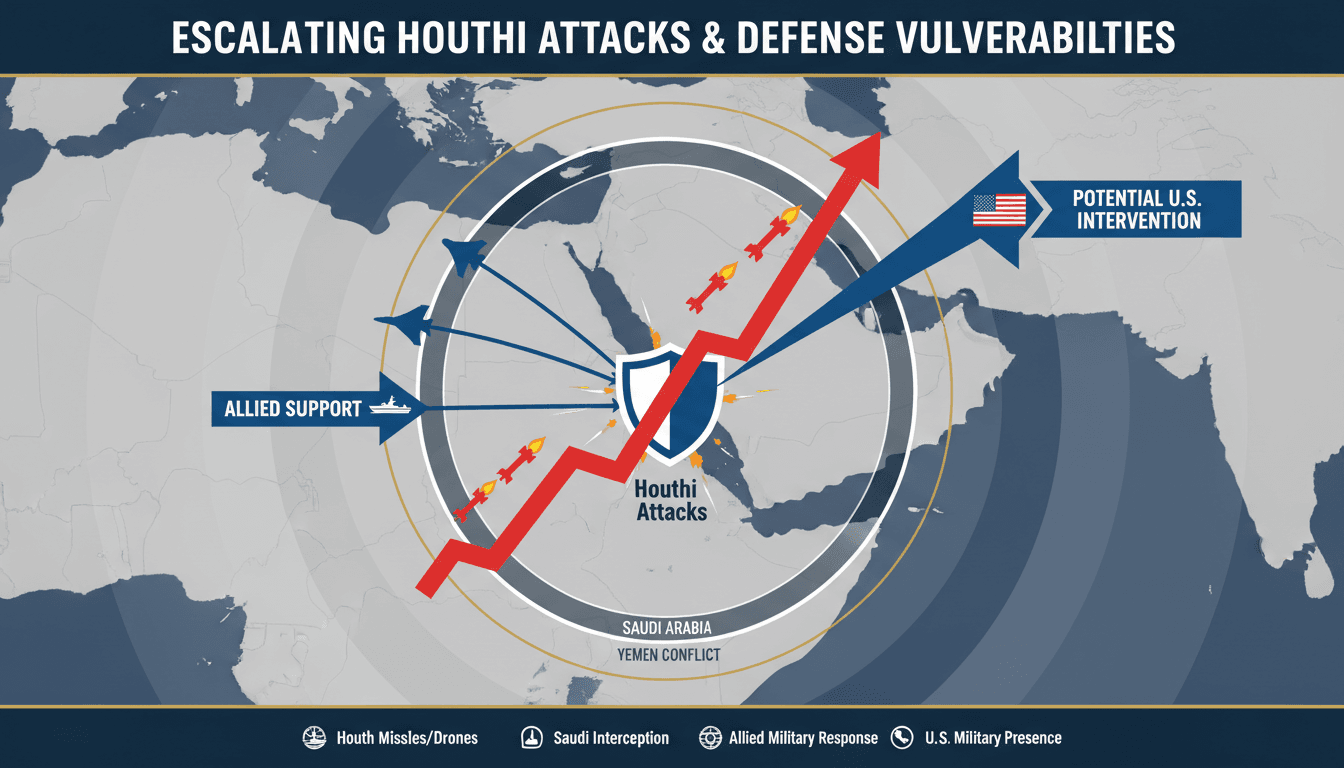
In October 2026, Houthi missile and drone strikes on Saudi Arabia escalated dramatically, more than doubling in frequency within a week. This surge included a deadly attack on Riyadh's King Khalid International Airport, which resulted in at least 13 fatalities and over 300 injuries. The Houthis, backed by Iran, have effectively utilized low-cost drone and missile technology to exploit vulnerabilities in Saudi Arabia's air defense systems, which, despite significant investment, have proven inadequate against such asymmetric warfare tactics.
Saudi Arabia's defense budget, which ranks eighth globally at $83.2 billion, has not translated into effective deterrence against these attacks. The kingdom's reliance on advanced U.S.-origin systems like the Patriot missile defense has been challenged by the sheer volume and unpredictability of Houthi strikes. The geography of Saudi Arabia, with vast areas to protect, further complicates defense efforts, leading to interceptor depletion and a strained military response.
In response to the escalating threat, Saudi Arabia has sought assistance from allies, including the United Kingdom, which deployed Typhoon jets, and Egypt, which is providing defensive support. Israel has also offered help, highlighting the regional implications of the conflict. Meanwhile, the U.S. has been approached for additional interceptors, but global shortages complicate this request. President Trump is under pressure to consider direct military intervention, a move that could escalate U.S. involvement in the region and impact domestic political dynamics.
The situation is further complicated by the ongoing Yemen conflict, which has seen a resurgence of fighting after a period of uneasy truce. The Houthis have made significant territorial gains, particularly along the Red Sea coast, and their ability to launch cross-border attacks on Saudi targets raises alarms about the effectiveness of Saudi defenses. The Saudi-led coalition has conducted retaliatory strikes on Houthi positions in Yemen, but the long-term effectiveness of these actions remains uncertain.
As the conflict continues to evolve, the implications for regional stability and global markets are profound. The potential for disruptions to oil supplies and aviation routes could have far-reaching consequences, affecting not only Saudi Arabia but also the broader Gulf Cooperation Council (GCC) and international stakeholders.
Who feels it first (and how)
- Airline and travel sectors: Increased security alerts and potential flight disruptions.
- Energy market stakeholders: Fluctuations in oil prices due to perceived risks in the region.
- Local businesses in Saudi Arabia: Economic uncertainty and operational disruptions from conflict-related advisories.
- U.S. military and defense contractors: Potential shifts in resource allocation and strategic focus in the Middle East.
What to watch next
- U.S. military decisions: Monitor any announcements regarding direct intervention or increased military support to Saudi Arabia, as this could escalate tensions.
- Houthi operational capabilities: Keep an eye on the frequency and scale of Houthi attacks, which may indicate their evolving strategy and effectiveness.
- Global oil market reactions: Watch for fluctuations in oil prices and investor sentiment in response to ongoing conflict developments and geopolitical risks.
Houthi attacks have increased significantly, targeting critical Saudi infrastructure.
Saudi Arabia will continue to seek international military support while weighing its options for a more aggressive response.
The long-term effectiveness of Saudi defenses against Houthi tactics and the potential for U.S. military intervention.
Frequently Asked Questions
- Why it matters?
- The escalating conflict poses risks to energy markets and geopolitical stability, which can directly influence economic conditions worldwide.
- What happened (in 30 seconds)?
- Houthi attacks on Saudi Arabia surged in October 2026, targeting key infrastructure and resulting in casualties. Saudi Arabia is seeking additional military support from allies, including the U.S., amid concerns over its air defense capabilities. President Trump faces pressure to consider direct military intervention as the situation escalates, complicating U.S. foreign policy in the region.
- What's really happening?
- In October 2026, Houthi missile and drone strikes on Saudi Arabia escalated dramatically, more than doubling in frequency within a week. This surge included a deadly attack on Riyadh's King Khalid International Airport, which resulted in at least 13 fatalities and over 300 injuries. The Houthis, backed by Iran, have effectively utilized low-cost drone and missile technology to exploit vulnerabilities in Saudi Arabia's air defense systems, which, despite significant investment, have proven inadeq
- Who feels it first (and how)?
- Airline and travel sectors: Increased security alerts and potential flight disruptions. Energy market stakeholders: Fluctuations in oil prices due to perceived risks in the region. Local businesses in Saudi Arabia: Economic uncertainty and operational disruptions from conflict-related advisories. U.S. military and defense contractors: Potential shifts in resource allocation and strategic focus in the Middle East.
- What to watch next?
- U.S. military decisions: Monitor any announcements regarding direct intervention or increased military support to Saudi Arabia, as this could escalate tensions. Houthi operational capabilities: Keep an eye on the frequency and scale of Houthi attacks, which may indicate their evolving strategy and effectiveness. Global oil market reactions: Watch for fluctuations in oil prices and investor sentiment in response to ongoing conflict developments and geopolitical risks.
U.S. political news and right-leaning commentary.
"Fox News is a highly influential conservative news outlet known for right-leaning political commentary and coverage."
— A47 Editor
How Saudi Arabia's defense vulnerabilities could become Trump's problem amid Houthi onslaught
Saudi Arabia is facing increasing threats from Houthi missile and drone attacks, prompting the U.S. to evacuate some diplomats from Riyadh and President Trump to consider direct military action against Yemen. The escalating violence has raised signif...
United Kingdom-focused news including local politics, business, and social issues.
"BBC News is widely regarded as a reputable international news organization, known for its impartial tone and public service mandate."
— A47 Editor
UK to deploy jets to defend Saudi Arabia from Houthi attacks
The United Kingdom has announced the deployment of additional Royal Air Force jets to Saudi Arabia in response to escalating Houthi attacks in the region. This military support aims to bolster Saudi defenses against missile and drone strikes that hav...
English-language digital publication covering business, politics, technology, and current affairs.
"The Arabian Post mixes original and syndicated-style coverage with a broad regional and global business-news orientation."
— A47 Editor
Saudi Arabia seeks military support as Houthi attacks escalate
Saudi Arabia is actively seeking military support from regional allies as Houthi attacks intensify, exposing significant security vulnerabilities. The escalation includes missile and drone strikes that have resulted in civilian casualties and disrupt...