
Saudi Arabia Expands Ballistic Missile Production Facility Amid Houthi Attacks
Why it matters
The expansion of Saudi missile production reflects a significant shift in regional military strategy amid escalating conflicts.
What happened (in 30 seconds)
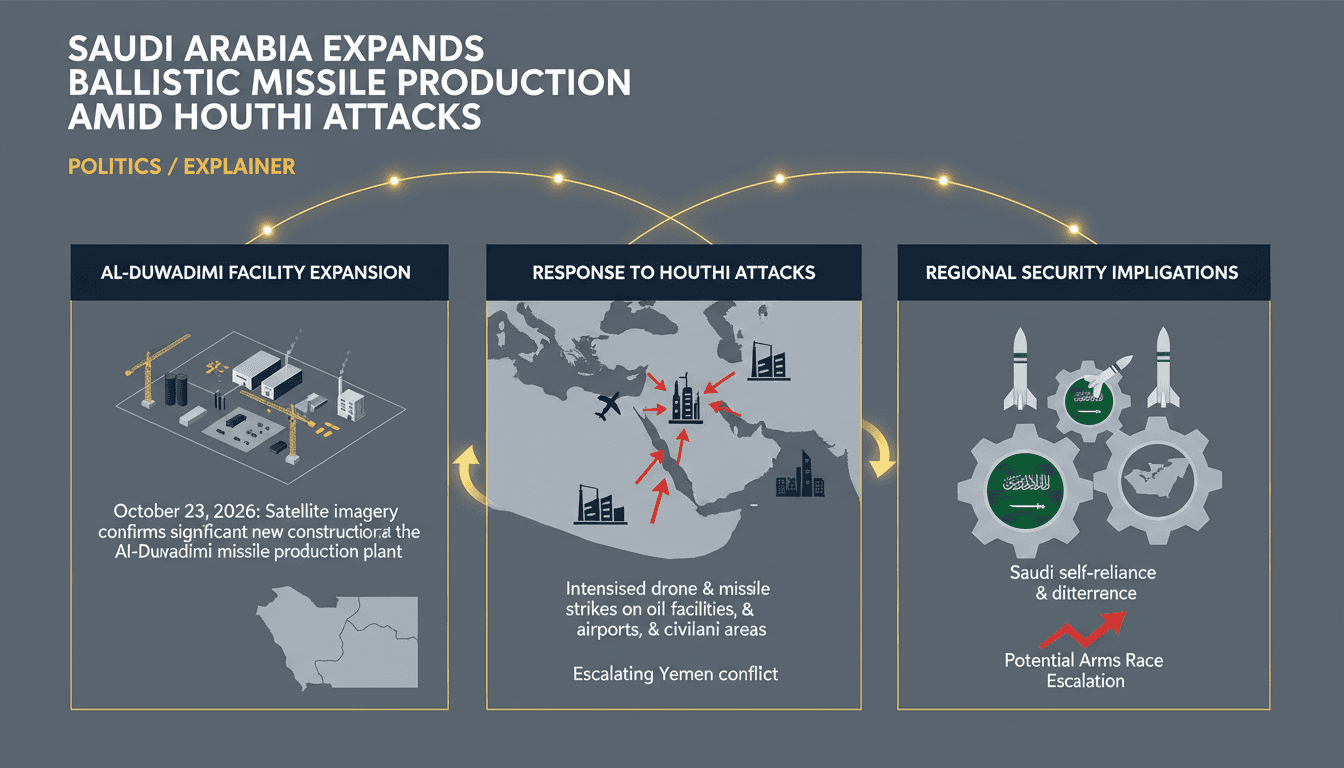
- Saudi Arabia is expanding its ballistic missile production facility at al-Duwadimi, reported on October 23, 2026.
- Houthi forces have intensified attacks on Saudi targets, including Riyadh's King Khalid International Airport, with at least 42 strikes reported by mid-October.
- International responses include condemnation from the UN Security Council and concerns over regional stability and oil market volatility.
The context you actually need
- The Saudi-Houthi conflict has been ongoing since 2015, with Saudi Arabia leading a coalition against Iran-backed Houthi rebels.
- Recent escalations began in September 2026, with Houthi attacks exposing vulnerabilities in Saudi air defenses despite advanced systems.
- The missile facility expansion is linked to Chinese technology and aims to produce more advanced missiles, potentially operational by late 2026.
What's really happening
The recent escalation in the Saudi-Houthi conflict has prompted Saudi Arabia to bolster its military capabilities significantly. The reported expansion of the ballistic missile production facility at al-Duwadimi is a direct response to the intensified Houthi attacks, which have surged since September 2026. With at least 42 strikes on Saudi territory by mid-October, including multiple assaults on critical infrastructure, the urgency for enhanced missile capabilities has become apparent.
The Houthi rebels, backed by Iran, have demonstrated an evolving military strategy that combines drone, cruise, and ballistic missile tactics. This multifaceted approach has challenged Saudi air defenses, leading to increased casualties and damage to civilian targets. The Saudi government has accused Iran of supplying advanced technology to the Houthis, further complicating the regional security landscape.
The expansion at al-Duwadimi includes the construction of a new facility for solid-fuel motors, which are essential for longer-range and higher-payload missiles. This development is significant as it indicates a shift towards self-reliance in missile production, reducing dependency on foreign suppliers. The involvement of Chinese technology in this expansion suggests a strategic partnership that could enhance Saudi Arabia's military capabilities further.
As Saudi Arabia ramps up its missile production, the implications extend beyond its borders. The potential for increased missile capabilities could alter the balance of power in the region, prompting neighboring countries to reassess their military strategies. Additionally, the ongoing conflict and military escalation may lead to volatility in global oil markets, as threats to energy infrastructure could disrupt supply chains and impact prices.
The situation remains fluid, with the potential for further escalations as both sides continue to engage in military posturing. The international community's response, particularly from the UN and regional powers, will play a crucial role in shaping the future dynamics of the conflict.
Who feels it first (and how)
- Saudi civilians: Increased risk of attacks and casualties from Houthi strikes.
- Energy sector workers: Potential disruptions to oil production and infrastructure.
- Regional governments: Heightened security concerns and military readiness in neighboring countries.
- Global oil markets: Fluctuations in oil prices due to perceived instability in the region.
What to watch next
- Missile production timelines: Monitor the operational status of the expanded facility and its impact on regional military capabilities.
- Houthi attack patterns: Watch for changes in the frequency and targets of Houthi strikes on Saudi Arabia.
- International diplomatic responses: Observe how global powers, particularly the UN and Iran, react to the escalating conflict and military expansions.
Houthi attacks on Saudi Arabia have increased significantly.
Saudi Arabia will continue to enhance its military capabilities in response to Houthi threats.
The long-term impact of these developments on regional stability and global oil markets.
Frequently Asked Questions
- Why it matters?
- The expansion of Saudi missile production reflects a significant shift in regional military strategy amid escalating conflicts.
- What happened (in 30 seconds)?
- Saudi Arabia is expanding its ballistic missile production facility at al-Duwadimi, reported on October 23, 2026. Houthi forces have intensified attacks on Saudi targets, including Riyadh's King Khalid International Airport, with at least 42 strikes reported by mid-October. International responses include condemnation from the UN Security Council and concerns over regional stability and oil market volatility.
- What's really happening?
- The recent escalation in the Saudi-Houthi conflict has prompted Saudi Arabia to bolster its military capabilities significantly. The reported expansion of the ballistic missile production facility at al-Duwadimi is a direct response to the intensified Houthi attacks, which have surged since September 2026. With at least 42 strikes on Saudi territory by mid-October, including multiple assaults on critical infrastructure, the urgency for enhanced missile capabilities has become apparent. The Hout
- Who feels it first (and how)?
- Saudi civilians: Increased risk of attacks and casualties from Houthi strikes. Energy sector workers: Potential disruptions to oil production and infrastructure. Regional governments: Heightened security concerns and military readiness in neighboring countries. Global oil markets: Fluctuations in oil prices due to perceived instability in the region.
- What to watch next?
- Missile production timelines: Monitor the operational status of the expanded facility and its impact on regional military capabilities. Houthi attack patterns: Watch for changes in the frequency and targets of Houthi strikes on Saudi Arabia. International diplomatic responses: Observe how global powers, particularly the UN and Iran, react to the escalating conflict and military expansions.
Global business headlines with AI angles.
"General business outlet that frequently covers AI."
— A47 Editor
Saudi Arabia's Clashes With The Houthis Keep Escalating. Riyadh is now Reportedly Beefing Up Its Missile Capabilities.
Saudi Arabia is reportedly enhancing its missile capabilities amid escalating clashes with the Iran-backed Houthi rebels in Yemen. This development follows significant territorial gains by the Houthis, prompting Saudi Arabia to bolster its military d...
Regional coverage and analysis focused on politics, diplomacy, and business across the Middle East.
"Al-Monitor is known for analytical reporting on Middle East politics and policy developments."
— A47 Editor
From mountain fighters to 'regional power': the rise of Yemen's Houthis
The Houthis, originally mountain fighters from northern Yemen, have transformed into a significant regional power, exerting control over large areas of Yemen and posing a threat to Saudi Arabia, the world's leading oil exporter. Their rise has been m...
U.S. political news and right-leaning commentary.
"Fox News is a highly influential conservative news outlet known for right-leaning political commentary and coverage."
— A47 Editor
How Saudi Arabia's defense vulnerabilities could become Trump's problem amid Houthi onslaught
Saudi Arabia is facing increasing threats from Houthi missile and drone attacks, prompting the U.S. to evacuate some diplomats from Riyadh and President Trump to consider direct military action against Yemen. The escalating violence has raised signif...