
Turkey Submits Mecca Joint Defence Agreement for Parliamentary Ratification
Why it matters
This trilateral defense pact aims to enhance regional security amid rising tensions, potentially stabilizing key trade routes.
What happened (in 30 seconds)
- Turkey submitted the Mecca Joint Defence Agreement to its parliament for ratification on October 20, 2026.
- The pact, signed in August 2026, establishes a mutual defense framework among Turkey, Saudi Arabia, and Pakistan.
- Parliamentary approval is pending, with discussions expected to begin as early as October 25, 2026.
The context you actually need
- The agreement was signed amid escalating Houthi attacks on Saudi Arabia, prompting a need for collective security measures.
- Turkey's role includes offering military technology support and joining a Saudi-led coalition for Red Sea security.
- The pact emphasizes intelligence sharing, counter-terrorism efforts, and limits Turkish military contributions to equipment and systems without troop deployments.
What's really happening
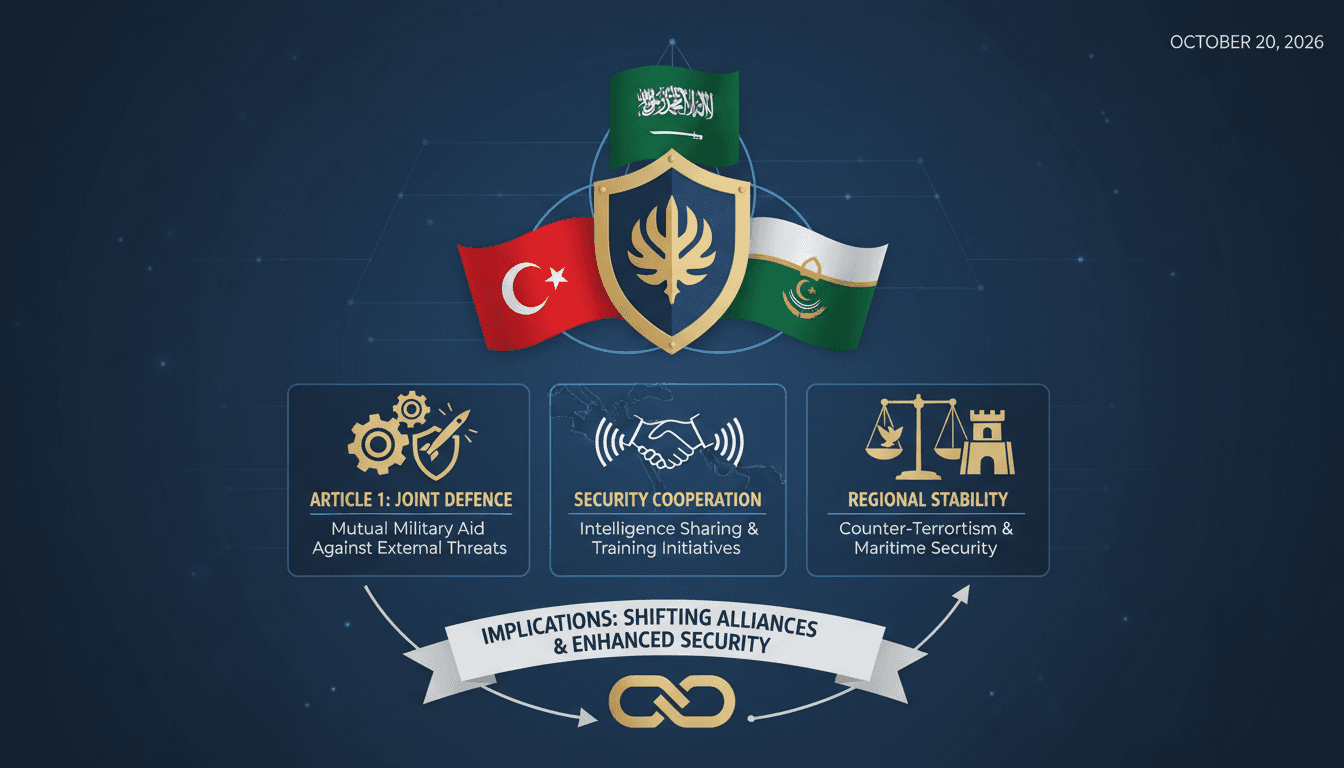
The Mecca Joint Defence Agreement represents a strategic pivot for Turkey, Saudi Arabia, and Pakistan, aiming to bolster collective security in a region fraught with instability. The agreement is modeled after NATO's Article 5, which stipulates that an armed attack against one member is considered an attack against all. This mutual defense framework is particularly relevant given the recent uptick in Houthi attacks on Saudi targets, which have raised alarms about regional security.
Turkey's submission of the agreement to parliament is a critical step toward formalizing this trilateral alliance. The Turkish government has framed the pact as a means to strengthen collective deterrence against external threats, particularly from non-state actors like the Houthis. By invoking UN Charter Article 51, the agreement underscores the right to self-defense, which is crucial for legitimizing military responses if necessary.
The agreement consists of 16 articles that outline the responsibilities and expectations of each signatory. Notably, it limits Turkish contributions to non-combat support, such as intelligence and equipment, which reflects a cautious approach to military engagement. This is significant for Turkey, as it seeks to avoid entanglement in prolonged conflicts while still asserting its influence in regional security matters.
The geopolitical implications of this agreement extend beyond the immediate parties involved. For instance, the focus on Red Sea security is vital for maintaining the flow of maritime trade, particularly for countries like the UAE and those reliant on Gulf shipping routes. As tensions rise, the potential for disruptions in trade could have cascading effects on global supply chains, making this agreement a pivotal factor in regional stability.
Moreover, the parliamentary debate expected to commence soon will be closely watched by opposition parties and analysts alike. The outcome could influence Turkey's foreign policy direction and its role in Middle Eastern geopolitics. If ratified, the agreement could institutionalize a new security architecture in the region, potentially altering alliances and power dynamics.
Who feels it first (and how)
- Defense contractors in Turkey, Saudi Arabia, and Pakistan may see increased demand for military technology and equipment.
- Logistics and shipping companies operating in the Red Sea region could benefit from enhanced security measures.
- Regional governments may adjust their foreign policies in response to the new trilateral alliance, impacting diplomatic relations.
What to watch next
- Parliamentary debates: The discussions in the Turkish parliament will reveal the level of support for the agreement and any potential amendments.
- Houthi activity: Monitoring Houthi attacks on Saudi Arabia will indicate the immediate security challenges that the agreement aims to address.
- Regional reactions: Observing how neighboring countries respond to this pact will provide insights into shifting alliances and security strategies in the Middle East.
The Mecca Joint Defence Agreement has been submitted to the Turkish parliament for ratification.
The parliamentary debate will occur soon, potentially influencing Turkey's military commitments.
The long-term impact on regional security dynamics and trade routes remains to be seen.
Frequently Asked Questions
- Why it matters?
- This trilateral defense pact aims to enhance regional security amid rising tensions, potentially stabilizing key trade routes.
- What happened (in 30 seconds)?
- Turkey submitted the Mecca Joint Defence Agreement to its parliament for ratification on October 20, 2026. The pact, signed in August 2026, establishes a mutual defense framework among Turkey, Saudi Arabia, and Pakistan. Parliamentary approval is pending, with discussions expected to begin as early as October 25, 2026.
- What's really happening?
- The Mecca Joint Defence Agreement represents a strategic pivot for Turkey, Saudi Arabia, and Pakistan, aiming to bolster collective security in a region fraught with instability. The agreement is modeled after NATO's Article 5, which stipulates that an armed attack against one member is considered an attack against all. This mutual defense framework is particularly relevant given the recent uptick in Houthi attacks on Saudi targets, which have raised alarms about regional security. Turkey's sub
- Who feels it first (and how)?
- Defense contractors in Turkey, Saudi Arabia, and Pakistan may see increased demand for military technology and equipment. Logistics and shipping companies operating in the Red Sea region could benefit from enhanced security measures. Regional governments may adjust their foreign policies in response to the new trilateral alliance, impacting diplomatic relations.
- What to watch next?
- Parliamentary debates: The discussions in the Turkish parliament will reveal the level of support for the agreement and any potential amendments. Houthi activity: Monitoring Houthi attacks on Saudi Arabia will indicate the immediate security challenges that the agreement aims to address. Regional reactions: Observing how neighboring countries respond to this pact will provide insights into shifting alliances and security strategies in the Middle East.
Regional coverage and analysis focused on politics, diplomacy, and business across the Middle East.
"Al-Monitor is known for analytical reporting on Middle East politics and policy developments."
— A47 Editor
Turkey submits Saudi-Pakistan defence pact to parliament for ratification, sources say
Turkey has submitted a defense pact with Pakistan and Saudi Arabia to its parliament for ratification, following the signing of the Mecca Joint Defence Agreement in August, which establishes a mutual defense commitment among the three nations in resp...
English-language news from Qatar covering domestic and regional affairs.
"Gulf Times reflects Qatari perspectives on regional developments."
— A47 Editor
Turkey submits Saudi-Pakistan defence pact to parliament for ratification, sources say
Turkey has submitted a defense pact with Pakistan and Saudi Arabia to its parliament for ratification, as reported by parliamentary sources. This move is seen as a step towards strengthening military cooperation among the three nations, particularly ...
Arabic-language political and world news coverage for UAE readers.
"Emarat Al Youm world coverage usually presents international developments through a UAE and Arab audience lens."
— A47 Editor
رويترز: تركيا تحيل اتفاقية مكة للدفاع المشترك إلى البرلمان للمصادقة عليها رويترز: تركيا تحيل اتفاقية مكة للدفاع المشترك إلى البرلمان للمصادقة عليها
Turkey has submitted the Mecca Agreement for mutual defense, signed between Pakistan and Saudi Arabia, to its parliament for ratification, according to three parliamentary sources. This move indicates Turkey's commitment to strengthening defense ties...