
Ukrainian Military Integrates Starshield Satellite Communications Amid Ongoing Conflict with Russia
Why it matters
The integration of satellite communications in military operations reshapes the landscape of modern warfare and international relations.
What happened (in 30 seconds)
- Ukrainian forces are using SpaceX's Starshield satellite network for critical military operations amid ongoing conflict with Russia.
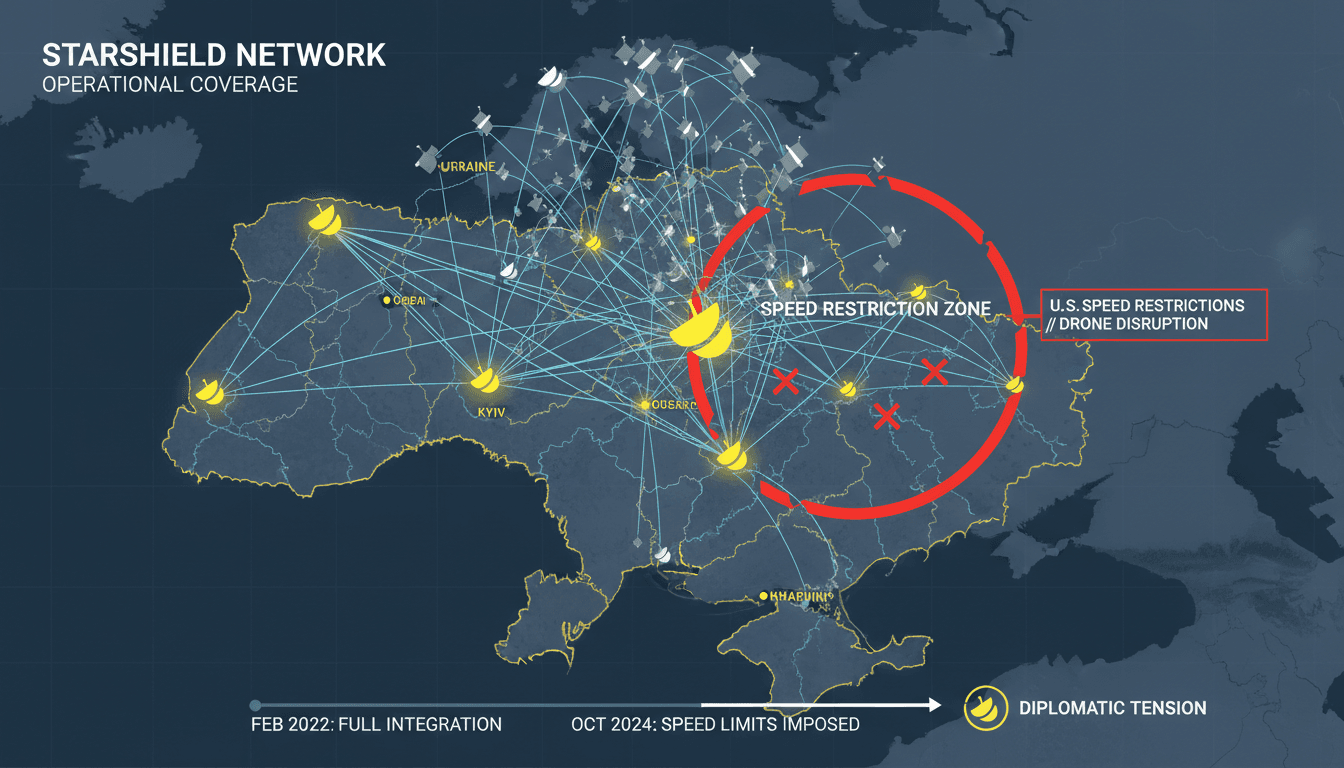
- Speed restrictions imposed by the U.S. government on mobile terminals have disrupted drone operations and military communications.
- Partial restoration of services occurred by mid-October 2026, but full capabilities remain limited due to political tensions.
The context you actually need
- Starshield's role: Following Russia's invasion in 2022, Ukraine's terrestrial communications were severely disrupted, making satellite connectivity essential for military operations.
- Operational integration: Ukrainian units have adapted Starshield for various military applications, including drone warfare and logistics support.
- Political dynamics: The U.S. government's involvement in regulating Starshield services has created friction between Ukrainian officials and SpaceX.
What's really happening
The ongoing conflict in Ukraine has highlighted the critical role of advanced satellite communications in modern warfare. Since Russia's full-scale invasion in 2022, Ukrainian forces have faced significant challenges due to the destruction of terrestrial communication infrastructure. In response, they turned to SpaceX's Starlink and its military-grade variant, Starshield, which provide low-latency, jam-resistant connectivity essential for maintaining command chains, enabling drone warfare, and supporting logistics in contested areas.
As of October 2026, the Ukrainian military has integrated Starshield terminals into various operational frameworks. This includes coordinating infantry movements, conducting drone relays for reconnaissance and attacks, and controlling ground robots and interceptor drones. The operational range of these drones extends between 50 to 150 kilometers behind enemy lines, showcasing the strategic advantage provided by satellite communications.
However, the situation took a turn when the U.S. government imposed speed restrictions on mobile terminals, limiting their operational effectiveness. These restrictions, set at approximately 160 kilometers per hour, were implemented without prior warning, leading to significant disruptions in drone operations and military missions. Ukrainian officials, including President Volodymyr Zelenskyy, expressed concerns that these restrictions jeopardized critical missions and air defenses.
SpaceX clarified that decisions regarding Starshield services rest with U.S. government authorities, indicating a complex interplay between military needs and political oversight. By mid-October 2026, partial restoration of services was achieved, but the limitations imposed by the U.S. government continued to hinder full operational capabilities. This situation reflects broader geopolitical tensions, particularly involving the Trump administration, which has raised questions about the reliability of U.S. support for Ukraine.
The reliance on Starshield also underscores a significant shift in military strategy, where satellite communications are becoming indispensable for real-time decision-making and operational success. As Ukraine adapts to these challenges, there is an increasing emphasis on diversifying communication methods to mitigate risks associated with reliance on a single provider.
Who feels it first (and how)
- Ukrainian Armed Forces: Directly impacted by communication disruptions affecting operational capabilities.
- Defense contractors: Companies involved in military technology may face increased scrutiny and demand for diversified solutions.
- U.S. policymakers: Decisions regarding military support and technology exports will have significant implications for international relations.
What to watch next
- Future U.S. policy changes: Any shifts in U.S. government regulations regarding military technology exports could impact Ukraine's operational capabilities.
- Technological advancements: Innovations in satellite communications and drone technology may alter the dynamics of military engagements.
- Ukrainian adaptation strategies: Observing how Ukraine diversifies its communication methods will provide insights into future military operations.
Ukrainian forces are integrating Starshield for military operations.
Continued political tensions will affect the reliability of satellite communications.
The long-term implications of U.S. policy changes on Ukraine's military strategy.
Frequently Asked Questions
- Why it matters?
- The integration of satellite communications in military operations reshapes the landscape of modern warfare and international relations.
- What happened (in 30 seconds)?
- Ukrainian forces are using SpaceX's Starshield satellite network for critical military operations amid ongoing conflict with Russia. Speed restrictions imposed by the U.S. government on mobile terminals have disrupted drone operations and military communications. Partial restoration of services occurred by mid-October 2026, but full capabilities remain limited due to political tensions.
- What's really happening?
- The ongoing conflict in Ukraine has highlighted the critical role of advanced satellite communications in modern warfare. Since Russia's full-scale invasion in 2022, Ukrainian forces have faced significant challenges due to the destruction of terrestrial communication infrastructure. In response, they turned to SpaceX's Starlink and its military-grade variant, Starshield, which provide low-latency, jam-resistant connectivity essential for maintaining command chains, enabling drone warfare, and s
- Who feels it first (and how)?
- Ukrainian Armed Forces: Directly impacted by communication disruptions affecting operational capabilities. Defense contractors: Companies involved in military technology may face increased scrutiny and demand for diversified solutions. U.S. policymakers: Decisions regarding military support and technology exports will have significant implications for international relations.
- What to watch next?
- Future U.S. policy changes: Any shifts in U.S. government regulations regarding military technology exports could impact Ukraine's operational capabilities. Technological advancements: Innovations in satellite communications and drone technology may alter the dynamics of military engagements. Ukrainian adaptation strategies: Observing how Ukraine diversifies its communication methods will provide insights into future military operations.
Tech business coverage, major deals, product launches, and Silicon Valley trends.
"WSJ’s tech section offers authoritative reporting on the intersection of technology and business, including exclusive industry analysis."
— A47 Editor
How Does the Ukrainian Military Use Starlink?
Ukraine is utilizing a basic Starshield service, which incorporates Starlink's standard equipment with enhanced features, to bolster its military communications amid ongoing conflicts. This service is critical for operational effectiveness, especiall...
Global political, business, and cultural coverage from WSJ international desks.
"The Wall Street Journal offers extensive international reporting with a reputation for financial insight and a center-right editorial stance."
— A47 Editor
How Does the Ukrainian Military Use Starlink?
Ukraine is utilizing a basic Starshield service, which incorporates Starlink's standard equipment with enhanced features, to support its military operations. This service is crucial for maintaining communication and coordination among Ukrainian force...
24/7 international news from a French perspective in multiple languages.
"France 24 is viewed as a globally focused outlet with balanced coverage and a European perspective."
— A47 Editor
Zelensky says Starshield speed limits slowing down frontline response
Ukrainian President Volodymyr Zelensky has criticized the speed limits imposed on the Starshield satellite system, stating that they are hampering the ability of Ukrainian forces to coordinate effective drone strikes against Russian troops. Reports i...