
Warhound Program for Genetic Engineering of Military Dogs Announced
Why it matters
The Warhound initiative addresses critical supply shortages and enhances operational capabilities for U.S. defense and law enforcement.
What happened (in 30 seconds)
- On October 23, 2026, the Warhound Program was announced, aiming to genetically engineer military working dogs.
- Backed by major firms, including Anduril Industries and Colossal Biosciences, the initiative has raised $200 million in funding.
- First genetically modified puppies are expected to be available by early 2027, with potential service entry within two years.
The context you actually need
- Over 80% of military working dogs are currently imported from Europe, creating vulnerabilities in supply chains.
- High training washout rates exceeding 50% and prevalent genetic health issues have plagued existing canine programs.
- Geopolitical competition for elite working dogs has intensified, prompting a shift towards domestic production and innovation.
What's really happening
The Warhound Program is a response to longstanding challenges in sourcing and training military working dogs. Historically, the U.S. military has relied heavily on European imports, which has created a precarious supply chain vulnerable to geopolitical tensions. With over 80% of military working dogs sourced from Europe, the U.S. has faced issues such as high training washout rates—often exceeding 50%—and genetic health problems like hip dysplasia. These factors have prompted a reevaluation of how the military acquires and trains its canine assets.
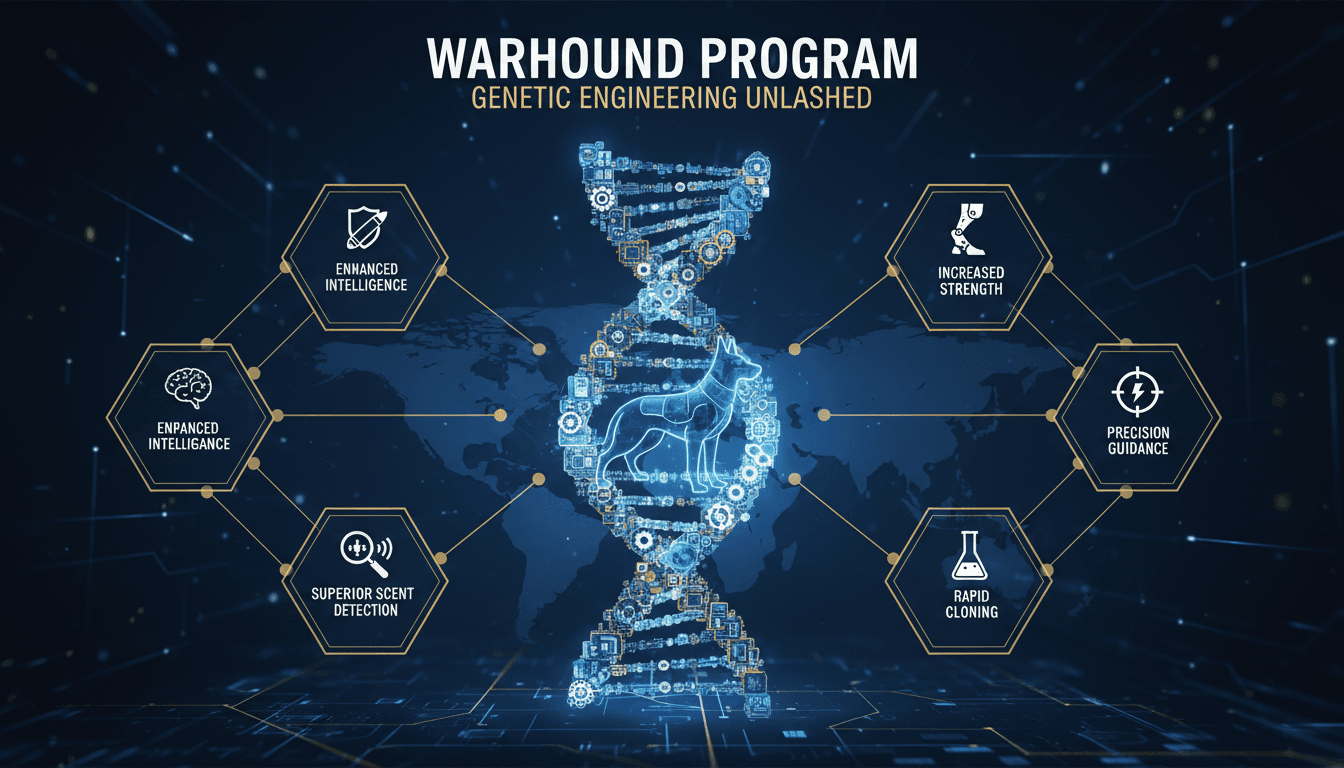
The collaboration between defense technology firm Anduril Industries and synthetic biology company Colossal Biosciences marks a significant pivot towards domestic production. The Warhound initiative aims to leverage advanced genetic engineering techniques to create a new generation of military working dogs that are not only healthier but also more capable. By biobanking genetic material from top-performing breeds like Belgian Malinois, German Shepherds, and Labrador Retrievers, Warhound plans to clone proven animals and employ targeted gene editing to enhance desirable traits such as olfaction and speed.
This initiative is not merely about creating "super dogs"; it also integrates advanced protective technologies developed by Anduril, which could enhance the operational effectiveness of these animals in the field. The first genetically modified puppies are expected to be born in early 2027, with the potential for these dogs to enter service within two years. This timeline reflects a rapid acceleration in the development of military capabilities, driven by both technological advancements and the urgent need for reliable domestic sources of working dogs.
The implications of the Warhound Program extend beyond military applications. Law enforcement agencies and first responders could also benefit from enhanced canine capabilities, potentially leading to improved public safety outcomes. However, the ethical considerations surrounding genetic engineering and cloning of animals are already sparking debates among experts and the public alike. As the program progresses, it will be crucial to monitor both the technological advancements and the societal reactions to these developments.
Who feels it first (and how)
- Military personnel: Enhanced capabilities in operations and training.
- Law enforcement agencies: Improved efficiency in detection and response tasks.
- Biotechnology firms: Increased investment and interest in defense applications.
- Animal welfare advocates: Heightened scrutiny and ethical debates regarding genetic engineering.
What to watch next
- First litters of genetically modified puppies: Their performance and health will be critical indicators of the program's success.
- Public and ethical reactions: Ongoing discussions about the implications of genetic engineering in animals could influence future policies.
- Market interest from investors: Continued funding and support from venture capitalists may signal confidence in the program's viability and potential expansion.
The Warhound Program has secured $200 million in funding and aims to produce genetically modified military working dogs.
The first genetically modified puppies will be born in early 2027, with potential service entry within two years.
The long-term societal and ethical implications of genetically engineered animals remain to be fully understood.
Frequently Asked Questions
- Why it matters?
- The Warhound initiative addresses critical supply shortages and enhances operational capabilities for U.S. defense and law enforcement.
- What happened (in 30 seconds)?
- On October 23, 2026, the Warhound Program was announced, aiming to genetically engineer military working dogs. Backed by major firms, including Anduril Industries and Colossal Biosciences, the initiative has raised $200 million in funding. First genetically modified puppies are expected to be available by early 2027, with potential service entry within two years.
- What's really happening?
- The Warhound Program is a response to longstanding challenges in sourcing and training military working dogs. Historically, the U.S. military has relied heavily on European imports, which has created a precarious supply chain vulnerable to geopolitical tensions. With over 80% of military working dogs sourced from Europe, the U.S. has faced issues such as high training washout rates—often exceeding 50%—and genetic health problems like hip dysplasia. These factors have prompted a reevaluation of h
- Who feels it first (and how)?
- Military personnel: Enhanced capabilities in operations and training. Law enforcement agencies: Improved efficiency in detection and response tasks. Biotechnology firms: Increased investment and interest in defense applications. Animal welfare advocates: Heightened scrutiny and ethical debates regarding genetic engineering.
- What to watch next?
- First litters of genetically modified puppies: Their performance and health will be critical indicators of the program's success. Public and ethical reactions: Ongoing discussions about the implications of genetic engineering in animals could influence future policies. Market interest from investors: Continued funding and support from venture capitalists may signal confidence in the program's viability and potential expansion.
Tech business coverage, major deals, product launches, and Silicon Valley trends.
"WSJ’s tech section offers authoritative reporting on the intersection of technology and business, including exclusive industry analysis."
— A47 Editor
The Plan to Put Super Dogs on the Battlefield of the Future
Anduril Industries is advancing its military technology initiatives by developing genetically engineered military dogs, designed to be faster and possess enhanced olfactory capabilities, to improve battlefield effectiveness. This project aims to leve...
U.S. business news, corporate developments, and economy.
"The Wall Street Journal is respected for deep financial and economic reporting with a center-right editorial perspective."
— A47 Editor
The Plan to Put Super Dogs on the Battlefield of the Future
Anduril Industries is spearheading an initiative to genetically engineer military dogs, aiming to enhance their speed and olfactory capabilities for battlefield applications. This venture, backed by co-founder Palmer Luckey and entrepreneur Ben Lamm,...
Science and technology stories including AI.
"Longstanding science magazine with thoughtful AI coverage."
— A47 Editor
Warhound wants to engineer and clone military superdogs—can they do it?
Warhound, a startup co-founded by Ben Lamm and Palmer Luckey, has emerged from stealth mode with $200 million in funding aimed at developing genetically engineered dogs for military, law enforcement, and first responder applications. The initiative s...
Scientific research, technology, environment, and society.
"Scientific American is one of the oldest and most authoritative science magazines, known for deep dives into science, technology, and society."
— A47 Editor
Warhound wants to engineer and clone military superdogs—can they do it?
Warhound, a startup co-founded by Ben Lamm and Palmer Luckey, has emerged from stealth mode with $200 million in funding aimed at developing genetically engineered dogs for military, law enforcement, and first responder applications. The initiative s...
Editor-curated FT homepage stories spanning markets, business, world, and opinion.
"The Financial Times is a globally respected business publication with a centrist/center-left tone and strong markets focus."
— A47 Editor
Palmer Luckey unveils start-up to breed ‘genetically enhanced’ dogs for military
Palmer Luckey, co-founder of Anduril, has launched a new start-up aimed at breeding genetically enhanced dogs for military use, in collaboration with entrepreneur Ben Lamm. This initiative focuses on cloning and gene-editing canines to create special...