
UK Government Initiates 'Be Ready' Campaign for Emergency Preparedness Amid Rising Risks
Why it matters
The UK's 'Be Ready' campaign reflects a growing trend in public preparedness amid increasing geopolitical and environmental threats.
What happened (in 30 seconds)
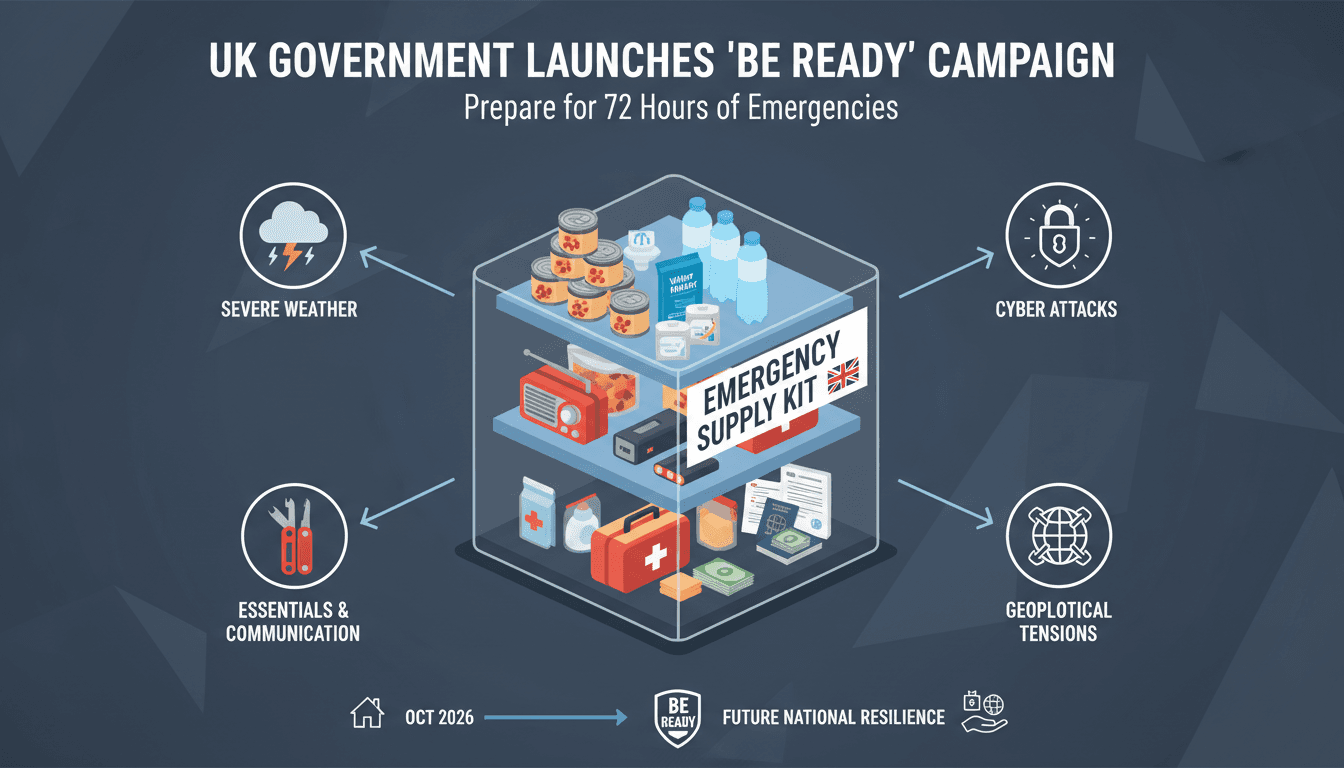
- The UK government launched the 'Be Ready' campaign on 22-23 October 2026, urging households to stockpile three days of essential supplies.
- Prime Minister Andy Burnham and Defence Secretary Wes Streeting emphasized the need for preparedness against severe weather, cyber threats, and geopolitical risks.
- Public response has varied, with some individuals beginning to stockpile supplies while others express skepticism about the adequacy of the measures.
The context you actually need
- Repeated warnings from government officials since September 2026 highlighted vulnerabilities related to El Niño, cyber threats, and geopolitical tensions.
- Past experiences, such as the COVID-19 lockdowns, have influenced public sentiment, prompting many to take the campaign seriously.
- The campaign builds on previous government guidance, aiming to enhance national resilience in the face of increasing disruptions.
What's really happening
The 'Be Ready' campaign is a strategic response to a confluence of risks that have been escalating in recent years. The UK government has identified several key threats, including climate change-induced extreme weather events, cyber attacks on critical infrastructure, and geopolitical tensions, particularly concerning Russia. These factors have created a sense of urgency around public preparedness.
The campaign recommends that households maintain a stockpile of essential supplies for three days, including non-perishable food, bottled water, power banks, and cash. This recommendation is based on the premise that in the event of a significant disruption—whether from a natural disaster or a cyber incident—individuals will be better equipped to manage the initial fallout. The specific guideline of 9 litres of water per person for three days (3 litres daily) underscores the importance of hydration during emergencies.
Public reactions have been mixed. Some individuals, like Lawrence Barratt, began stockpiling supplies in response to online advice and government warnings, while others, such as Marco Camurri, had started months earlier due to concerns about El Niño. This reflects a growing awareness of the need for personal preparedness, driven by past experiences with crises.
However, skepticism remains. Some citizens view the campaign as reminiscent of outdated civil defense advice, questioning whether the recommended measures are sufficient for prolonged crises. The government has emphasized a gradual approach to stockpiling, encouraging individuals to incorporate preparedness into their routine shopping rather than engaging in panic buying. As of 25 October 2026, reports indicate that while there has been an uptick in stockpiling, there has not been widespread panic buying or market shortages.
The campaign's timing is critical, as it coincides with increasing media coverage of climate-related events and geopolitical tensions. This heightened awareness may lead to a more proactive public response, but it also raises questions about the adequacy of government support and resources for those who may struggle to prepare.
Who feels it first (and how)
- Households: Families and individuals are directly impacted as they assess their preparedness levels and stockpile supplies.
- Retailers: Grocery and supply stores may experience fluctuations in demand for essential items as consumers respond to the campaign.
- Emergency services: Increased public awareness may lead to higher demand for emergency services during actual crises.
- Local governments: Municipalities may need to adjust their emergency response plans based on public preparedness levels.
What to watch next
- Public sentiment: Monitor how public attitudes toward preparedness evolve in response to ongoing geopolitical and environmental developments.
- Supply chain impacts: Watch for any disruptions in the availability of essential goods as stockpiling increases.
- Government follow-up: Observe how the UK government addresses public skepticism and whether additional resources or guidance are provided.
The UK government has launched the 'Be Ready' campaign, urging households to stockpile essential supplies.
Public interest in emergency preparedness will continue to grow as global risks increase.
The long-term effectiveness of the campaign in enhancing national resilience remains to be seen.
Frequently Asked Questions
- Why it matters?
- The UK's 'Be Ready' campaign reflects a growing trend in public preparedness amid increasing geopolitical and environmental threats.
- What happened (in 30 seconds)?
- The UK government launched the 'Be Ready' campaign on 22-23 October 2026, urging households to stockpile three days of essential supplies. Prime Minister Andy Burnham and Defence Secretary Wes Streeting emphasized the need for preparedness against severe weather, cyber threats, and geopolitical risks. Public response has varied, with some individuals beginning to stockpile supplies while others express skepticism about the adequacy of the measures.
- What's really happening?
- The 'Be Ready' campaign is a strategic response to a confluence of risks that have been escalating in recent years. The UK government has identified several key threats, including climate change-induced extreme weather events, cyber attacks on critical infrastructure, and geopolitical tensions, particularly concerning Russia. These factors have created a sense of urgency around public preparedness. The campaign recommends that households maintain a stockpile of essential supplies for three days
- Who feels it first (and how)?
- Households: Families and individuals are directly impacted as they assess their preparedness levels and stockpile supplies. Retailers: Grocery and supply stores may experience fluctuations in demand for essential items as consumers respond to the campaign. Emergency services: Increased public awareness may lead to higher demand for emergency services during actual crises. Local governments: Municipalities may need to adjust their emergency response plans based on public preparedness levels.
- What to watch next?
- Public sentiment: Monitor how public attitudes toward preparedness evolve in response to ongoing geopolitical and environmental developments. Supply chain impacts: Watch for any disruptions in the availability of essential goods as stockpiling increases. Government follow-up: Observe how the UK government addresses public skepticism and whether additional resources or guidance are provided.
UK and international business news, economics, and corporate coverage.
"The Guardian’s business section covers finance and markets with a progressive editorial tone."
— A47 Editor
Tinned food, loo roll and power banks: the Brits following advice to stockpile
The UK government has launched a campaign advising citizens to stockpile essential supplies, including tinned food, water, and backup power banks, in preparation for potential emergencies such as extreme weather and cyber attacks. This initiative enc...
Top international stories selected by The Guardian editors.
"The Guardian is known for its progressive editorial stance and in-depth analysis."
— A47 Editor
Tinned food, loo roll and power banks: the Brits following advice to stockpile
The UK government has launched a campaign advising citizens to stockpile essential supplies, including tinned food, water, and backup power banks, in preparation for potential emergencies such as extreme weather and cyber attacks. This initiative enc...
UK politics, business, and social stories.
"Sky News is a UK-based 24-hour channel known for fast-breaking news and political coverage."
— A47 Editor
What is in the Be Ready checklist as Britons urged to stock up for emergencies?
The UK government has initiated a campaign urging the British public to stockpile essential supplies, including food and water, in preparation for potential emergencies such as extreme weather and cyber attacks. This initiative is part of a broader e...
Political developments, elections, and policy issues in the UK.
"Sky News is a UK-based 24-hour channel known for fast-breaking news and political coverage."
— A47 Editor
Stock up to survive 'extreme weather and cyber attacks', government urges
The UK government has launched a campaign urging households to stock up on emergency supplies to last for three days in the event of crises such as extreme weather and cyber attacks. This initiative aims to enhance national resilience amid increasing...