
El Salvador Sends Special Forces to Haiti for Kidnapped Technicians Rescue
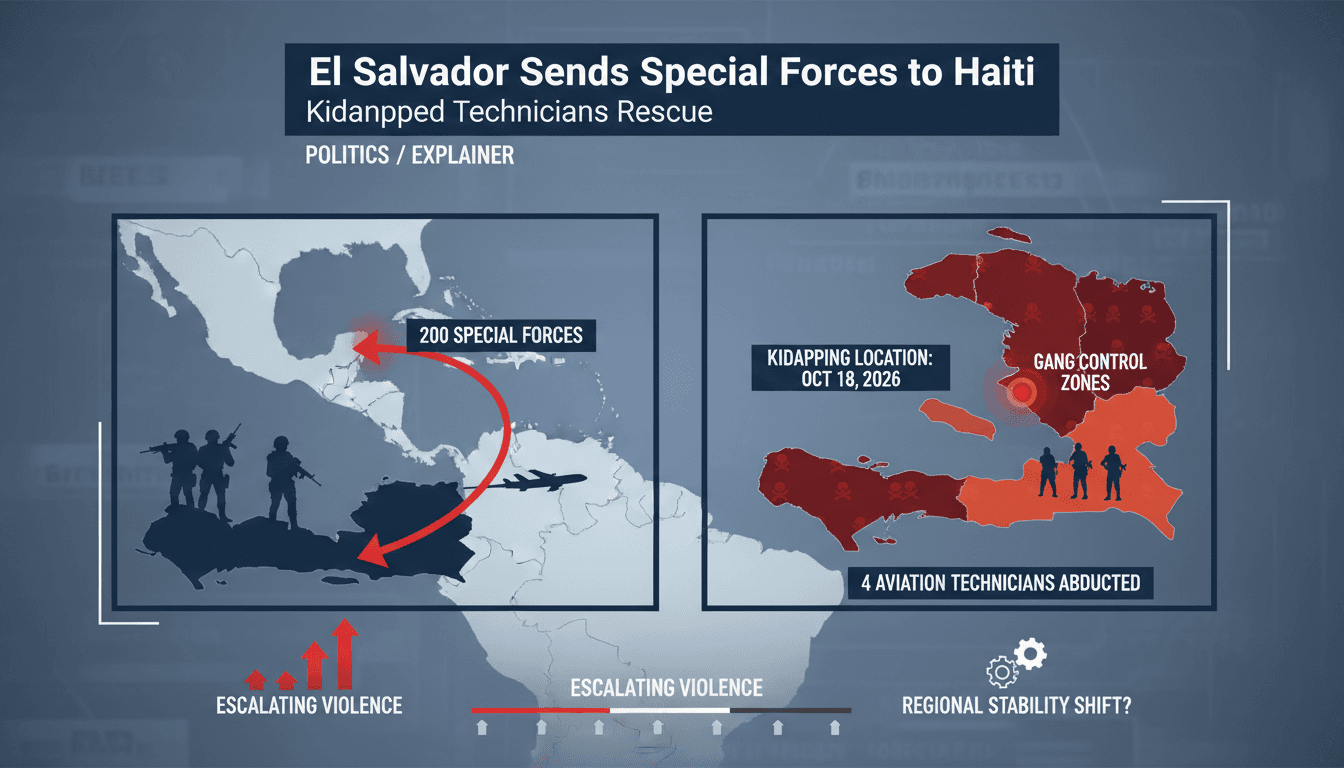
Why it matters
This operation underscores the escalating gang violence in Haiti and the international community's response, which could influence global security policies and humanitarian aid strategies.
What happened (in 30 seconds)
- El Salvador deployed approximately 200 special forces troops to Haiti from October 22-24, 2026, to assist in the rescue of four kidnapped aviation technicians.
- The technicians were abducted on October 18, 2026, in Croix-des-Bouquets, an area heavily controlled by armed gangs.
- President Nayib Bukele vowed a stronger military response if the hostages were harmed, reflecting El Salvador's aggressive anti-gang stance.
The context you actually need
- Haiti has been plagued by gang violence for years, with armed groups controlling significant portions of Port-au-Prince, leading to a humanitarian crisis affecting nearly 1.5 million people.
- The UN Security Council authorized the Gang Suppression Force (GSF) to assist Haitian police in restoring order, highlighting the international community's concern over the deteriorating situation.
- El Salvador's involvement is part of a broader anti-gang strategy under President Bukele, who has implemented strict measures domestically and contributed personnel to international missions.
What's really happening
On October 18, 2026, four Salvadoran aviation technicians were ambushed while traveling in an armored vehicle in the Santo area of Croix-des-Bouquets. Armed gangs, notably the notorious 400 Mawozo, opened fire, used explosives, and set the vehicle ablaze. Although the technicians initially escaped the vehicle, they went missing shortly thereafter. This incident is emblematic of the rampant gang violence in Haiti, where armed groups have increasingly challenged state authority and created a climate of fear.
In response to the kidnapping, President Nayib Bukele announced a military rescue operation on October 21-22, emphasizing the need for the safe return of the hostages and threatening escalated military action if they were harmed. The Salvadoran special forces, initially numbering around 100, were quickly reinforced to approximately 200 troops, arriving in Port-au-Prince to support the GSF and Haitian police operations in the Plaine du Cul-de-Sac area.
The operation involves both helicopter and ground searches, with ongoing clashes reported between Salvadoran forces and local gangs. Notably, gang leader Wilson Joseph of 400 Mawozo publicly challenged Bukele, indicating the high stakes and potential for further violence. As of now, no group has claimed responsibility for the kidnapping, and the condition of the technicians remains unconfirmed.
This military intervention reflects a broader trend of countries taking unilateral action to protect their citizens abroad, particularly in regions where local governance has collapsed. The implications of such actions extend beyond immediate rescue efforts, as they may set precedents for future international military engagements and influence global perceptions of security and humanitarian responsibilities.
Who feels it first (and how)
- Haitian civilians: They face increased violence and instability as gang confrontations escalate.
- International humanitarian organizations: Their operations may be hindered by the security situation, affecting aid delivery.
- Salvadoran military and government: They are under pressure to ensure the safe return of the technicians, impacting domestic and international credibility.
- Global security analysts: They will monitor the effectiveness of this operation as a case study for future interventions in similar contexts.
What to watch next
- The outcome of the rescue operation: Success or failure will influence El Salvador's military reputation and its domestic anti-gang policies.
- Reactions from Haitian gangs: Any retaliatory actions could escalate violence and complicate international efforts in Haiti.
- International community's response: Increased military involvement from other nations could reshape the security landscape in Haiti and beyond.
El Salvador has deployed approximately 200 special forces troops to Haiti.
The situation will remain volatile, with potential for further military engagements.
The fate of the kidnapped technicians and the long-term implications for Haiti's security landscape.
Frequently Asked Questions
- Why it matters?
- This operation underscores the escalating gang violence in Haiti and the international community's response, which could influence global security policies and humanitarian aid strategies.
- What happened (in 30 seconds)?
- El Salvador deployed approximately 200 special forces troops to Haiti from October 22-24, 2026, to assist in the rescue of four kidnapped aviation technicians. The technicians were abducted on October 18, 2026, in Croix-des-Bouquets, an area heavily controlled by armed gangs. President Nayib Bukele vowed a stronger military response if the hostages were harmed, reflecting El Salvador's aggressive anti-gang stance.
- What's really happening?
- On October 18, 2026, four Salvadoran aviation technicians were ambushed while traveling in an armored vehicle in the Santo area of Croix-des-Bouquets. Armed gangs, notably the notorious 400 Mawozo, opened fire, used explosives, and set the vehicle ablaze. Although the technicians initially escaped the vehicle, they went missing shortly thereafter. This incident is emblematic of the rampant gang violence in Haiti, where armed groups have increasingly challenged state authority and created a clima
- Who feels it first (and how)?
- Haitian civilians: They face increased violence and instability as gang confrontations escalate. International humanitarian organizations: Their operations may be hindered by the security situation, affecting aid delivery. Salvadoran military and government: They are under pressure to ensure the safe return of the technicians, impacting domestic and international credibility. Global security analysts: They will monitor the effectiveness of this operation as a case study for future interventions
- What to watch next?
- The outcome of the rescue operation: Success or failure will influence El Salvador's military reputation and its domestic anti-gang policies. Reactions from Haitian gangs: Any retaliatory actions could escalate violence and complicate international efforts in Haiti. International community's response: Increased military involvement from other nations could reshape the security landscape in Haiti and beyond.
English-language reporting on Saudi politics, policy, and society.
"Saudi Gazette reflects mainstream Saudi institutional perspectives."
— A47 Editor
El Salvador sends special forces to Haiti to rescue four kidnapped soldiers
El Salvador has deployed approximately 200 special forces troops to Haiti to rescue four military aviation technicians who were kidnapped by armed gangs. The operation, supported by the UN-backed Gang Suppression Force, aims to locate the technicians...
Global political, business, and cultural coverage from WSJ international desks.
"The Wall Street Journal offers extensive international reporting with a reputation for financial insight and a center-right editorial stance."
— A47 Editor
El Salvador Sends Troops to Haiti to Rescue Military Personnel After Gang Ambush
El Salvador has deployed troops to Haiti following the kidnapping of four Salvadoran members of a U.N.-backed Gang Suppression Force by local gangs. President Nayib Bukele has issued a warning of a more severe military response if the hostages are no...
International coverage of politics, culture, and current affairs.
"BBC News is widely regarded as a reputable international news organization, known for its impartial tone and public service mandate."
— A47 Editor
El Salvador's president threatens Haitian gangs over military hostages
El Salvador's President Nayib Bukele has threatened Haitian gangs following the kidnapping of four members of the Gang Suppression Force, who have been missing since Sunday. This incident highlights the ongoing security crisis in Haiti, where gang vi...
International stories from NPR’s global desk.
"NPR is an American public media organization known for thoughtful reporting and a slightly left-leaning editorial tone."
— A47 Editor
Bukele says military operation launched to rescue Salvadorans held by gangs in Haiti
El Salvador's President Nayib Bukele announced a military operation aimed at rescuing four Salvadoran aviation technicians who were kidnapped by gangs in Haiti. This operation underscores the ongoing security challenges faced by both nations due to g...