
US Senator Blumenthal Initiates Inquiry into Tether's Payments to Nxum Group
Why it matters
This inquiry highlights potential conflicts of interest in the rapidly evolving landscape of cryptocurrency regulation.
What happened (in 30 seconds)
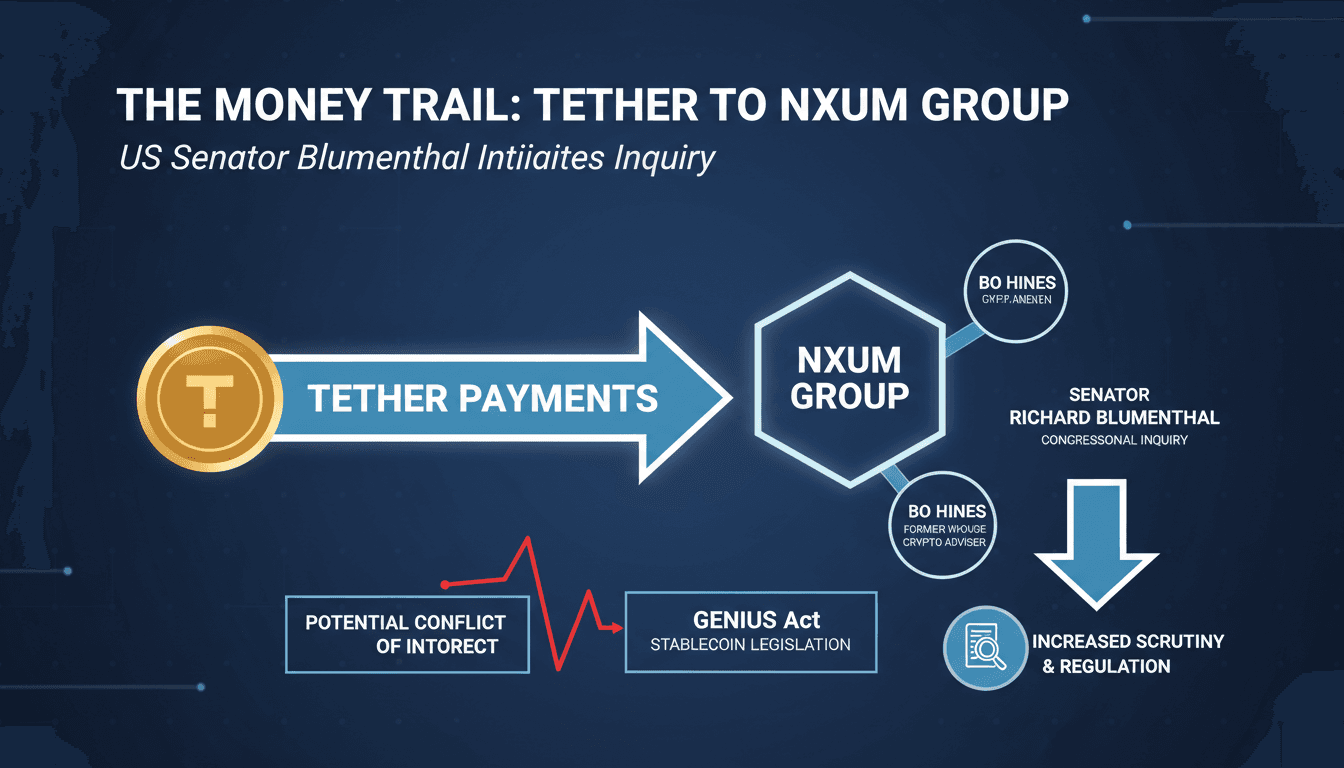
- Senator Richard Blumenthal launched an inquiry into Tether's payments to Nxum Group, co-founded by former White House adviser Bo Hines.
- Tether reportedly paid Nxum over $6 million for consulting services, raising questions about lobbying and ethics.
- Blumenthal's letters seek detailed records from Tether and Nxum, with responses due by November 3, 2026.
The context you actually need
- Stablecoin regulation has gained traction since the Trump administration, culminating in the GENIUS Act, which established a federal framework for stablecoin oversight.
- Bo Hines played a key role in drafting this legislation while maintaining a stake in Nxum, raising concerns about the revolving door between public service and private interests.
- Tether's internal investigation found no wrongdoing, but the inquiry continues to scrutinize the relationship between crypto firms and government officials.
What's really happening
On October 22, 2026, U.S. Senator Richard Blumenthal initiated a congressional inquiry into Tether's financial dealings with Nxum Group, a consulting firm co-founded by Bo Hines, a former White House adviser on digital assets. This inquiry is not merely a procedural formality; it underscores the growing scrutiny of the cryptocurrency sector, particularly regarding the ethical implications of lobbying and the intertwining of public service with private sector interests.
Tether, a major player in the stablecoin market, reportedly paid Nxum $415,000 monthly for strategic communications and public affairs services, totaling over $6 million. These payments were initially routed through an intermediary before direct contracts were established after Hines left his government role. Hines retained a one-third ownership stake in Nxum throughout his tenure, which raises significant questions about potential conflicts of interest. His dual role as a government official and a stakeholder in a consulting firm that benefited from Tether's payments is at the heart of the inquiry.
The GENIUS Act, which Hines helped draft, aims to create a regulatory framework for stablecoins, a sector that has seen explosive growth and increasing regulatory attention. The inquiry reflects broader concerns about the ethics of lobbying in the cryptocurrency space, where the lines between public policy and private profit can become blurred. As the Senate Permanent Subcommittee on Investigations seeks records from Tether and Nxum, the implications of this inquiry could extend beyond the immediate parties involved, potentially influencing future legislation and regulatory approaches to cryptocurrency.
Tether's response to the inquiry indicates that they have conducted an internal review, finding no evidence of wrongdoing. However, the ongoing nature of the inquiry suggests that additional scrutiny may be forthcoming. The Senate subcommittee's request for documentation is a critical step in understanding the full scope of Tether's financial relationships and the potential implications for the broader cryptocurrency market.
As the inquiry unfolds, it may set precedents for how cryptocurrency firms engage with government officials and navigate the complex regulatory landscape. The outcome could influence not only Tether's operations but also the strategies of other firms in the cryptocurrency space, particularly those involved in lobbying and consulting.
Who feels it first (and how)
- Cryptocurrency firms: Increased scrutiny may lead to tighter regulations and compliance requirements.
- Consulting firms: Potential changes in how they engage with government officials could reshape business models.
- Investors: Market reactions to regulatory developments could impact asset values and investment strategies.
What to watch next
- Senate responses: The outcomes of the inquiry and any subsequent actions taken by the Senate could set new standards for transparency in the crypto sector.
- Market reactions: Watch for any shifts in Tether's market position or broader cryptocurrency asset values as the inquiry progresses.
- Legislative changes: Potential amendments to the GENIUS Act or new regulations could emerge based on findings from this inquiry.
Tether made substantial payments to Nxum Group for consulting services.
The inquiry will lead to increased scrutiny of lobbying practices in the cryptocurrency sector.
The long-term impact on Tether's operations and the broader cryptocurrency market remains to be seen.
Frequently Asked Questions
- Why it matters?
- This inquiry highlights potential conflicts of interest in the rapidly evolving landscape of cryptocurrency regulation.
- What happened (in 30 seconds)?
- Senator Richard Blumenthal launched an inquiry into Tether's payments to Nxum Group, co-founded by former White House adviser Bo Hines. Tether reportedly paid Nxum over $6 million for consulting services, raising questions about lobbying and ethics. Blumenthal's letters seek detailed records from Tether and Nxum, with responses due by November 3, 2026.
- What's really happening?
- On October 22, 2026, U.S. Senator Richard Blumenthal initiated a congressional inquiry into Tether's financial dealings with Nxum Group, a consulting firm co-founded by Bo Hines, a former White House adviser on digital assets. This inquiry is not merely a procedural formality; it underscores the growing scrutiny of the cryptocurrency sector, particularly regarding the ethical implications of lobbying and the intertwining of public service with private sector interests. Tether, a major player in
- Who feels it first (and how)?
- Cryptocurrency firms: Increased scrutiny may lead to tighter regulations and compliance requirements. Consulting firms: Potential changes in how they engage with government officials could reshape business models. Investors: Market reactions to regulatory developments could impact asset values and investment strategies.
- What to watch next?
- Senate responses: The outcomes of the inquiry and any subsequent actions taken by the Senate could set new standards for transparency in the crypto sector. Market reactions: Watch for any shifts in Tether's market position or broader cryptocurrency asset values as the inquiry progresses. Legislative changes: Potential amendments to the GENIUS Act or new regulations could emerge based on findings from this inquiry.
Bitcoin news, technical analysis, and forecasts across crypto markets.
"NewsBTC covers Bitcoin news, technical analysis, and forecasts across crypto markets and major blockchain projects."
— A47 Editor
US Senator Questions Tether Over Reported Payments Linked To Former Crypto Adviser
U.S. Senator Richard Blumenthal has initiated an inquiry into Tether and consultancy Nxum regarding reported payments linked to a former cryptocurrency adviser, raising potential ethics concerns. This investigation seeks to obtain records related to ...
Covers blockchain, cryptocurrency news, project analysis, and market insights.
"Cointelegraph is a leading crypto-focused media outlet known for timely news, analysis, and educational content related to blockchain and digital assets."
— A47 Editor
US senator probes Tether after reported deal with ex-Trump crypto adviser
Senator Richard Blumenthal is investigating Tether following reports of a $6.3 million consulting deal with Nxum, a firm associated with Bo Hines, a former cryptocurrency adviser to Donald Trump. The inquiry seeks records from Tether's CTO, Paolo Ard...
Covers blockchain, cryptocurrency news, project analysis, and market insights.
"CoinDesk is a well-established cryptocurrency and blockchain news provider, offering comprehensive insights, market data, and industry research."
— A47 Editor
Senate's top Democratic investigator looking into Tether payments to Bo Hines' firm
Senator Richard Blumenthal is expanding his investigation into cryptocurrency by probing Tether's payments to a consulting firm co-owned by Bo Hines, a former adviser to Donald Trump. This inquiry adds to Blumenthal's scrutiny of Tether's financial o...