
U.S. and Iran escalate military strikes amid rising tensions in the Middle East
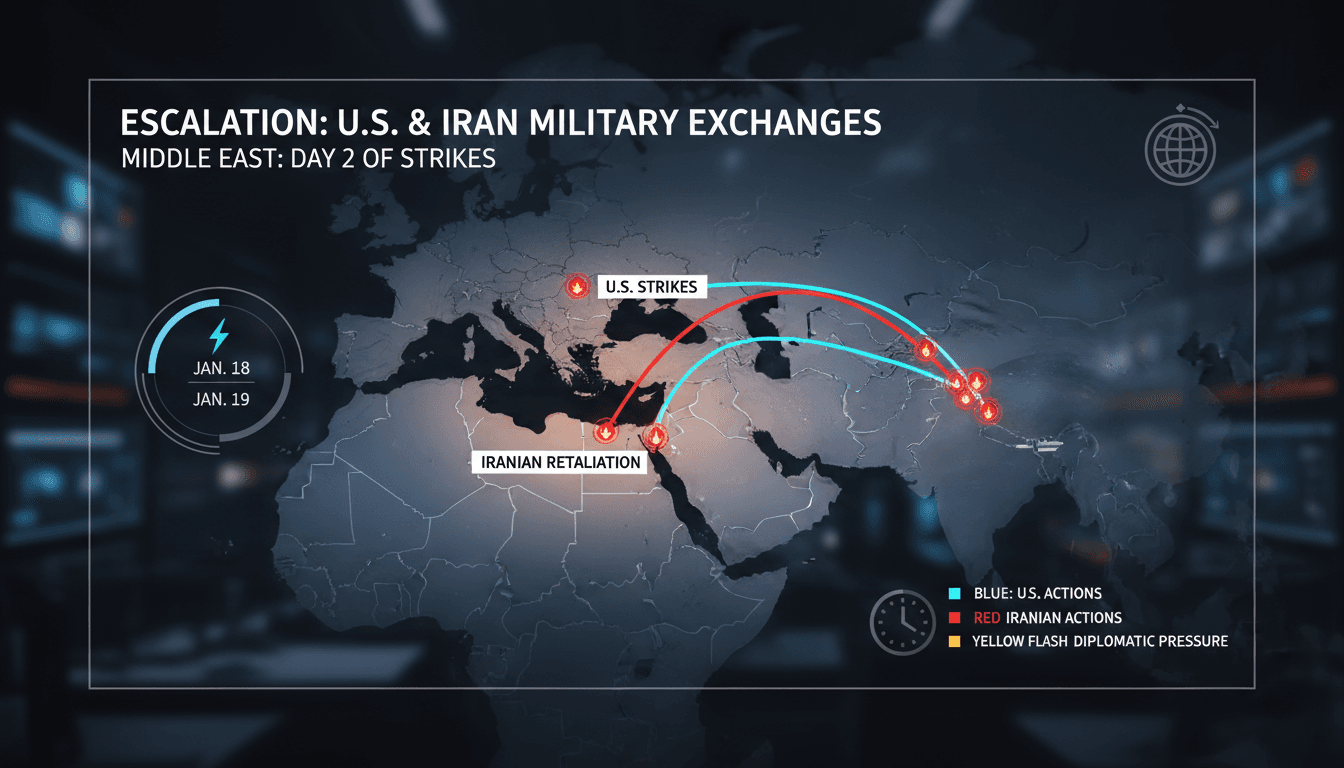
Here's what it means for you.
The recent military exchanges between the U.S. and Iran signal a critical juncture in Middle Eastern geopolitics, with potential ramifications for global markets and security policies. As both nations engage in escalating hostilities, stakeholders must prepare for the possibility of broader conflict, which could disrupt regional stability and impact energy markets. The situation underscores the urgent need for diplomatic engagement to prevent further escalation.
What happened
The U.S. and Iran have engaged in military strikes for the second consecutive day, marking a significant escalation in their ongoing conflict. Iran has retaliated against U.S. strikes by targeting American assets in multiple countries, including Kuwait, Jordan, and Bahrain. This exchange of military actions highlights the increasing tensions between the two nations, driven by a cycle of retaliation and diplomatic pressures.
The strikes began with U.S. actions against Iranian targets, prompting Iran's response aimed at U.S. interests in the region. Damage has been reported in the capital city of one of the targeted countries, illustrating the immediate impact of these military exchanges. The situation remains fluid, with both sides poised for further actions.
The Context
The recent military exchanges are part of a broader escalation of hostilities between the U.S. and Iran, rooted in longstanding tensions. Iran claims its strikes were a direct response to American actions, which have been compounded by ongoing U.S. diplomatic pressures on Tehran to negotiate a deal. The timing of these events is critical, as they occur against a backdrop of heightened scrutiny of U.S. military presence in the region.
The conflict has significant implications for regional stability, with various stakeholders closely monitoring developments. The potential for further military action raises concerns not only for the involved nations but also for neighboring countries and global markets. As the situation evolves, the need for effective diplomatic solutions becomes increasingly urgent.
Takeaway
The ongoing military exchanges suggest a potential for further escalation unless diplomatic solutions are actively pursued by both nations. Observers should monitor for any diplomatic responses from the U.S. and Iran, as these could significantly influence the trajectory of the conflict. Additionally, developments regarding U.S. military presence in the region will be crucial in determining the next steps.
The outlook remains uncertain, with both nations navigating this escalation. Continued military actions could lead to broader conflict, while successful diplomatic efforts may provide a pathway to de-escalation. Stakeholders must remain vigilant as the situation unfolds.
Insights and news on social issues, policy, and political movements across the United States.
"The Wall Street Journal is known for its deep political coverage, especially at the intersection of policy, regulation, and social dynamics."
— A47 Editor
The U.S. and Iran stumbled back into war, exchanging strikes for the second day in a row. Read more in today’s WSJ Politics Newsletter:
The United States and Iran have engaged in a series of military strikes over the past two days, marking a significant escalation in their ongoing conflict. This exchange of fire follows recent U.S. actions, including the downing of an Iranian drone a...
Editor-curated FT homepage stories spanning markets, business, world, and opinion.
"The Financial Times is a globally respected business publication with a centrist/center-left tone and strong markets focus."
— A47 Editor
US and Iran exchange fresh wave of strikes
The United States and Iran have engaged in a new wave of military strikes following the downing of an American Apache helicopter, which President Trump attributed to Iranian forces. This escalation marks a significant increase in hostilities and mili...
International coverage of politics, culture, and current affairs.
"BBC News is widely regarded as a reputable international news organization, known for its impartial tone and public service mandate."
— A47 Editor
US and Iran exchange strikes across Middle East for second day in a row
The United States and Iran have engaged in military strikes for the second consecutive day, with Iran targeting American assets in Kuwait, Jordan, and Bahrain in response to U.S. airstrikes. This escalation follows President Trump's warnings to Iran ...