
Iran Details Contingency Plans to Target Persian Gulf Undersea Internet Cables if US and Israeli Strikes Resume
Why it matters
Targeting subsea fiber corridors threatens the physical foundation carrying 99% of global internet traffic, converting regional maritime tension into direct operational friction for global financial hubs.
What happened (in 30 seconds)
- Contingency plans disclosed: Iranian security officials confirmed to Reuters detailed plans to target subsea telecommunications cables in the Persian Gulf if military strikes resume against Iran.
- Seven specific targets: The confirmation follows statements by IRGC political affairs deputy Yadollah Javani identifying seven major internet cables routed beneath the Strait of Hormuz.
- Active repair obstruction: The contingency strategy includes deliberate measures to prevent maintenance and repair vessels from accessing damaged subsea lines, aiming to prolong connectivity outages.
The context you actually need
- Asymmetric leverage shift: Facing conventional military constraints after exchanges through 2026, planners are prioritizing high-impact digital bottlenecks over traditional surface shipping targets.
- The 99% dependency: Subsea fiber routes carry 99% of global internet traffic according to International Telecommunication Union data, rendering satellite arrays structurally unable to handle standard regional volume.
- Concentrated physical chokepoints: The Strait of Hormuz functions not only as a global crude transit passage, but also as a tightly clustered physical routing point for regional data links.
What's really happening
The strategic mechanics of deterrence in the Persian Gulf have expanded from oil transit lines directly into subsea fiber optics. On October 21, 2026, IRGC political affairs deputy Yadollah Javani publicly flagged that seven primary telecommunications cables under the Strait of Hormuz represent prospective operational targets. Two days later, two senior security officials confirmed to Reuters that these measures exist as actionable operational contingencies if the United States and Israel initiate renewed strikes against Iranian infrastructure.
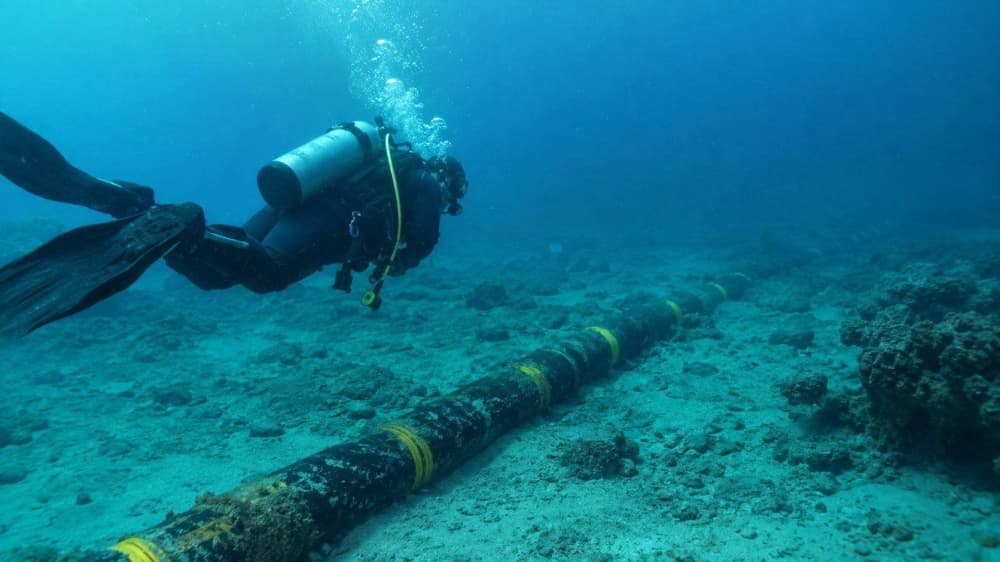
The structural vulnerability lies in the physics of global telecommunications. Over 99% of international data transits along seafloor cables rather than over-the-air satellite networks. The Persian Gulf relies on a concentrated subsea layout that routes traffic between Europe, the Middle East, and Asia through shallow maritime channels. In peace conditions, cable cuts caused by commercial anchors or seismic shifts trigger automatic route switching to redundant fibers alongside emergency deployment of specialized repair ships.
The reported contingency alters those economics by combining physical disruption with access denial. Damaging fiber lines is technologically straightforward in shallow channels; keeping those lines offline is where systemic leverage occurs. Senior officials explicitly outlined plans to obstruct cable-laying and maintenance vessels from operating in the Strait of Hormuz. Subsea repairs require specialized, slow-moving commercial vessels that cannot operate within contested zones without extensive naval protection.
For commercial enterprises operating out of Gulf data hubs, the issue is capacity substitution. Satellite constellations cannot scale to match multi-terabit subsea capacity for enterprise needs. Shifting regional internet connectivity to backup satellite routes leads to immediate latency spikes, severe bandwidth limits, and higher marginal costs. By moving deterrence planning to subsea data assets, planners have established an operational framework designed to convert external military pressure into rapid operational paralysis across regional financial centers.
Who feels it first (and how)
- Financial institutions in regional hubs: Transaction processing teams and settlement desks face operational downtime and dropped API calls as low-latency routes drop offline.
- Cloud architects and IT operators: Infrastructure leads encounter packet loss and service degradation when regional availability zones lose primary subsea connectivity.
- E-commerce and logistics platforms: Digital merchant channels and supply chain clearing systems face revenue interruptions as consumer-facing applications become unreachable.
- Maritime logistics operators: Shipping firms and insurers absorb higher risk premiums as repair operations and transit coordination are compromised across the Strait.
What to watch next
- Marine insurance pricing shifts: Watch for changes in war-risk insurance premiums for commercial repair ships operating in the Persian Gulf, which signals higher operational risk.
- Enterprise latency telemetry: Monitor regional routing and network path adjustments by major transit providers to see if traffic begins pre-emptively avoiding Strait of Hormuz channels.
- Dual-route telecom contracts: Track whether regional enterprises accelerate procurement of alternative overland terrestrial fiber networks linking the Gulf to Mediterranean hubs.
Iranian officials confirmed detailed plans to target Gulf subsea communication cables and disrupt repair efforts if military hostilities resume.
A coordinated cut of Strait of Hormuz fiber cables would exhaust local satellite capacity and trigger significant drops in enterprise internet bandwidth.
Whether international commercial repair fleets maintain legal clearance and physical capability to restore subsea fiber assets during active regional conflict.
Frequently Asked Questions
- Why it matters?
- Targeting subsea fiber corridors threatens the physical foundation carrying 99% of global internet traffic, converting regional maritime tension into direct operational friction for global financial hubs.
- What happened (in 30 seconds)?
- Contingency plans disclosed: Iranian security officials confirmed to Reuters detailed plans to target subsea telecommunications cables in the Persian Gulf if military strikes resume against Iran. Seven specific targets: The confirmation follows statements by IRGC political affairs deputy Yadollah Javani identifying seven major internet cables routed beneath the Strait of Hormuz. Active repair obstruction: The contingency strategy includes deliberate measures to prevent maintenance and repair ves
- What's really happening?
- The strategic mechanics of deterrence in the Persian Gulf have expanded from oil transit lines directly into subsea fiber optics. On October 21, 2026, IRGC political affairs deputy Yadollah Javani publicly flagged that seven primary telecommunications cables under the Strait of Hormuz represent prospective operational targets. Two days later, two senior security officials confirmed to Reuters that these measures exist as actionable operational contingencies if the United States and Israel initia
- Who feels it first (and how)?
- Financial institutions in regional hubs: Transaction processing teams and settlement desks face operational downtime and dropped API calls as low-latency routes drop offline. Cloud architects and IT operators: Infrastructure leads encounter packet loss and service degradation when regional availability zones lose primary subsea connectivity. E-commerce and logistics platforms: Digital merchant channels and supply chain clearing systems face revenue interruptions as consumer-facing applications b
- What to watch next?
- Marine insurance pricing shifts: Watch for changes in war-risk insurance premiums for commercial repair ships operating in the Persian Gulf, which signals higher operational risk. Enterprise latency telemetry: Monitor regional routing and network path adjustments by major transit providers to see if traffic begins pre-emptively avoiding Strait of Hormuz channels. Dual-route telecom contracts: Track whether regional enterprises accelerate procurement of alternative overland terrestrial fiber netw
Coverage of political affairs and regional developments from a Saudi perspective.
"Al Watan political coverage typically follows a mainstream Saudi framing of regional and national issues."
— A47 Editor
تبعات كارثية لخطط إيران لاستهداف كابلات الإنترنت البحرية
International reports indicate that Iran is developing detailed plans to target undersea internet and communication cables in the Gulf, raising significant security and economic concerns. This escalation threatens to sever the digital arteries connec...
Curated tech headlines including AI stories.
"Influential aggregator surfacing the day’s top tech/AI links."
— A47 Editor
Iranian security officials say the country has detailed plans to target undersea communications cables in the Gulf if the US and Israel attack Iran again (Reuters)
Iranian security officials have announced that the country has developed detailed plans to target undersea communications cables in the Gulf in response to potential attacks from the United States and Israel. This declaration underscores Iran's readi...
Regional coverage and analysis focused on politics, diplomacy, and business across the Middle East.
"Al-Monitor is known for analytical reporting on Middle East politics and policy developments."
— A47 Editor
Iran has detailed plans to hit Gulf undersea cables if war resumes, officials say
Iranian officials have revealed that Tehran has developed detailed plans to target undersea communications cables in the Gulf if the United States and Israel initiate further military action against Iran. This warning underscores the potential for si...