
Iranian Officials Announce Plans to Target Undersea Cables in Response to US or Israeli Attacks
Why it matters
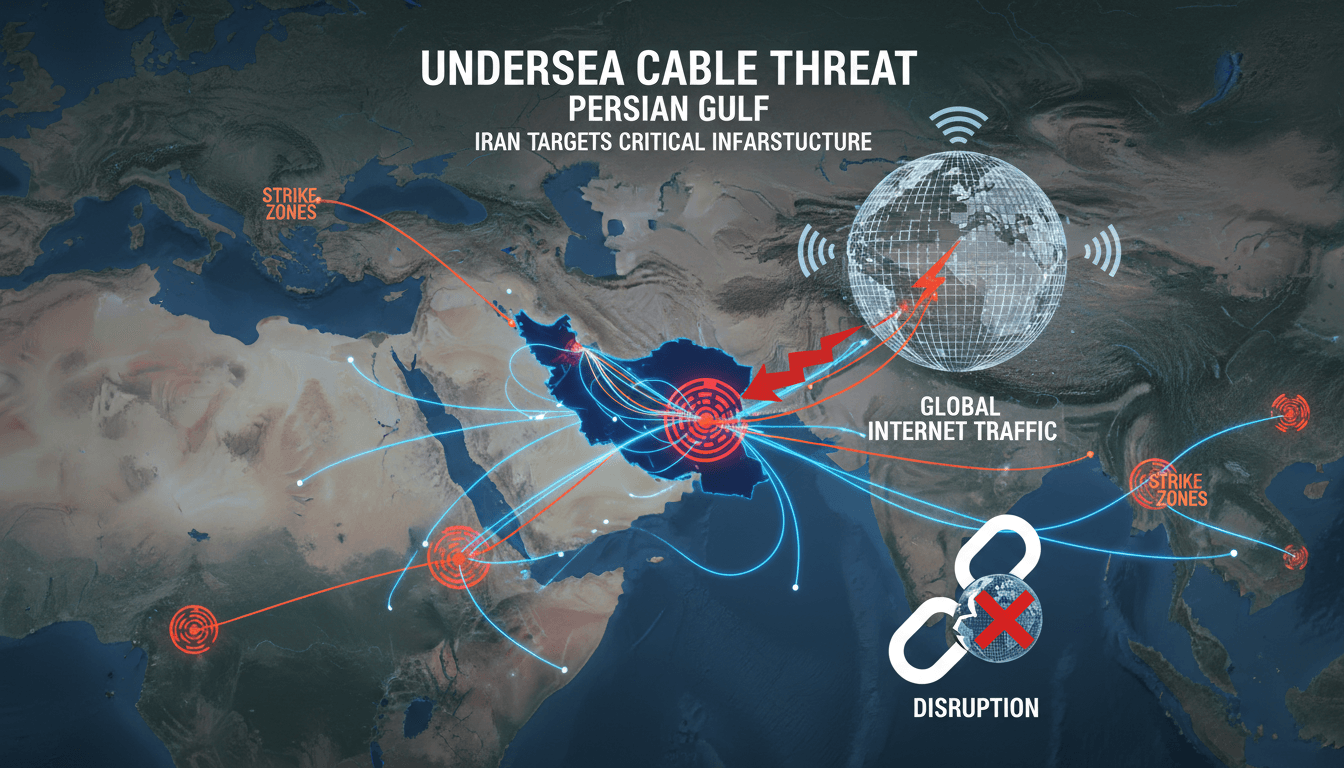
The potential targeting of undersea cables could disrupt critical communications and economic activities in the Gulf, impacting global markets.
What happened (in 30 seconds)
- Iranian officials disclosed plans to target undersea communications cables in the Persian Gulf if attacked by the U.S. or Israel.
- The threat emphasizes asymmetric retaliation, aiming to impede repairs and prolong disruptions to regional communications.
- Iran claims full access to the cables and has identified specific targets beneath the Strait of Hormuz.
The context you actually need
- Ongoing tensions between Iran, the U.S., and Israel have heightened the risk of military confrontations, with Iran signaling readiness for expanded responses.
- Undersea cables carry 99% of global internet traffic, making them critical infrastructure for international communications.
- Iran's Revolutionary Guards have previously warned about targeting digital and energy infrastructure, indicating a shift towards cyber and physical threats.
What's really happening
On October 23, 2026, Iranian security officials revealed detailed plans to target undersea communications cables in the Persian Gulf as a form of asymmetric retaliation against potential U.S. or Israeli military actions. This disclosure is significant, as it highlights Iran's strategic shift towards targeting critical infrastructure that underpins global communications. The officials framed their plans as a necessary response to the perceived collapse of diplomacy with Washington, suggesting that Iran feels cornered and is prepared to escalate its military posture.
The Iranian leadership has long viewed the Strait of Hormuz as a vital chokepoint for global oil and gas shipments, and now, with the added dimension of digital infrastructure, the stakes are even higher. The Revolutionary Guards have identified seven major undersea cables as potential targets, emphasizing that there would be "no more red lines" when it comes to these critical assets. This statement indicates a willingness to escalate tensions further, potentially leading to a cycle of retaliation that could destabilize the region.
The implications of such actions are profound. Disrupting undersea cables could lead to significant delays in internet connectivity and communications, particularly affecting financial operations in Gulf cities like Dubai. While analysts note that less than 1% of international bandwidth transits the area, local connectivity could still be severely impacted, affecting businesses and individuals alike. The Iranian threat serves as a deterrent signal to Gulf states and Washington, indicating that Iran is prepared to defend its interests aggressively.
Moreover, the broader context of this threat includes warnings from Iranian officials about targeting other digital assets, such as data centers and AI facilities. This suggests a comprehensive strategy to undermine not just military capabilities but also the technological infrastructure that supports economic stability in the region. As tensions continue to rise, the potential for miscalculation increases, making it crucial for stakeholders in the Gulf and beyond to monitor these developments closely.
Who feels it first (and how)
- Telecommunications companies: They may face operational disruptions and increased costs for repairs.
- Financial institutions: Banks and trading firms could experience delays in transactions and communications.
- Local businesses: Companies reliant on stable internet connectivity for operations may suffer losses.
- Consumers: Individuals could face slower internet speeds and service interruptions.
- Governments: Regional governments may need to enhance security measures to protect critical infrastructure.
What to watch next
- Diplomatic developments: Watch for any shifts in U.S.-Iran relations that could either escalate or de-escalate tensions.
- Military movements: Monitor the presence of U.S. and Israeli forces in the region, as increased military activity could provoke Iranian responses.
- Cybersecurity incidents: Be alert for any cyberattacks targeting Gulf infrastructure, which could indicate a shift in Iran's operational tactics.
Iranian officials have publicly stated their intent to target undersea cables.
Increased military tensions in the region could lead to actual attempts to disrupt communications.
The extent of the impact on global internet traffic and regional economies remains uncertain.
Frequently Asked Questions
- Why it matters?
- The potential targeting of undersea cables could disrupt critical communications and economic activities in the Gulf, impacting global markets.
- What happened (in 30 seconds)?
- Iranian officials disclosed plans to target undersea communications cables in the Persian Gulf if attacked by the U.S. or Israel. The threat emphasizes asymmetric retaliation, aiming to impede repairs and prolong disruptions to regional communications. Iran claims full access to the cables and has identified specific targets beneath the Strait of Hormuz.
- What's really happening?
- On October 23, 2026, Iranian security officials revealed detailed plans to target undersea communications cables in the Persian Gulf as a form of asymmetric retaliation against potential U.S. or Israeli military actions. This disclosure is significant, as it highlights Iran's strategic shift towards targeting critical infrastructure that underpins global communications. The officials framed their plans as a necessary response to the perceived collapse of diplomacy with Washington, suggesting tha
- Who feels it first (and how)?
- Telecommunications companies: They may face operational disruptions and increased costs for repairs. Financial institutions: Banks and trading firms could experience delays in transactions and communications. Local businesses: Companies reliant on stable internet connectivity for operations may suffer losses. Consumers: Individuals could face slower internet speeds and service interruptions. Governments: Regional governments may need to enhance security measures to protect critical infra
- What to watch next?
- Diplomatic developments: Watch for any shifts in U.S.-Iran relations that could either escalate or de-escalate tensions. Military movements: Monitor the presence of U.S. and Israeli forces in the region, as increased military activity could provoke Iranian responses. Cybersecurity incidents: Be alert for any cyberattacks targeting Gulf infrastructure, which could indicate a shift in Iran's operational tactics.
Curated tech headlines including AI stories.
"Influential aggregator surfacing the day’s top tech/AI links."
— A47 Editor
Iranian security officials say the country has detailed plans to target undersea communications cables in the Gulf if the US and Israel attack Iran again (Reuters)
Iranian security officials have announced that the country has developed detailed plans to target undersea communications cables in the Gulf in response to potential attacks from the United States and Israel. This declaration underscores Iran's readi...
Regional coverage and analysis focused on politics, diplomacy, and business across the Middle East.
"Al-Monitor is known for analytical reporting on Middle East politics and policy developments."
— A47 Editor
Iran has detailed plans to hit Gulf undersea cables if war resumes, officials say
Iranian officials have revealed that Tehran has developed detailed plans to target undersea communications cables in the Gulf if the United States and Israel initiate further military action against Iran. This warning underscores the potential for si...
Top international stories selected by The Guardian editors.
"The Guardian is known for its progressive editorial stance and in-depth analysis."
— A47 Editor
Iran threatens to strike oil and AI facilities across Gulf if US and Israel renew attacks
Iran's security chiefs have issued a stark warning, stating that there will be 'zero red lines' if the United States and Israel renew military attacks, threatening to target oil facilities, undersea cables, datacenters, and AI facilities across the G...