
North Korea Condemns US Missile Sales to South Korea as War Exports
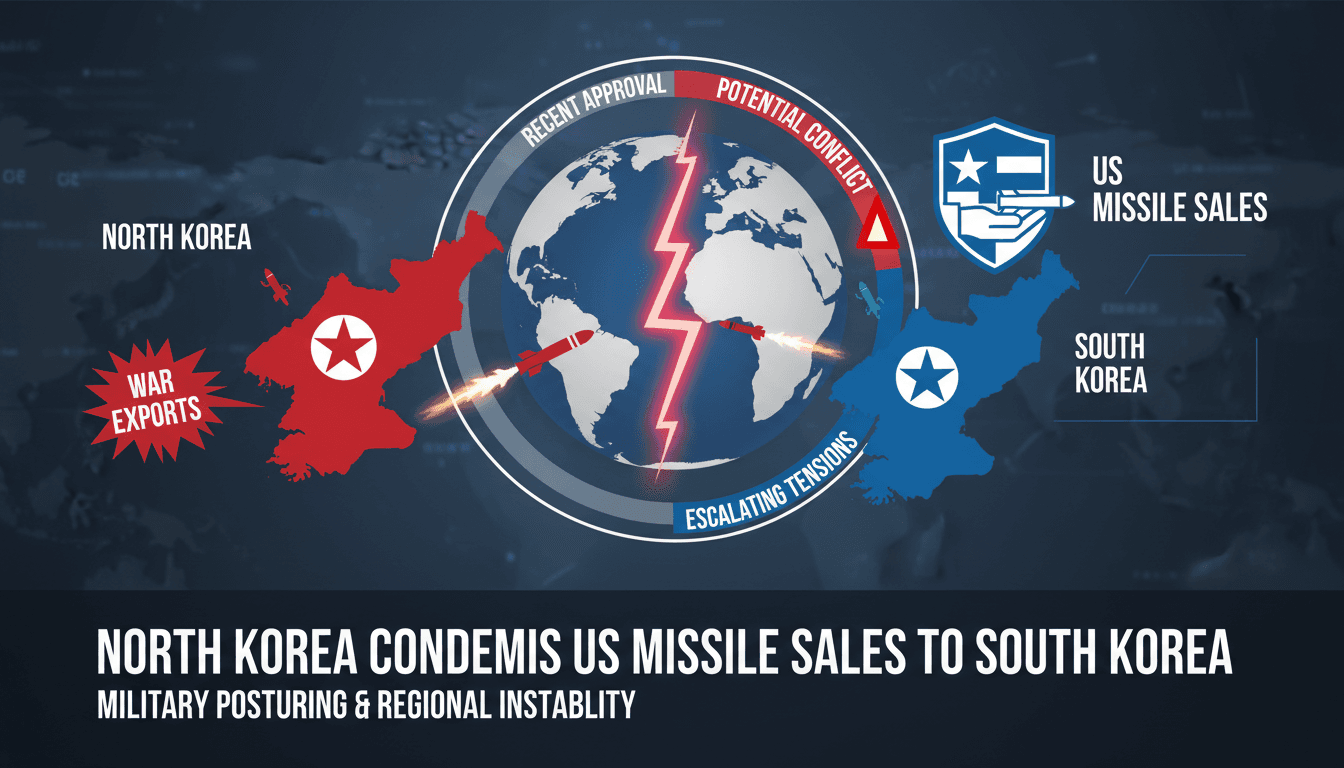
Here's what it means for you.
The recent approval of US missile sales to South Korea has significant implications for regional security dynamics. North Korea's condemnation highlights the fragile state of relations among the US, South Korea, and North Korea, raising concerns about potential military escalation. Stakeholders must closely monitor the evolving situation as it could impact diplomatic efforts and military strategies in the region.
What happened
North Korea has strongly condemned the United States' recent approval of missile sales to South Korea, labeling these actions as "war exports." This condemnation was articulated through a statement from North Korea's foreign ministry, which expressed deep concerns over regional security and the potential for military escalation. The missile sales include advanced air-to-air missiles and related equipment, further intensifying the existing tensions.
The North Korean government perceives these arms sales as a direct threat to its national security. This reaction underscores the ongoing military tensions between North Korea, the US, and South Korea, which have been exacerbated by recent developments. The situation reflects a critical juncture in the geopolitical landscape of the region.
The Context
The approval of missile sales by the US to South Korea occurred on June 12, 2026, and was followed by North Korea's public condemnation on June 13, 2026. This timeline illustrates the rapid escalation of rhetoric and military posturing in response to perceived threats. North Korea's use of the term "war exports" emphasizes its view of US arms sales as aggressive actions that undermine regional stability.
The backdrop of this event includes a history of military tensions in the Korean Peninsula, where North Korea has consistently viewed US support for South Korea as a direct challenge. The stakeholders involved—North Korea, the US, and South Korea—are navigating a complex web of military alliances and historical grievances. Understanding these dynamics is crucial for assessing the potential for future conflict.
Takeaway
As military tensions rise, the potential for conflict in the region increases, necessitating close monitoring of diplomatic efforts and military posturing from all involved parties. Observers should watch for potential military responses from North Korea, which may escalate the situation further. Additionally, developments in US-South Korea defense agreements will be critical in shaping the regional security landscape.
The situation remains fluid, and the international community must remain vigilant as North Korea continues to respond to perceived threats from US military support to South Korea. The implications of these actions could reverberate beyond the immediate region, affecting global security dynamics.
Regional and international reporting focused on Middle Eastern politics, diplomacy, and economics.
"Asharq Al-Awsat is a Saudi-owned international newspaper reflecting mainstream Gulf political perspectives."
— A47 Editor
North Korea Condemns US Missile Sale Approval to South Korea
North Korea has condemned the recent approval by the United States for the sale of missiles to South Korea, marking a significant escalation in tensions on the Korean Peninsula. This development comes amid ongoing concerns regarding military capabili...
RT is a Russian state-funded network covering global events from a Russian perspective.
"RT is widely criticized for promoting pro-Kremlin narratives and is considered by many to be a state propaganda outlet."
— A47 Editor
North Korea slams US ‘war exports’
North Korea has condemned the recent approval by the United States for missile sales to South Korea, labeling these actions as 'war exports' that exacerbate regional tensions. This statement reflects North Korea's ongoing concerns regarding military ...
Pan-Arab news coverage spanning politics, business, sports, and regional affairs.
"Asharq Al-Awsat reflects a broad Arab editorial perspective with strong attention to regional geopolitics."
— A47 Editor
كوريا الشمالية تندد بموافقة أميركا على بيع صواريخ إلى سيول
The North Korean Foreign Ministry condemned the United States' approval of selling advanced air-to-air missiles and related equipment to South Korea. This decision has raised tensions in the region, as it signifies a strengthening of military ties be...