
Algeria Authorizes Military Deployment to Niger to Secure Shared Energy Infrastructure
Why it matters
The formal authorization of Algerian military deployments to safeguard energy assets in Niger establishes an active state security umbrella over central Sahara trade corridors and long-delayed transnational pipelines.
What happened (in 30 seconds)
- Parliamentary clearance granted: On October 25, 2026, Algeria’s Council of the Nation approved the deployment with 148 votes (surpassing the 116-vote threshold), followed by an absolute majority approval in the People's National Assembly.
- Executive authorization issued: On October 26, 2026, the Algerian Presidency announced President Abdelmadjid Tebboune's formal decision to deploy units of the National People's Army across the border into Niger.
- Scope bounded by assets: Acting on a formal request from Nigerien authorities under constitutional articles 30 and 91, the mission is structured as a non-combat mandate explicitly targeted at securing shared economic and energy infrastructure.
The context you actually need
- A half-century precedent broken: This action represents Algeria’s first overseas military deployment since its logistical and combat support during the 1973 Arab-Israeli War, enabled by revised provisions introduced in the 2020 constitution.
- Bilateral ties rebuilt on shared transit: Despite initial diplomatic friction following the July 2023 military coup in Niamey, bilateral relations converged around physical asset security, culminating in an October 2026 defense agreement following defensive jet deployments in August 2026.
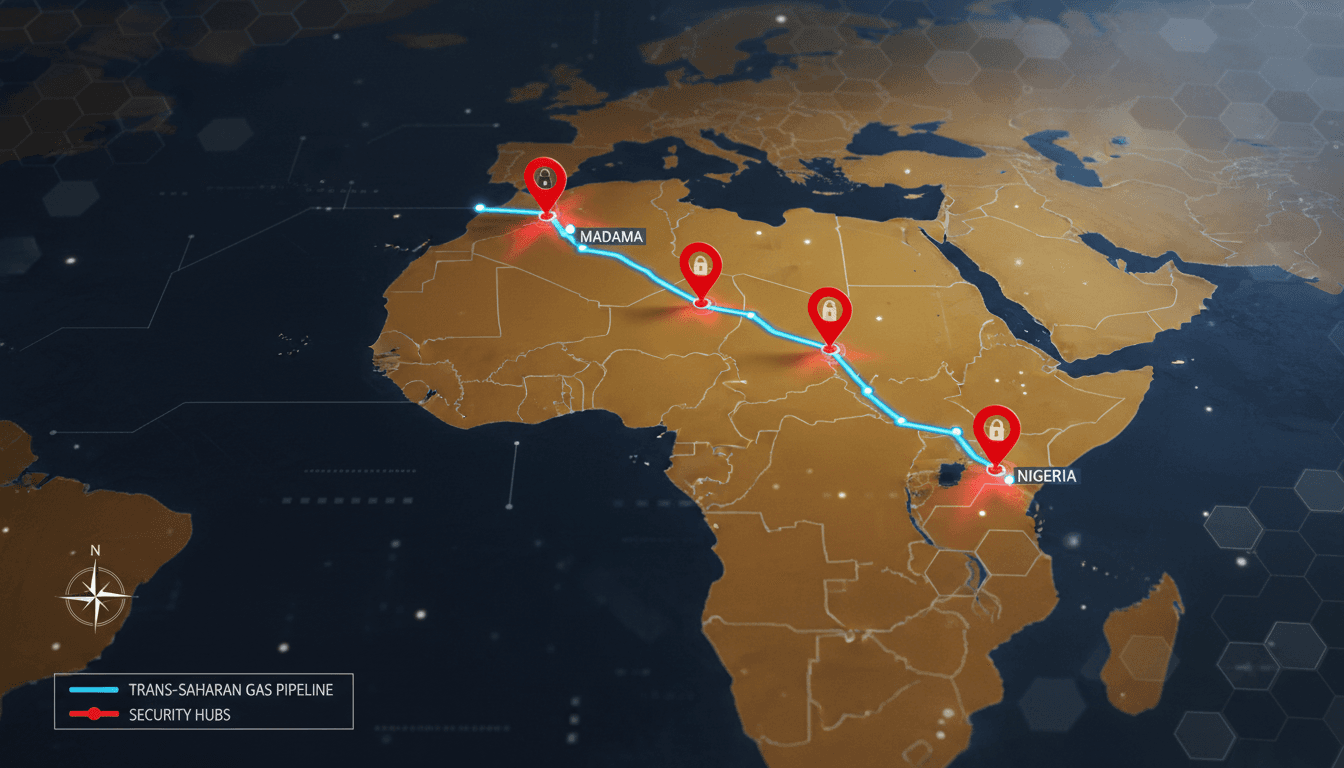
- The infrastructure at stake: The strategic core of the deployment centers on assets managed by Algerian state-owned Sonatrach and the pathway for the planned Trans-Saharan Gas Pipeline, connecting Nigeria, Niger, and Algeria.
What's really happening
The operational deployment of the Algerian National People's Army into Niger marks a fundamental strategic pivot from passive territorial defense to proactive external asset preservation. Since 1973, Algiers anchored its regional posture to strict non-interventionism. However, the legal architecture enacted in the 2020 constitutional reforms—specifically articles 30 and 91—established the framework for the executive branch to deploy force beyond national borders subject to a two-thirds legislative majority.
The immediate incentive governing this maneuver is infrastructure continuity. Algeria’s economic model relies heavily on its role as a premier hydrocarbon provider, with state-owned entity Sonatrach operating assets across the southern border. Niger hosts vital nodes for planned trans-continental conduits, most notably the Trans-Saharan Gas Pipeline project designed to link Nigerian supply to European export terminals via the Algerian coast. By securing sovereign approval from Niamey, Algeria positions its forces to insulate critical assets from regional volatility without unilaterally altering legal boundaries.
This security integration unfolded systematically throughout 2026. After deploying fighter aircraft to Niger in August to deter cross-border instability, Algiers finalized an institutional defense agreement with Niamey in early October. The subsequent emergency legislative sessions on October 25, 2026, confirmed domestic political alignment: the Council of the Nation cleared the constitutional quorum with 148 votes against the 116 required, accompanied by an absolute majority in the lower house.
By classifying the deployment strictly as a defensive, infrastructure-protection operation, Algiers mitigates the political risks of prolonged counter-insurgency warfare while deploying physical deterrence around fixed extraction and logistics sites. For Niger, welcoming external units provides immediate defensive capacity over assets it lacks the logistical capital to safeguard alone. The result is an institutionalized cross-border perimeter focused entirely on economic preservation rather than expeditionary warfare.
Who feels it first (and how)
- Midstream energy planners: Sonatrach project leaders and international energy consortia gain physical state defense over critical survey, drilling, and pipeline assets across the Niger-Algeria frontier.
- Cross-border logistics and infrastructure operators: Engineering and supply chain firms operating near northern Niger transit hubs—such as Madama near the Libyan border—face revised access protocols governed directly by Algerian military units.
- Global natural gas commodity desks: Desks tracking long-term piped gas supply routes from Africa observe a formal state-backed mechanism attempting to de-risk multi-billion-dollar transit corridors.
- Regional security analysts: Observers tracking Saharan stability must incorporate Algerian conventional forces directly into forward threat assessments, altering the balance of regional deterrence.
What to watch next
- Operational troop volumes and forward basing: The Algerian General Directorate and Presidency have yet to publish force numbers, unit configurations, or exact deployment dates to northern Niger bases such as Madama; these metrics will determine the practical operational footprint.
- Sonatrach capital allocation: Any subsequent announcements by Algerian state entities regarding renewed capital expenditures or construction contracts along the Trans-Saharan Gas Pipeline route will indicate commercial confidence in the new military cordon.
- Interstate security synchronization: Formal military communication protocols between Algerian field commanders and Nigerien security forces will indicate the degree of joint command integration versus isolated perimeter defense.
The Algerian Parliament legally approved the overseas deployment on October 25, 2026, and the Algerian Presidency formally announced the deployment authorization on October 26, 2026, citing constitutional articles 30 and 91 to defend shared economic and energy infrastructure at Niger’s explicit request.
The mission will focus tightly on fixed infrastructure perimeters, minimizing exposure to mobile tactical operations to maintain its non-combat, asset-protection classification.
The final troop count, the operational command hierarchy between Algiers and Niamey, the exact financial arrangements funding the mission, and the specific deployment date of ground units remain undisclosed.
Frequently Asked Questions
- Why it matters?
- The formal authorization of Algerian military deployments to safeguard energy assets in Niger establishes an active state security umbrella over central Sahara trade corridors and long-delayed transnational pipelines.
- What happened (in 30 seconds)?
- Parliamentary clearance granted: On October 25, 2026, Algeria’s Council of the Nation approved the deployment with 148 votes (surpassing the 116-vote threshold), followed by an absolute majority approval in the People's National Assembly. Executive authorization issued: On October 26, 2026, the Algerian Presidency announced President Abdelmadjid Tebboune's formal decision to deploy units of the National People's Army across the border into Niger. Scope bounded by assets: Acting on a formal reque
- What's really happening?
- The operational deployment of the Algerian National People's Army into Niger marks a fundamental strategic pivot from passive territorial defense to proactive external asset preservation. Since 1973, Algiers anchored its regional posture to strict non-interventionism. However, the legal architecture enacted in the 2020 constitutional reforms—specifically articles 30 and 91—established the framework for the executive branch to deploy force beyond national borders subject to a two-thirds legislati
- Who feels it first (and how)?
- Midstream energy planners: Sonatrach project leaders and international energy consortia gain physical state defense over critical survey, drilling, and pipeline assets across the Niger-Algeria frontier. Cross-border logistics and infrastructure operators: Engineering and supply chain firms operating near northern Niger transit hubs—such as Madama near the Libyan border—face revised access protocols governed directly by Algerian military units. Global natural gas commodity desks: Desks tracking l
- What to watch next?
- Operational troop volumes and forward basing: The Algerian General Directorate and Presidency have yet to publish force numbers, unit configurations, or exact deployment dates to northern Niger bases such as Madama; these metrics will determine the practical operational footprint. Sonatrach capital allocation: Any subsequent announcements by Algerian state entities regarding renewed capital expenditures or construction contracts along the Trans-Saharan Gas Pipeline route will indicate commercial
Arabic-language coverage of political affairs and current events.
"Okaz political coverage typically follows mainstream Saudi framing on national and regional affairs."
— A47 Editor
الرئاسة الجزائرية تعلن إرسال قوات عسكرية إلى النيجر
The Algerian Presidency announced that President Abdelmadjid Tebboune has decided to send units of the Algerian army to Niger to protect shared energy and economic interests, in response to a request from the Nigerien authorities. The decision follow...
Global news coverage with extensive reporting on Middle Eastern conflicts and geopolitics.
"Al Jazeera is a Qatar-based broadcaster known for wide regional coverage and alternative perspectives."
— A47 Editor
Algeria’s president orders troop deployment to neighbouring Niger
Algeria's president ordered the deployment of troops to neighbouring Niger at Niamey's request, to help secure shared energy interests. The move follows approval by Algeria's parliament and would mark Algeria's first military deployment abroad since ...
Comprehensive coverage of Middle Eastern and global issues.
"Al Jazeera is a prominent voice from the Global South, especially the Middle East, with an emphasis on underreported stories."
— A47 Editor
Algeria’s president orders troop deployment to neighbouring Niger
Algeria's president ordered the deployment of troops to neighbouring Niger at Niamey's request, to help secure shared energy interests. The move follows approval by Algeria's parliament and would mark Algeria's first military deployment abroad since ...
International coverage of politics, culture, and current affairs.
"BBC News is widely regarded as a reputable international news organization, known for its impartial tone and public service mandate."
— A47 Editor
Algeria to send troops to Niger in first foreign deployment since 1973
Algeria is set to send troops to Niger in its first foreign military deployment since 1973, according to the base report from BBC News. The troops are expected to protect energy facilities in northern Niger, near the Libyan border, following approval...
24/7 international news from a French perspective in multiple languages.
"France 24 is viewed as a globally focused outlet with balanced coverage and a European perspective."
— A47 Editor
Algeria to send troops to Niger in first foreign deployment in over 50 years
Algeria's parliament approved a resolution sending troops to Niger, marking the first deployment of Algerian soldiers abroad since the 1973 Arab-Israeli war. The move comes as Niger faces persistent attacks by armed groups, including near its border ...
English-language reporting on Saudi politics, policy, and society.
"Saudi Gazette reflects mainstream Saudi institutional perspectives."
— A47 Editor
Algeria's upper house approves military deployment to Niger
Algeria's Council of the Nation, the upper house of parliament, voted unanimously on Sunday to approve a presidential decision to deploy military forces to neighboring Niger to protect oil projects operated by state-owned energy company Sonatrach, ac...