
Saudi, Turkish and Pakistani Security Officials Hold Talks with Iran in Tehran on Regional De-escalation
Why it matters
The formal convergence of the Mecca Defence Alliance and Tehran establishes an endogenous diplomatic buffer capable of mitigating cross-border infrastructure disruptions and stabilizing regional trade corridors without relying on external security guarantees.
What happened (in 30 seconds)
* High-level quadrilateral consultations opened in Tehran: On October 26, 2026, Saudi Defence Minister Prince Khalid bin Salman, Pakistani Army Chief Field Marshal Asim Munir, and Turkish intelligence chief Ibrahim Kalin convened with Iranian Supreme National Security Council Secretary Mohsen Rezaei. * The agenda targeted systemic de-escalation: Iranian Deputy Secretary Ali Bagheri Kani outlined discussions centered on collective regional security architecture, Israeli policies, Lebanon developments, and mitigating broader conflict dynamics. * Mediation materialized from prior bilateral diplomacy: The meeting followed preliminary framework proposals by Pakistani Army Chief Munir during an earlier Tehran visit, facilitating the first joint contact between the Mecca Pact nations and Iran since heightened tensions earlier in 2026.
The context you actually need
* The Mecca Defence Alliance represents structured coordination: Formed in August 2026 by Saudi Arabia, Turkey, and Pakistan, the grouping was created to synchronize mutual defense posture across Southwest Asia and the Middle East. * Iran champions an "endogenous security" model: Tehran’s diplomatic framework insists on regional self-reliance, aiming to coordinate defense matters exclusively among local capitals rather than external powers. * Escalations since early 2026 forced diplomatic engagement: Cross-border Houthi missile strikes on Saudi territory and US-Iran confrontations since February 2026 highlighted systemic operating risks for infrastructure across the Gulf.
What's really happening
The diplomatic gathering in Tehran marks a calculated shift from unilateral posturing to structural de-risking among four major regional states. Saudi Arabia, Turkey, Pakistan, and Iran collectively hold the operational levers governing air routes, maritime shipping choke points, and energy export infrastructure across Southwest Asia. While the Mecca Defence Alliance formed in August 2026 established an integrated mutual defense compact between Riyadh, Ankara, and Islamabad, the Tehran engagement demonstrates that the bloc views security as unattainable without an explicit channel to Iran.
The incentives guiding this engagement are pragmatic rather than ideological. For Saudi Arabia, physical continuity and long-term economic transformation depend on insulating critical infrastructure from cross-border projectile strikes. Repeated Houthi missile incursions highlighted that formal military alliances cannot substitute for bilateral and multilateral non-aggression understandings. For Turkey and Pakistan, acting as co-conveners reinforces their strategic weight across the Arabian Sea and Levant while containing cross-border spillover effects that threaten their trade connectivity. Pakistan’s military leadership served as the primary bridge, turning a preliminary diplomatic overture in Tehran into a quadrilateral forum.
For Tehran, convening three of the region’s largest conventional military actors within its capital operationalizes its long-standing "endogenous security" policy. By bringing the Mecca Pact members to the table without external Western stakeholders, Tehran establishes a platform to negotiate stability on its own perimeter while addressing active flashpoints in Lebanon and broader confrontation zones.
The structural implication for global commerce is direct. Commercial assets operating in the Gulf navigate operational risk pricing dictated by geographic proximity to regional conflicts. When sovereign defense and intelligence chiefs meet directly, backchannel deconfliction mechanisms become actionable. This structural coordination limits unintended escalations, providing baseline stability for global logistics, shipping insurers, and energy markets navigating geopolitical volatility.
Who feels it first (and how)
* Gulf aviation and logistics operators: Flight paths and regional maritime transits face fewer immediate rerouting requirements as cross-border military escalation risks ease. * Energy trading desks: Benchmark crude prices absorb reduced geopolitical risk premiums given direct contact between major Gulf oil producers and Tehran. * Supply chain risk managers in Dubai: Corporate planners encounter improved baseline stability for regional headquarters, project financing, and cargo transit through the Strait of Hormuz and Red Sea corridors. * Defense and intelligence analysts: Regional security strategists must re-evaluate balance-of-power models as the Mecca Pact engages directly with Iran’s endogenous security initiatives.
What to watch next
* Red Sea and Yemeni cross-border incidents: Any reduction or continuation of Houthi missile activity directed toward Saudi targets will signal whether Tehran consultations yield immediate operational deconfliction. * Formalization of working groups: Joint communiqués establishing institutional security committees between the Mecca Pact states and Iran will indicate whether this meeting was a tactical conversation or a structural shift. * Energy market reactions: Monitoring crude futures and shipping insurance margins will reveal whether international markets price in a sustained reduction in regional supply-chain disruption.
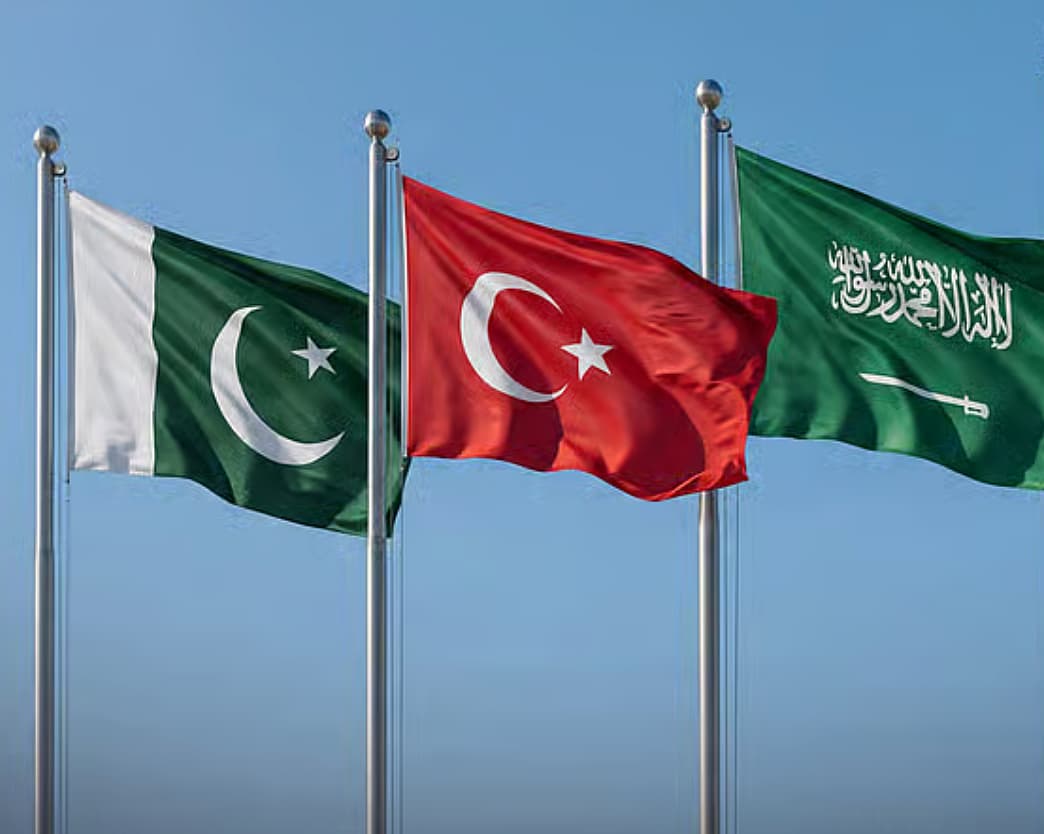
Officials from Saudi Arabia, Turkey, Pakistan, and Iran convened in Tehran on October 26, 2026, for quadrilateral regional security consultations following mediation facilitated by Pakistan.
The dialogue will produce ongoing bilateral and quadrilateral communication lines to manage localized security friction points and prevent inadvertent escalation.
Whether Iran-aligned non-state actors will align operational actions with the de-escalation frameworks discussed by state defense and intelligence heads.
Frequently Asked Questions
- Why it matters?
- The formal convergence of the Mecca Defence Alliance and Tehran establishes an endogenous diplomatic buffer capable of mitigating cross-border infrastructure disruptions and stabilizing regional trade corridors without relying on external security guarantees.
- What happened (in 30 seconds)?
- High-level quadrilateral consultations opened in Tehran: On October 26, 2026, Saudi Defence Minister Prince Khalid bin Salman, Pakistani Army Chief Field Marshal Asim Munir, and Turkish intelligence chief Ibrahim Kalin convened with Iranian Supreme National Security Council Secretary Mohsen Rezaei. The agenda targeted systemic de-escalation: Iranian Deputy Secretary Ali Bagheri Kani outlined discussions centered on collective regional security architecture, Israeli policies, Lebanon developments
- What's really happening?
- The diplomatic gathering in Tehran marks a calculated shift from unilateral posturing to structural de-risking among four major regional states. Saudi Arabia, Turkey, Pakistan, and Iran collectively hold the operational levers governing air routes, maritime shipping choke points, and energy export infrastructure across Southwest Asia. While the Mecca Defence Alliance formed in August 2026 established an integrated mutual defense compact between Riyadh, Ankara, and Islamabad, the Tehran engagemen
- Who feels it first (and how)?
- Gulf aviation and logistics operators: Flight paths and regional maritime transits face fewer immediate rerouting requirements as cross-border military escalation risks ease. Energy trading desks: Benchmark crude prices absorb reduced geopolitical risk premiums given direct contact between major Gulf oil producers and Tehran. Supply chain risk managers in Dubai: Corporate planners encounter improved baseline stability for regional headquarters, project financing, and cargo transit through the St
- What to watch next?
- Red Sea and Yemeni cross-border incidents: Any reduction or continuation of Houthi missile activity directed toward Saudi targets will signal whether Tehran consultations yield immediate operational deconfliction. Formalization of working groups: Joint communiqués establishing institutional security committees between the Mecca Pact states and Iran will indicate whether this meeting was a tactical conversation or a structural shift. Energy market reactions: Monitoring crude futures and shipping
Arabic-language coverage of international news and geopolitics.
"RT Arabic is a Russian state-funded outlet often criticized for promoting Kremlin-aligned narratives."
— A47 Editor
طهران: زيارة ممثلي دول تحالف مكة خطوة للتعاون بشأن آليات الأمن الإقليمي
Iran's Foreign Ministry said Tehran's hosting of a high-level security meeting with Saudi Arabia, Pakistan and Turkey, representing the Mecca coalition, is a practical step toward reflecting on and cooperating over regional security mechanisms based ...
Global news coverage with extensive reporting on Middle Eastern conflicts and geopolitics.
"Al Jazeera is a Qatar-based broadcaster known for wide regional coverage and alternative perspectives."
— A47 Editor
Officials from Mecca pact states to hold talks in Iran amid regional tensions
Officials from the Mecca pact states are set to hold talks in Iran, the first high-level contact between Tehran and the bloc since Houthi rebels escalated attacks on Saudi Arabia, according to Al Jazeera's report on the base story.
Comprehensive coverage of Middle Eastern and global issues.
"Al Jazeera is a prominent voice from the Global South, especially the Middle East, with an emphasis on underreported stories."
— A47 Editor
Officials from Mecca pact states to hold talks in Iran amid regional tensions
Officials from the Mecca pact states are set to hold talks in Iran, the first high-level contact between Tehran and the bloc since Houthi rebels escalated attacks on Saudi Arabia, according to Al Jazeera's report on the base story.
Macro commentary, policy analysis, growth/inflation themes, and global outlooks.
"Contextual macro coverage that complements day-to-day market headlines."
— A47 Editor
Mecca Pact nations to hold high-level talks with Iran in Tehran, Reuters reports
Mecca Pact nations are set to hold high-level talks with Iran in Tehran, according to a Reuters report carried by Investing.com. The base coverage frames the meeting as a diplomatic engagement, with no details on agenda or outcomes provided in the so...
UAE-based English-language newspaper covering regional politics, economics, and global affairs.
"The National reflects Emirati policy perspectives while maintaining international editorial standards."
— A47 Editor
Middle East latest: Saudi Arabia leads Makkah pact countries to Tehran for crucial war talks
Saudi Arabia is leading the Makkah defence pact countries, including Turkey and Pakistan, to Tehran for talks described as crucial amid the wider war-related tensions, following Houthi missile and drone attacks that have targeted Saudi infrastructure...
Regional coverage and analysis focused on politics, diplomacy, and business across the Middle East.
"Al-Monitor is known for analytical reporting on Middle East politics and policy developments."
— A47 Editor
Officials from Mecca pact countries to meet Iranian officials in Tehran on Monday
Officials from Saudi Arabia, Turkey and Pakistan, members of the Mecca defence pact, are set to meet Iranian leaders in Tehran on Monday, in their first high-level contact since the kingdom became a pressure point in the wider Iran conflict. Saudi Ar...
Breaking news and analysis from the UAE and Gulf region.
"Khaleej Times is a long-running UAE publication with broad regional coverage."
— A47 Editor
Saudi official says Tehran security talks with officials from Turkey, Pakistan, Iran today
Saudi officials said security talks in Tehran involving representatives from Turkey, Pakistan and Iran were scheduled for the day, according to the base report by Khaleej Times, which frames the meeting as part of ongoing regional diplomacy.