
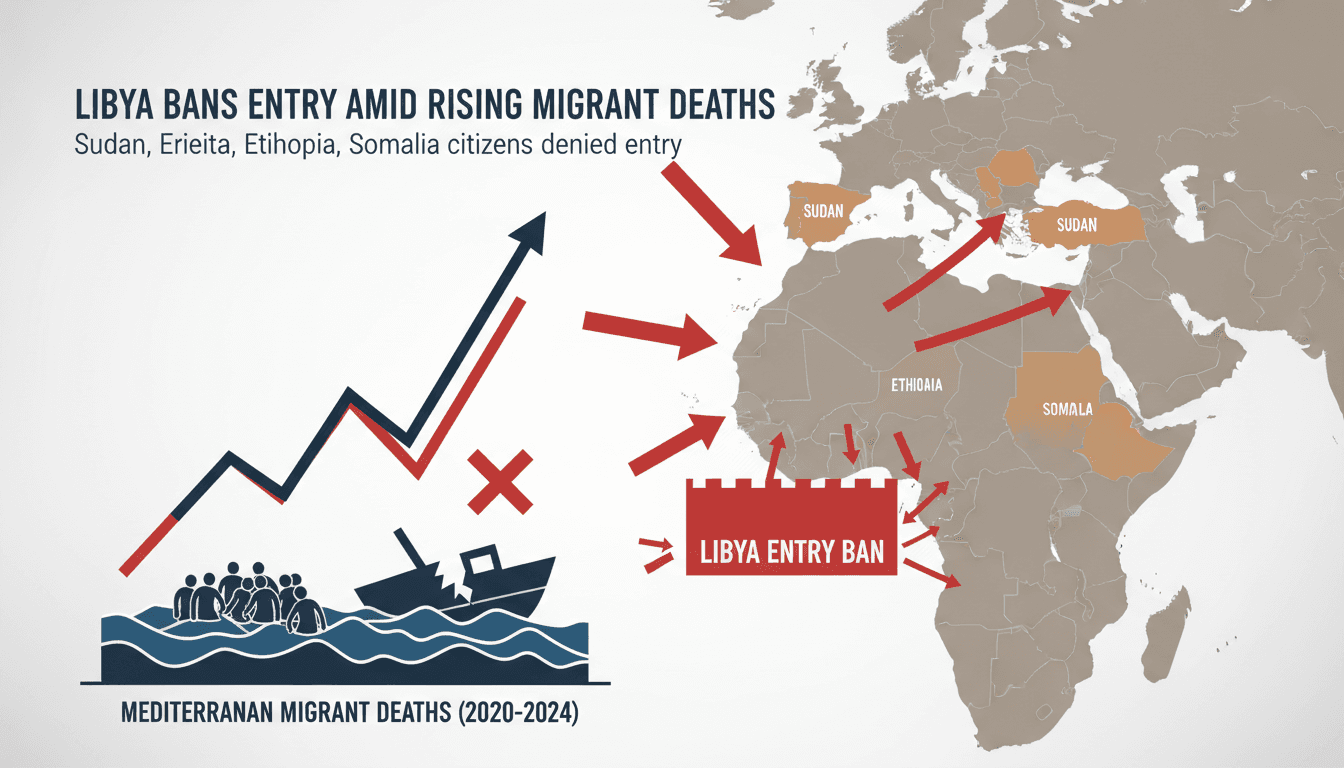
Libya bans entry for citizens from four African countries amid rising migrant deaths
Here's what it means for you.
Libya's recent entry ban for nationals from Sudan, Eritrea, Ethiopia, and Somalia signals a significant shift in its approach to managing migration. This decision comes in response to a troubling increase in migrant deaths at sea, raising urgent humanitarian concerns. Stakeholders, including international organizations and neighboring countries, will need to closely monitor the implications of this policy on migration patterns and regional stability. The ban may also prompt discussions around Libya's humanitarian policies and its role as a transit hub for migrants seeking to reach Europe. As the situation evolves, the international community's response will be critical in addressing the broader challenges of migration in the Mediterranean.
What happened
Libyan authorities have announced a ban on the entry of nationals from Sudan, Eritrea, Ethiopia, and Somalia. This decision was made in light of a rising number of migrant deaths at sea, with 26 bodies recently recovered along the Libyan coast. The ban aims to control the influx of migrants using Libya as a transit point to Europe.
Exemptions to the ban include diplomats and professionals in healthcare and education, indicating a nuanced approach to the enforcement of this policy. The announcement was made by Libyan Prime Minister Osama Hamad, who emphasized the need for measures to address the ongoing humanitarian crisis.
The Context
The entry ban is part of Libya's broader efforts to manage the increasing flow of migrants attempting to reach Europe. Recent incidents of bodies washing ashore have highlighted the dangers faced by those making the perilous journey across the Mediterranean. The involvement of the Coast Guard and Red Crescent in recovering and handling the bodies underscores the humanitarian challenges at play.
As Libya grapples with its role as a transit hub, the implications of such policies are becoming increasingly evident. The timing of this decision coincides with a critical moment in the ongoing migration crisis, raising questions about the effectiveness of Libya's approach to humanitarian issues.
Takeaway
The situation in Libya reflects broader challenges in managing migration and humanitarian crises in the region. Observers should monitor the impact of the entry ban on migration patterns in the Mediterranean, as well as potential international responses to Libya's migration policies. The effectiveness of this ban and its humanitarian consequences will be crucial to watch in the coming months.
As the dynamics of migration continue to evolve, the international community's engagement will play a vital role in addressing the underlying issues contributing to this crisis.
Pan-Arab news coverage spanning politics, business, sports, and regional affairs.
"Asharq Al-Awsat reflects a broad Arab editorial perspective with strong attention to regional geopolitics."
— A47 Editor
ليبيا: بنغازي لاحتواء «مخاطر الهجرة» بحظر دخول مواطني 4 دول أفريقية
The authorities in eastern Libya have reignited the debate over irregular migration by implementing a ban on the entry of citizens from four African countries through land, air, and sea routes. This decision reflects ongoing concerns regarding the ma...
English-language reporting on Saudi politics, policy, and society.
"Saudi Gazette reflects mainstream Saudi institutional perspectives."
— A47 Editor
Libya blocks entry for four nationalities as more bodies of migrants wash ashore
Authorities in eastern Libya have imposed a ban on the entry of citizens from Sudan, Eritrea, Ethiopia, and Somalia, aiming to reduce the influx of migrants using Libya's Mediterranean coast as a route to Europe. This decision follows the recovery of...
Arabic-language coverage of international news and geopolitics.
"RT Arabic is a Russian state-funded outlet often criticized for promoting Kremlin-aligned narratives."
— A47 Editor
حماد يحظر دخول مواطني 4 دول إفريقية إلى ليبيا ويأمر بترحيل المخالفين للإقامة
The Prime Minister of the Libyan government appointed by the parliament, Osama Hamad, has issued a decision prohibiting the entry of citizens from four African countries into Libya. This measure also includes orders for the deportation of individuals...