
US Increases Military Presence in Middle East Following Iranian Attack
Here's what it means for you.
The recent escalation in U.S. military presence in the Middle East signals a significant shift in the geopolitical landscape, particularly concerning U.S.-Iran relations. As tensions rise, businesses and policymakers must prepare for potential disruptions in the region, which could impact global markets and energy supplies. The deaths of U.S. soldiers underscore the human cost of this conflict, prompting a reevaluation of diplomatic strategies. Increased military activity may also lead to heightened volatility in the region, affecting not only U.S. interests but also those of allies and adversaries alike. Stakeholders should closely monitor developments as the situation evolves.
What happened
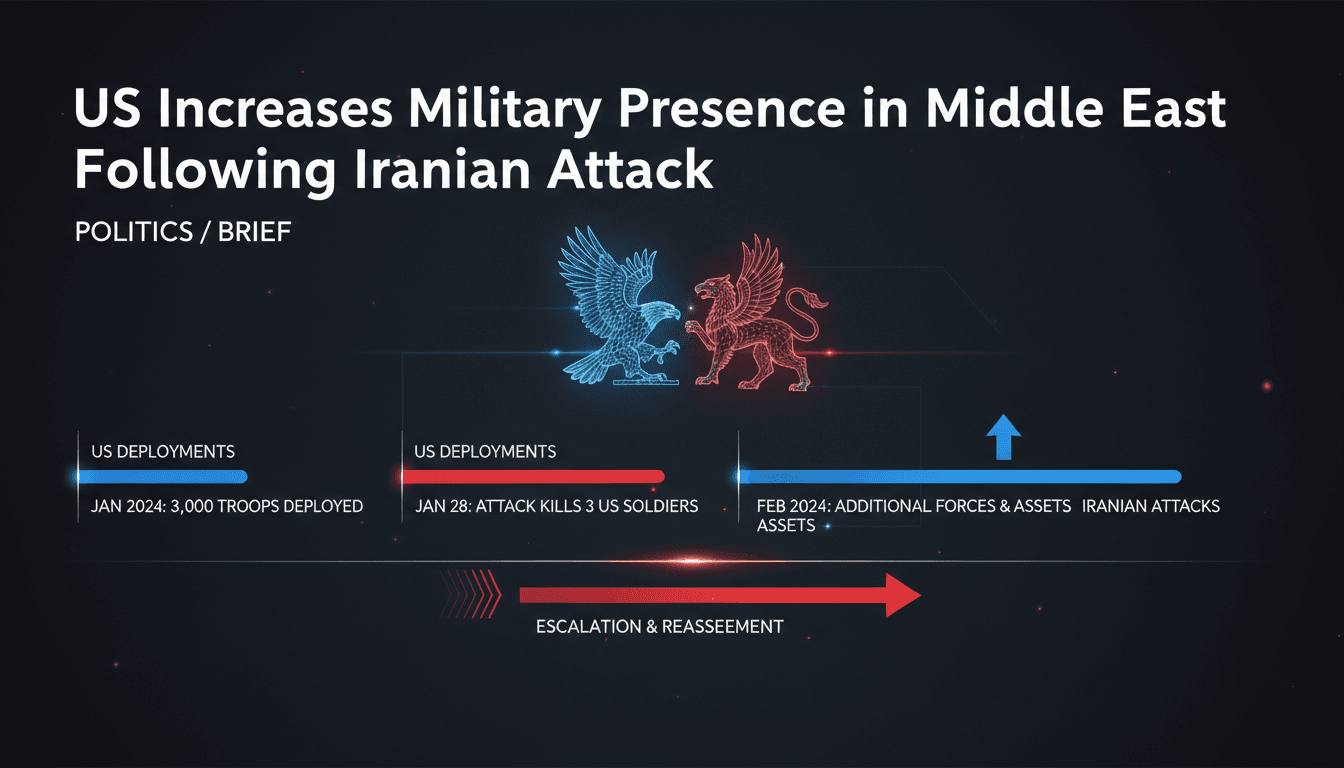
The United States has significantly increased its military presence in the Middle East following an Iranian attack that resulted in the deaths of three U.S. soldiers. This surge includes the deployment of additional troops, refueling aircraft, and strategic bombers to the region. The escalation comes amid rising tensions and military exchanges between the U.S. and Iran, raising questions about the effectiveness of ongoing diplomatic efforts.
On July 22, 2026, the U.S. and Iran exchanged fire across the region, marking a critical point in the ongoing conflict. The U.S. response indicates a shift towards a more aggressive military posture in light of recent events.
The Context
The recent Iranian attack that killed three U.S. soldiers occurred at a base in Jordan, highlighting the risks faced by American forces in the region. This incident has prompted the U.S. to reassess its military strategy and capabilities, leading to the deployment of additional resources. Diplomatic efforts aimed at de-escalating the conflict are now under scrutiny by officials in both nations, raising concerns about the potential for further military confrontations.
The backdrop of this escalation includes a history of military exchanges between the U.S. and Iran, which have intensified in recent months. As both nations navigate this complex landscape, the implications for regional stability and international relations are profound.
Takeaway
The situation in the Middle East is likely to intensify as military actions continue and diplomatic solutions remain elusive. Observers should watch for potential further military deployments by the U.S. and any responses from Iran regarding the increased military presence. The ongoing exchanges of fire suggest that both nations are prepared for a prolonged conflict, which could lead to a reassessment of strategies in the coming weeks.
As military tensions rise, the potential for a broader conflict increases, making it essential for stakeholders to stay informed about developments in the region.
Pan-Arab news coverage spanning politics, business, sports, and regional affairs.
"Asharq Al-Awsat reflects a broad Arab editorial perspective with strong attention to regional geopolitics."
— A47 Editor
حشد أميركي يمنح ترمب خيارات أوسع ضد إيران
The United States has enhanced its military capabilities in the Middle East by increasing the number of refueling aircraft and redeploying B-1 strategic bombers. This move is seen as a strategic response to ongoing tensions with Iran.
Global political, business, and cultural coverage from WSJ international desks.
"The Wall Street Journal offers extensive international reporting with a reputation for financial insight and a center-right editorial stance."
— A47 Editor
U.S. Surges Forces Toward Middle East, Giving Trump Options to Expand Iran War
The United States has increased its military presence in the Middle East following the deaths of three U.S. soldiers in an Iranian missile attack at a base in Jordan. This surge includes additional troops, medics, and weaponry, indicating a significa...
International coverage of politics, security, and social issues.
"Global News is a mainstream Canadian outlet with a centrist editorial stance, focusing on factual reporting."
— A47 Editor
U.S. and Iran renew strikes as conflict expands in Middle East
The United States and Iran have intensified their military confrontations, exchanging fire across the Middle East, with U.S. airstrikes targeting Iranian positions following recent Iranian attacks that resulted in U.S. troop casualties. This escalati...