
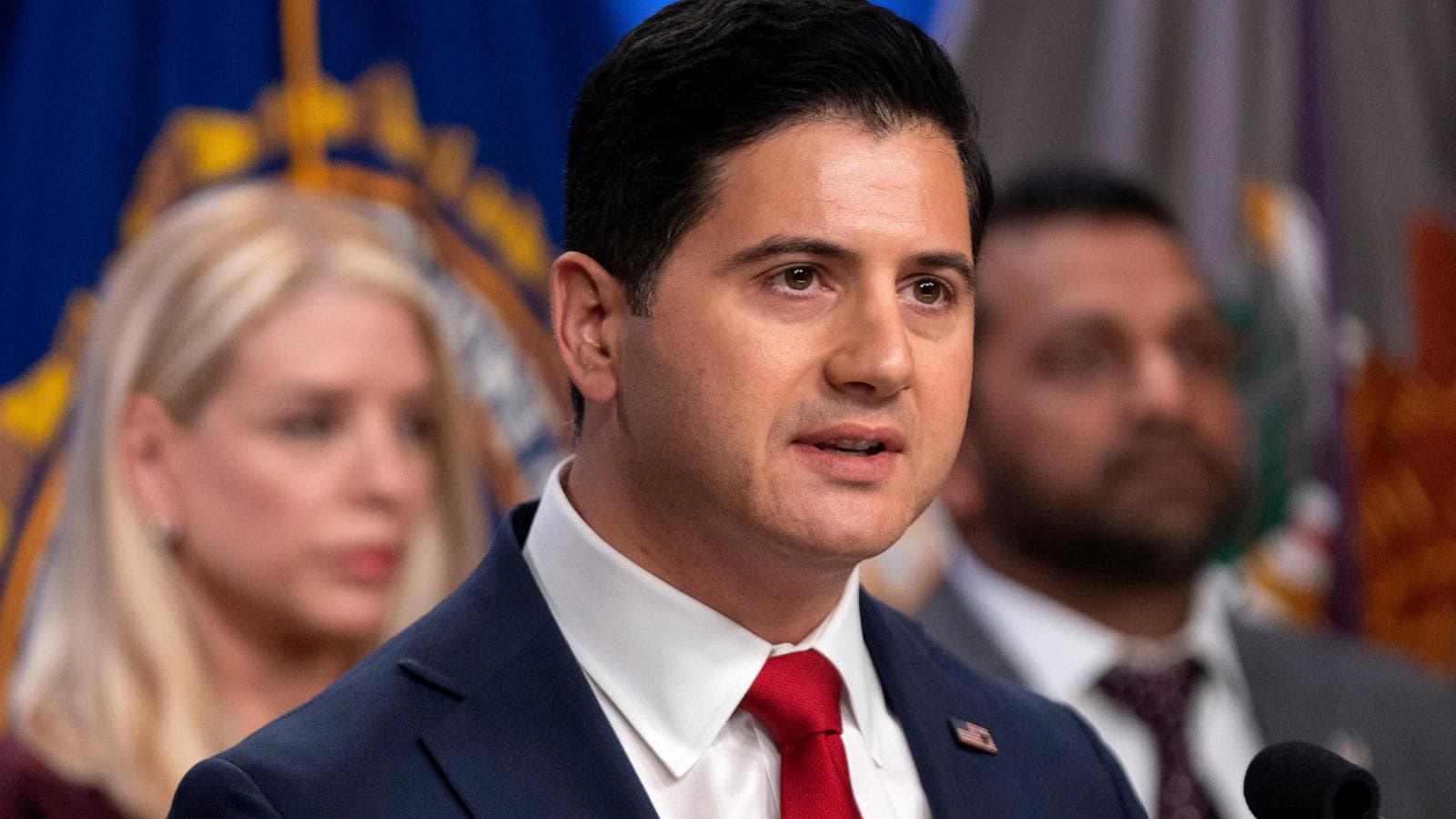
Federal Judge Rules Bill Essayli Unlawfully Serving as De Facto US Attorney for Central District of California
Why it matters
Federal court rulings disqualifying interim U.S. attorneys test the statutory limits of executive appointments and risk disrupting the administrative continuity of federal criminal litigation.
What happened (in 30 seconds)
- A federal judge issued an adverse ruling: On October 28, 2026, U.S. District Judge J. Michael Seabright ruled that Bill Essayli is unlawfully serving as the de facto United States Attorney for the Central District of California.
- Prosecutorial authority was restricted: The decision bars Essayli from supervising two active criminal prosecutions in the district, though the order remains stayed pending the outcome of a government appeal.
- The appointment method was rejected: The court determined that reassigning Essayli to First Assistant U.S. Attorney after his initial interim appointment expired operated as an impermissible bypass of statutory limits on unconfirmed prosecutors.
The context you actually need
- The 120-day statutory threshold: Federal vacancy frameworks limit temporary, non-Senate-confirmed interim U.S. attorneys to a 120-day window, after which district courts typically hold statutory appointment power unless a permanent nominee is confirmed.
- A multi-district administrative strategy: The executive branch has utilized administrative title redesignations to keep preferred interim personnel in operational control of offices without submitting candidates for formal Senate confirmation.
- Accumulating judicial precedents: Federal judges across at least four jurisdictions—including California, Nevada, New Jersey, and New York—have issued rulings finding that interim leaders installed via these administrative mechanisms were serving without lawful authority.
What's really happening
The conflict in the Central District of California is fundamentally about statutory limits versus administrative flexibility in the executive appointment process. The Federal Vacancies Reform Act and related prosecutorial succession statutes were designed with explicit institutional friction: an administration may temporarily fill an executive vacancy with an interim appointee for up to 120 days, but enduring authority requires confirmation by the U.S. Senate. This structure creates an incentive for administrations facing complex confirmation paths to utilize internal reassignments, such as designating an appointee as First Assistant U.S. Attorney, to preserve operational leadership without initiating a confirmation process.
In this instance, Bill Essayli was appointed acting U.S. Attorney for the Central District of California in March 2025. Prior to the statutory 120-day mark, former Attorney General Pam Bondi designated him First Assistant U.S. Attorney. While Judge Seabright initially permitted Essayli to remain in that secondary operational role in October 2025 despite disqualifying him from select matters, subsequent appellate guidance altered the legal baseline.
The turning point arrived in August 2026, when the 9th U.S. Circuit Court of Appeals ruled on the parallel appointment of Sigal Chattah in Nevada. The appellate court established that when an individual exercises the practical responsibilities, oversight, and final authority of a U.S. Attorney after the expiration of statutory limits, the formal job title does not shield the arrangement from being classified as an unlawful de facto appointment. Applying this standard, Judge Seabright concluded that Essayli’s sustained executive direction over the Los Angeles office rendered his status identical to that evaluated in the 9th Circuit precedent.
This development creates direct institutional trade-offs for the Department of Justice, now led by Attorney General Todd Blanche. Bypassing the Senate preserves direct departmental control over leadership in key jurisdictions, but it introduces acute systemic risk to criminal dockets. Every indictment, supervisory directive, and prosecutorial decision authorized by an official deemed to be serving unlawfully invites immediate procedural motions to dismiss or disqualify from defense counsel. Rather than streamlining federal enforcement, reliance on contested appointment pathways creates a secondary layer of litigation that ties up judicial resources and temporarily stalls significant federal cases.
Who feels it first (and how)
- Federal criminal defendants in Southern California: Defense teams in the Central District of California gain immediate procedural leverage to challenge indictments, evidentiary filings, and supervisory orders authorized by the contested office leadership.
- Career prosecutors within the Central District: Assistant U.S. Attorneys face operational delays and administrative ambiguity regarding delegable authority, case approvals, and trial strategy while the judicial stay remains active.
- Corporate legal counsel and compliance executives: Organizations managing active federal investigations or civil enforcement matters in California encounter scheduling friction and potential administrative resets if leadership lines must be reconfigured.
- Federal district and appellate judges: Courts across the 9th Circuit must absorb a concentrated volume of interlocutory appeals and administrative challenges addressing the validity of prosecutorial actions.
What to watch next
- The 9th Circuit's decision on the stay: The appellate court will determine whether to maintain Judge Seabright's stay, establishing whether Essayli can continue day-to-day supervisory duties during the formal appeals process.
- Department of Justice operational restructuring: Watch whether Attorney General Todd Blanche shifts tactics by submitting formal nominations to the Senate or transferring authority to career officials to insulate high-profile trials from structural challenges.
- Supreme Court review petitions: As conflicting district interpretations and appellate rulings accumulate, watch for an emergency docket application or petition for certiorari seeking a definitive interpretation of federal vacancy limits.
Judge Seabright ruled Essayli’s role unlawful under 9th Circuit precedent, barred him from supervising two criminal cases, and stayed the enforcement of the ruling pending appeal.
Defense counsel across additional pending criminal matters in the Central District of California will file parallel motions seeking disqualification or dismissal based on this precedent.
Whether the U.S. Supreme Court will agree to take up the statutory question, and whether an adverse final ruling would invalidate retrospective prosecutorial decisions made during the contested tenure.
Frequently Asked Questions
- Why it matters?
- Federal court rulings disqualifying interim U.S. attorneys test the statutory limits of executive appointments and risk disrupting the administrative continuity of federal criminal litigation.
- What happened (in 30 seconds)?
- A federal judge issued an adverse ruling: On October 28, 2026, U.S. District Judge J. Michael Seabright ruled that Bill Essayli is unlawfully serving as the de facto United States Attorney for the Central District of California. Prosecutorial authority was restricted: The decision bars Essayli from supervising two active criminal prosecutions in the district, though the order remains stayed pending the outcome of a government appeal. The appointment method was rejected: The court determined that
- What's really happening?
- The conflict in the Central District of California is fundamentally about statutory limits versus administrative flexibility in the executive appointment process. The Federal Vacancies Reform Act and related prosecutorial succession statutes were designed with explicit institutional friction: an administration may temporarily fill an executive vacancy with an interim appointee for up to 120 days, but enduring authority requires confirmation by the U.S. Senate. This structure creates an incentive
- Who feels it first (and how)?
- Federal criminal defendants in Southern California: Defense teams in the Central District of California gain immediate procedural leverage to challenge indictments, evidentiary filings, and supervisory orders authorized by the contested office leadership. Career prosecutors within the Central District: Assistant U.S. Attorneys face operational delays and administrative ambiguity regarding delegable authority, case approvals, and trial strategy while the judicial stay remains active. Corporate le
- What to watch next?
- The 9th Circuit's decision on the stay: The appellate court will determine whether to maintain Judge Seabright's stay, establishing whether Essayli can continue day-to-day supervisory duties during the formal appeals process. Department of Justice operational restructuring: Watch whether Attorney General Todd Blanche shifts tactics by submitting formal nominations to the Senate or transferring authority to career officials to insulate high-profile trials from structural challenges. Supreme Court
International coverage from The Guardian's global desks.
"The Guardian is known for its progressive editorial stance and in-depth analysis."
— A47 Editor
Obama campaigns in Georgia as Trump stumps in Ohio in dueling midterms rallies – live
Donald Trump and Barack Obama campaigned in key states in the final days before the US midterm elections, with Obama in Georgia and Trump in Ohio, as both parties seek control of Congress. The Guardian's live coverage also reported new reporting on A...
News from the United States including domestic politics, society, and culture.
"The Guardian is known for its progressive editorial stance and in-depth analysis, often advocating for social justice, environmental issues, and liberal values."
— A47 Editor
Obama campaigns in Georgia as Trump stumps in Ohio in dueling midterms rallies – live
Donald Trump and Barack Obama campaigned in key states in the final days before the US midterm elections, with Obama in Georgia and Trump in Ohio, as both parties seek control of Congress. The Guardian's live coverage also reported new reporting on A...
Capitol Hill news, legislation, and policy insight.
"The Hill specializes in U.S. politics and policy, with a focus on Capitol Hill developments and a reputation for insider reporting."
— A47 Editor
Top federal prosecutor in LA not legally serving, judge rules
A federal judge ruled on Tuesday that Bill Essayli, the First Assistant U.S. Attorney for the Central District of California, is unlawfully serving as the top federal prosecutor in Los Angeles, describing him as a "de facto" U.S. attorney. U.S. Distr...
Major U.S. developments and regional news.
"ABC News delivers broad national coverage with a mainstream editorial stance, focusing on accessibility and balanced reporting."
— A47 Editor
Federal judge rules top US prosecutor in Los Angeles isn't legally serving
A federal judge has ruled that Bill Essayli, a Republican who has served as the top U.S. prosecutor in Los Angeles, is not legally serving in that role, according to ABC News. The ruling centers on the legality of his service in the position, which h...
U.S. political news and right-leaning commentary.
"Fox News is a highly influential conservative news outlet known for right-leaning political commentary and coverage."
— A47 Editor
Federal judge rules Bill Essayli unlawfully serving as de facto US attorney in California
A federal judge ruled that Bill Essayli is unlawfully serving as de facto U.S. attorney in California, according to a Fox News report published October 28, 2026. Essayli responded that the Supreme Court will ultimately decide his fate in the matter.
California news and regional developments.
"The Los Angeles Times is a major West Coast newspaper offering in-depth reporting with a liberal editorial tone and strong regional focus."
— A47 Editor
Judge finds L.A.'s top federal prosecutor is unlawfully serving, bars him from two cases
A federal judge ruled that Bill Essayli, the top federal prosecutor in Los Angeles, is unlawfully serving as head of the U.S. attorney's office. The judge barred him from overseeing two prosecutions but delayed the order's effect, leaving his leaders...