
Democrats Win Both Congressional Chambers After 2026 Midterms Setting Up Oversight of Trump Foreign Policy
Why it matters
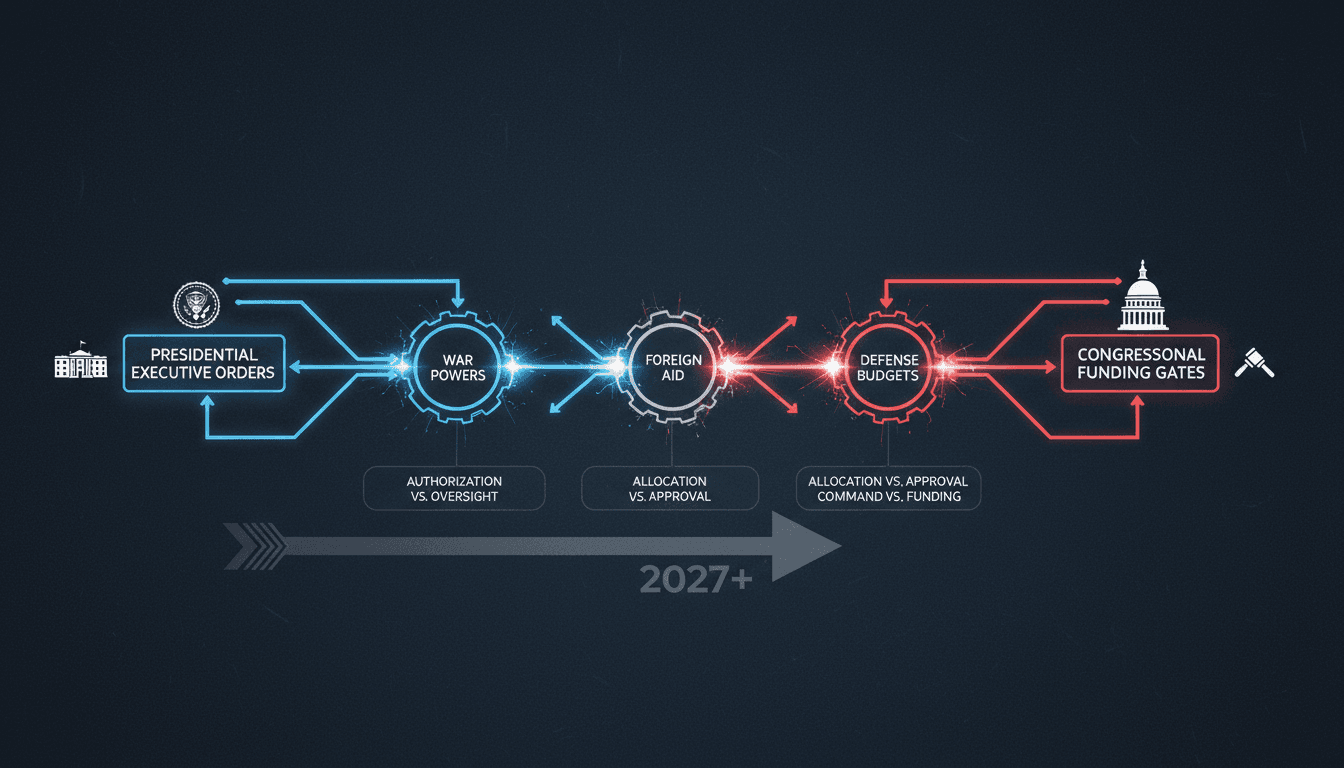
A divided American government creates institutional counterweights to executive decision-making, shifting the primary lever of foreign engagement from unilateral executive action to contentious budget battles over authorizations and aid allocations.
What happened (in 30 seconds)
- Democrats secured majorities in both chambers: The November 3, 2026, midterm elections transferred legislative control of both the US House and Senate to Democrats following two years of unified Republican governance.
- The policy scope targets five core arenas: Lawmakers intend to expand oversight starting January 2027 across the US-Iran conflict, Ukraine security aid, annual funding for Israel, overall defense allocations, and regional initiatives in Latin America.
- Executive authority faces budgetary boundaries: While President Donald Trump retains constitutional command over foreign operations, the legislative branch now holds structural influence through appropriations, spending cutbacks, and formal investigative processes.
The context you actually need
- The Iran conflict established the primary faultline: Military actions launched on February 28, 2026, without prior congressional authorization, intensified debates regarding the legal limits of presidential war powers and unauthorized military expenditure.
- Two years of unified power altered foreign commitments: Previous legislative sessions saw the halting of Ukrainian security assistance, reductions in international civilian aid, and expanded operations across Latin America, including Venezuela and Cuba.
- Institutional leverage remains bounded by margins: While controlling the legislative calendar allows majority leaders to block defense spending increases, overriding presidential vetoes on foreign policy legislation requires supermajorities that neither party holds outright.
What's really happening
The return of divided government in Washington creates structural gridlock that alters how the United States projects influence abroad. Under the US Constitution, the president serves as commander-in-chief, holding operational direction over armed forces and direct diplomatic conduct. However, the power of the purse rests entirely with Congress. When legislative majorities oppose executive initiatives, the resulting friction transforms standard international policy into an arena of budgetary denial and procedural scrutiny.
Starting in January 2027, the primary mechanism of legislative influence will operate through appropriations committees rather than sweeping statutory overhauls. Without veto-proof two-thirds majorities in both chambers, Democratic leaders cannot unilaterally force the White House to sign major diplomatic changes or permanently halt active campaigns. Instead, their leverage relies on selective funding restrictions. By attaching policy riders to mandatory military funding packages, Congress can condition operational resources, cap munitions replenishment, or mandate reporting requirements that complicate ongoing campaigns.
The immediate pressure point centers on the ongoing conflict with Iran that began in February 2026. Because that operation commenced without formal authorization for the use of military force, legislative leadership possesses both the legal framework and political incentives to scrutinize its operational funding. By threatening to restrict secondary appropriations, lawmakers can increase the administrative friction required to sustain naval and air operations in the Middle East. This friction directly affects operational planning timelines and alters how defense planners forecast resource allocations.
A parallel dynamic applies to statutory assistance packages. Foreign military financing, including the baseline $3.8 billion annual allocation to Israel, requires regular legislative reauthorization and execution. While complete cuts remain improbable without broad bipartisan consensus, lawmakers can deploy oversight hearings, condition specific tranches on operational transparency, or pause transfer schedules. Similarly, legislative efforts to reintroduce aid allocations for Ukraine will encounter presidential veto threats, turning future aid bills into zero-sum negotiation tools linked to domestic spending priorities.
For international counterparties, this system of checks changes how bilateral commitments are assessed. Executive decrees and administrative agreements lose durability when domestic legislative majorities refuse to fund their implementation. The structural outcome is not an immediate reversal of American foreign strategy, but an era of conditional financing, slower policy execution, and constant investigative pressure across global operational theaters.
Who feels it first (and how)
- Energy markets and maritime logistics operators: Supply chains passing through Gulf transit lanes face altered risk premiums as congressional oversight challenges the funding and deployment cadence of naval forces engaged in the Iran conflict.
- Defense contractors and procurement teams: Corporations exposed to US defense hardware face budget caps, delayed contract awards, and enhanced audit requirements on weapons systems destined for foreign partners.
- Multinational corporate planners in hub economies like Dubai: Asset managers and treasury leads must calculate fluctuating currency, sanctions volatility, and energy price swings driven by legislative-executive standoff in Washington.
- International aid agencies and regional development bodies: Global entities awaiting renewed funding pipelines for Eastern Europe or Latin American civil initiatives must navigate protracted legislative impasses before capital is released.
What to watch next
- The January 2027 committee leadership appointments: The assignment of committee chairs in the House and Senate will establish the official investigative calendar for defense budgets and executive war authorizations.
- Emergency supplemental defense bills: The specific language and spending caps introduced into the first post-midterm defense appropriation acts will indicate whether legislative majorities can extract policy concessions from the executive branch.
- Global energy benchmark adjustments: Commercial freight and oil futures will reflect market sentiment regarding whether legislative scrutiny diminishes or escalates ongoing operations around Iranian trade routes.
Democrats control both the House of Representatives and the Senate following the November 2026 elections, taking formal power in January 2027 with direct control over the legislative calendar and committee oversight.
The incoming majorities will introduce restrictive spending riders on Middle East military operations and hold public inquiries into executive war powers, increasing friction for defense allocations.
Whether congressional leaders can assemble the necessary bipartisan margins to override presidential vetoes on contested foreign aid measures, such as Ukraine funding or conditions on Israel's $3.8 billion annual assistance.
Frequently Asked Questions
- Why it matters?
- A divided American government creates institutional counterweights to executive decision-making, shifting the primary lever of foreign engagement from unilateral executive action to contentious budget battles over authorizations and aid allocations.
- What happened (in 30 seconds)?
- Democrats secured majorities in both chambers: The November 3, 2026, midterm elections transferred legislative control of both the US House and Senate to Democrats following two years of unified Republican governance. The policy scope targets five core arenas: Lawmakers intend to expand oversight starting January 2027 across the US-Iran conflict, Ukraine security aid, annual funding for Israel, overall defense allocations, and regional initiatives in Latin America. Executive authority faces budg
- What's really happening?
- The return of divided government in Washington creates structural gridlock that alters how the United States projects influence abroad. Under the US Constitution, the president serves as commander-in-chief, holding operational direction over armed forces and direct diplomatic conduct. However, the power of the purse rests entirely with Congress. When legislative majorities oppose executive initiatives, the resulting friction transforms standard international policy into an arena of budgetary den
- Who feels it first (and how)?
- Energy markets and maritime logistics operators: Supply chains passing through Gulf transit lanes face altered risk premiums as congressional oversight challenges the funding and deployment cadence of naval forces engaged in the Iran conflict. Defense contractors and procurement teams: Corporations exposed to US defense hardware face budget caps, delayed contract awards, and enhanced audit requirements on weapons systems destined for foreign partners. Multinational corporate planners in hub econ
- What to watch next?
- The January 2027 committee leadership appointments: The assignment of committee chairs in the House and Senate will establish the official investigative calendar for defense budgets and executive war authorizations. Emergency supplemental defense bills: The specific language and spending caps introduced into the first post-midterm defense appropriation acts will indicate whether legislative majorities can extract policy concessions from the executive branch. Global energy benchmark adjustments:
Arabic-language coverage of international news and geopolitics.
"RT Arabic is a Russian state-funded outlet often criticized for promoting Kremlin-aligned narratives."
— A47 Editor
انتخابات الكونغرس ستغير بوصلة واشنطن
Democrats have taken control of both the House of Representatives and the Senate in the recent U.S. midterm congressional elections, ending two years of Republican control and giving the party substantial legislative power in Washington, with the pot...
Arabic-language reporting on global and regional news.
"BBC Arabic is part of the BBC, generally regarded for editorial standards and broad international coverage."
— A47 Editor
بعد سيطرة الديمقراطيين على الكونغرس.. ماذا ينتظر الرئيس الأمريكي؟
Democrats have won control of both the Senate and the House of Representatives in the midterm elections, a defeat that President Donald Trump acknowledged was affected by the war with Iran, rising fuel prices and higher living costs.
Arabic-language reporting on global and regional news.
"BBC Arabic is part of the BBC, generally regarded for editorial standards and broad international coverage."
— A47 Editor
كيف سيتعامل الرئيس ترامب مع معارضة ديمقراطية قوية في الكونغرس؟
The base article reports that the US midterm election results point to Democratic control of both chambers of Congress, raising questions about how this will shape American policy in the coming period and how President Donald Trump will deal with a s...