
South Korea Seeks Parliamentary Approval to Expand Cheonghae Anti-Piracy Mandate Toward Strait of Hormuz
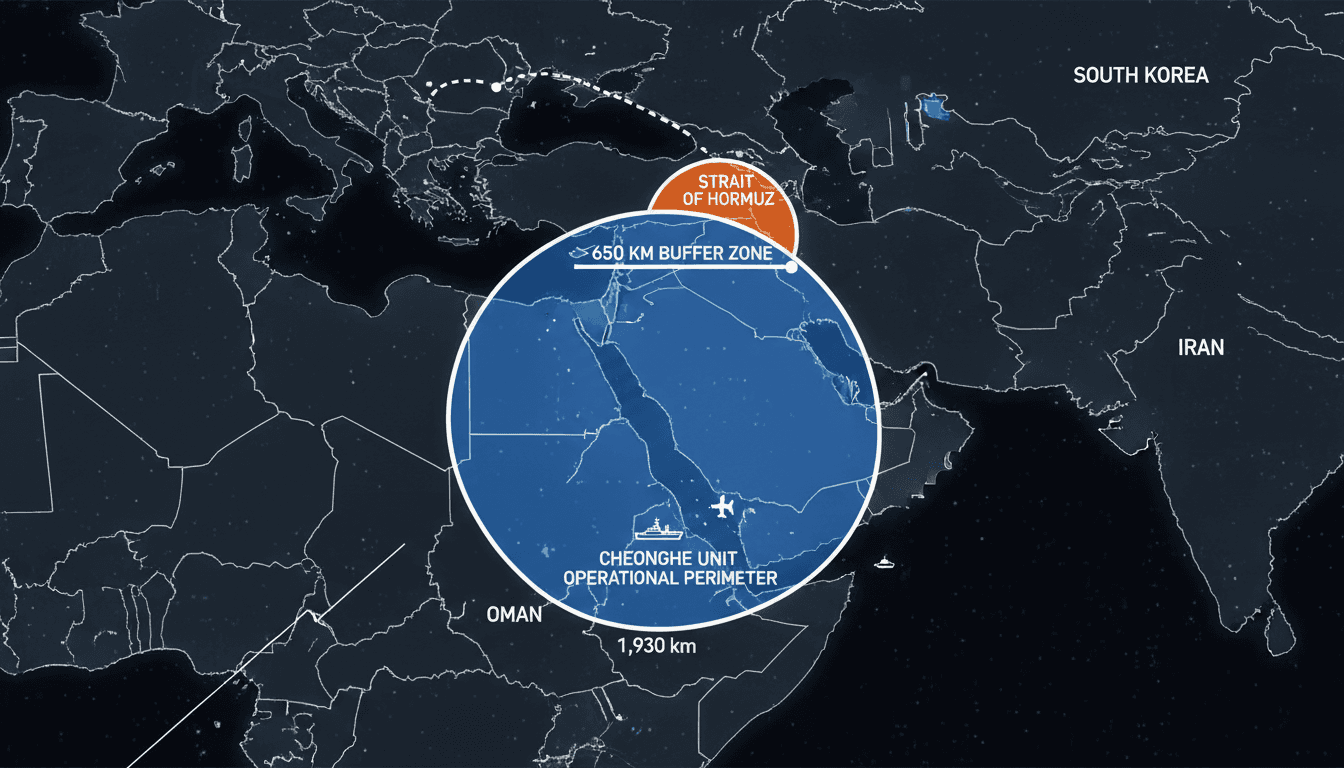
Why it matters
South Korea is recalibrating its physical trade defenses along Arabian Sea energy routes to answer alliance friction while deliberately avoiding the high-risk operational theater inside the Persian Gulf.
What happened (in 30 seconds)
- Mandate perimeter doubled: The South Korean Ministry of National Defense confirmed a proposal on November 5, 2026, to extend the Cheonghae Unit's operational zone beyond December 2026, widening its operational radius to 1,930 km into the waters near Duqm port in Oman.
- Hardware and personnel reinforcement: The operational scope adds 75 personnel—including an explosive ordnance disposal (EOD) team—along with a P-8A maritime patrol aircraft and unmanned mine-countermeasure systems.
- Explicit perimeter limits: The deployment deliberately halts approximately 650 km outside the Strait of Hormuz, explicitly excluding Iranian territorial waters, direct combat roles, and integration into US-led coalition command.
The context you actually need
- Historical mandate in the Gulf of Aden: The Cheonghae anti-piracy unit has operated off the coast of East Africa since 2009, historically focusing on commercial vessel safety against non-state piracy.
- Bilateral alliance pressure: Following statements from US President Donald Trump pressing South Korea over insufficient participation in operations related to Iran, Seoul sought an operational compromise that signals security commitment.
- Compounding maritime chokepoints: Ongoing instability involving Houthi actions in the Red Sea combined with wider US-Iran friction has created security voids across Arabian Sea commercial routes, drawing regional trade closer to Omani ports like Duqm.
What's really happening
The strategic mechanics of South Korea’s maritime expansion reflect an exercise in tension minimization. South Korea depends on steady passage through Gulf corridors for its national energy imports. However, entering the Strait of Hormuz under a collective security umbrella carries immediate structural liabilities: commercial retaliation risks, increased insurance surcharges for its domestic shipping lines, and diplomatic strain with Tehran.
To resolve these competing pressures, the Ministry of National Defense established an operational buffer. By situating the Cheonghae Unit’s primary boundary near Duqm in the Arabian Sea, Seoul positions its forces exactly 650 km away from the actual chokepoint of the Strait of Hormuz. This geographic distinction serves an incentive-driven purpose. For allied leadership in Washington, the deployment represents tangible asset mobilization: an advanced P-8A reconnaissance aircraft, an explosive ordnance disposal unit, unmanned mine-countermeasure assets, and an operational radius roughly doubled to 1,930 km.
Yet for maritime trade operators and regional counterparts, the operational parameters remain strictly non-combat, defensive, and independent. South Korea preserves its sovereign command structure rather than merging into multinational strike frameworks. The hardware added—particularly the mine-countermeasure platforms and P-8A surveillance—focuses on open-water route integrity and early detection rather than offensive strike capabilities.
This footprint allows South Korea to insulate its merchant fleet from secondary threats, such as opportunist piracy and loose maritime ordnance spilling outward from regional friction points, without crossing legal or political thresholds into Iranian waters. Internally, President Lee Jae Myung's administration faces domestic scrutiny, with opposition parties in the National Assembly, including the Rebuilding Korea Party, categorizing the expansion as a disguised deployment into regional hostilities. Consequently, the operational envelope must stay narrow. Keeping operations confined to international waters south of Oman provides an institutional firewall against escalation, safeguarding commercial transit lanes while insulating the state from direct combat liabilities.
Who feels it first (and how)
- Omani logistics and port infrastructure: The commercial hub of Duqm gains enhanced external perimeter security as South Korean mine-countermeasure and surveillance platforms operate in adjacent international waters.
- East Asian commercial fleet operators: South Korean-flagged tankers and bulk carriers navigating the Arabian Sea gain expanded direct escort and aerial surveillance support, reducing vulnerability to regional route disruptions.
- Regional maritime insurers: Underwriters assessing risks in the Gulf of Oman maintain clear distinctions between inner-gulf transits through Hormuz and lower-risk lanes south of Oman, keeping rate volatility localized.
- Seoul legislative policymakers: Members of South Korea’s National Assembly face a contentious ratification cycle as domestic political factions debate the boundary between anti-piracy operations and regional military entanglement.
What to watch next
- Cabinet and National Assembly confirmation: The defense proposal faces cabinet review followed by an authorization vote in the South Korean National Assembly, where opposition alignment will test the executive's security narrative.
- Deployment timeline of the P-8A and EOD assets: The schedule of deployment to the Arabian Sea will signal how rapidly South Korea intends to operationalize its expanded 1,930 km surveillance radius.
- Operational response from regional actors: Monitored communications or diplomatic statements from Tehran regarding foreign naval assets operating near the mouth of the Gulf of Oman will indicate whether the 650 km buffer effectively prevents diplomatic fallout.
South Korea has officially proposed expanding the Cheonghae Unit's mandate beyond December 2026, doubling its radius to 1,930 km and adding 75 personnel, unmanned mine assets, and a P-8A aircraft near Duqm, 650 km from Hormuz.
The operational deployment will remain strictly outside the Strait of Hormuz to prevent commercial shipping lines from being targeted by regional actors.
Whether domestic legislative resistance in the National Assembly will force modifications to the mandate’s duration, funding, or specific equipment provisions before final passage.
Frequently Asked Questions
- Why it matters?
- South Korea is recalibrating its physical trade defenses along Arabian Sea energy routes to answer alliance friction while deliberately avoiding the high-risk operational theater inside the Persian Gulf.
- What happened (in 30 seconds)?
- Mandate perimeter doubled: The South Korean Ministry of National Defense confirmed a proposal on November 5, 2026, to extend the Cheonghae Unit's operational zone beyond December 2026, widening its operational radius to 1,930 km into the waters near Duqm port in Oman. Hardware and personnel reinforcement: The operational scope adds 75 personnel—including an explosive ordnance disposal (EOD) team—along with a P-8A maritime patrol aircraft and unmanned mine-countermeasure systems. Explicit perimet
- What's really happening?
- The strategic mechanics of South Korea’s maritime expansion reflect an exercise in tension minimization. South Korea depends on steady passage through Gulf corridors for its national energy imports. However, entering the Strait of Hormuz under a collective security umbrella carries immediate structural liabilities: commercial retaliation risks, increased insurance surcharges for its domestic shipping lines, and diplomatic strain with Tehran. To resolve these competing pressures, the Ministry o
- Who feels it first (and how)?
- Omani logistics and port infrastructure: The commercial hub of Duqm gains enhanced external perimeter security as South Korean mine-countermeasure and surveillance platforms operate in adjacent international waters. East Asian commercial fleet operators: South Korean-flagged tankers and bulk carriers navigating the Arabian Sea gain expanded direct escort and aerial surveillance support, reducing vulnerability to regional route disruptions. Regional maritime insurers: Underwriters assessing risks
- What to watch next?
- Cabinet and National Assembly confirmation: The defense proposal faces cabinet review followed by an authorization vote in the South Korean National Assembly, where opposition alignment will test the executive's security narrative. Deployment timeline of the P-8A and EOD assets: The schedule of deployment to the Arabian Sea will signal how rapidly South Korea intends to operationalize its expanded 1,930 km surveillance radius. Operational response from regional actors: Monitored communications o
Global news coverage with extensive reporting on Middle Eastern conflicts and geopolitics.
"Al Jazeera is a Qatar-based broadcaster known for wide regional coverage and alternative perspectives."
— A47 Editor
South Korea plans to expand anti-piracy operations closer to Hormuz Strait
South Korea's defence ministry has said it will expand the operating area of its anti-piracy Cheonghae unit toward waters closer to the Strait of Hormuz, extending patrols to near the Omani port of Duqm, about 650 km from the strait. The plan follows...
Comprehensive coverage of Middle Eastern and global issues.
"Al Jazeera is a prominent voice from the Global South, especially the Middle East, with an emphasis on underreported stories."
— A47 Editor
South Korea plans to expand anti-piracy operations closer to Hormuz Strait
South Korea's defence ministry has said it will expand the operating area of its anti-piracy Cheonghae unit toward waters closer to the Strait of Hormuz, extending patrols to near the Omani port of Duqm, about 650 km from the strait. The plan follows...
International coverage from The Guardian's global desks.
"The Guardian is known for its progressive editorial stance and in-depth analysis."
— A47 Editor
South Korea says it will expand naval operations closer to strait of Hormuz
South Korea's defence ministry has said it will expand the operating area of its anti-piracy Cheonghae unit to waters closer to the strait of Hormuz, extending it to near the port of Duqm in Oman, about 650km from the strait. The move follows pressur...
Regional coverage and analysis focused on politics, diplomacy, and business across the Middle East.
"Al-Monitor is known for analytical reporting on Middle East politics and policy developments."
— A47 Editor
South Korea to expand anti-piracy unit operations closer to Strait of Hormuz
South Korea plans to expand operations of its anti-piracy Cheonghae unit to waters closer to the Strait of Hormuz, the Defence Ministry said, following pressure from US President Donald Trump to support the war in Iran. The government will submit a m...
24/7 international news from a French perspective in multiple languages.
"France 24 is viewed as a globally focused outlet with balanced coverage and a European perspective."
— A47 Editor
South Korea to deploy military mission to keep Strait of Hormuz open
South Korea will deploy maritime patrol aircraft and an explosive ordnance disposal team near the Strait of Hormuz to help keep the vital waterway open, the defence ministry said Thursday. Seoul says the mission will protect commercial shipping and e...