
Israel October 2026 Election Ends in Parliamentary Deadlock as Neither Bloc Reaches 61 Seats
Why it matters
A divided 120-seat parliament leaves key economic, defense, and administrative portfolios under caretaker stewardship, deferring long-term bilateral initiatives and structural fiscal adjustments across the Eastern Mediterranean.
What happened (in 30 seconds)
- Neither bloc secured a governing majority, as the October 27, 2026, parliamentary election left both major factions below the mandatory 61-seat threshold in the 120-seat Knesset.
- Vote tallies finalized a fragmented house, giving the Likud-led bloc headed by Benjamin Netanyahu 53 seats and the centrist Yashar-led bloc headed by Gadi Eisenkot 48 seats.
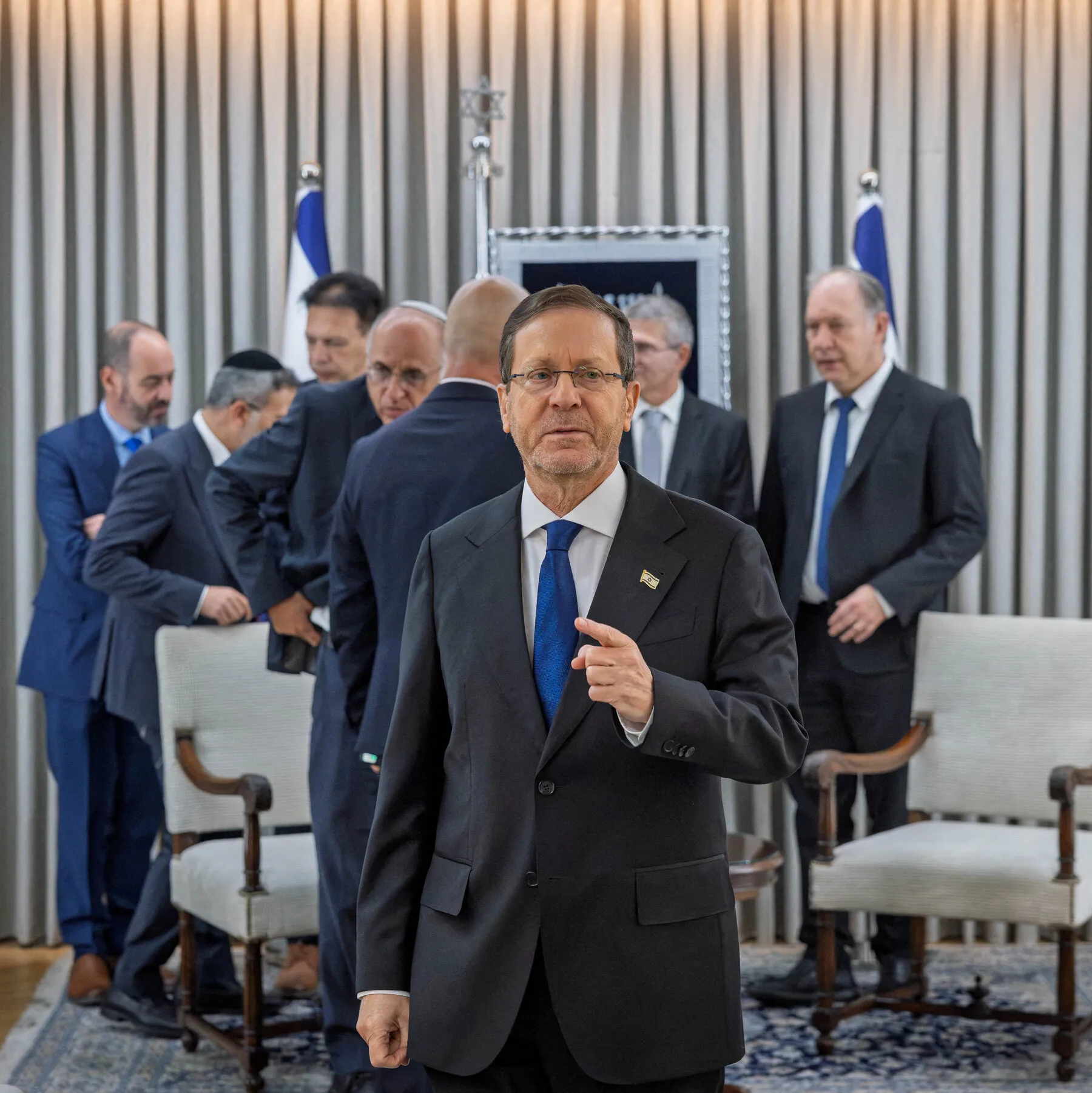
- President Isaac Herzog initiated formal consultations on November 5 with party leadership to assign a government-formation mandate, operating alongside a record 19 seats secured by Arab parties.
The context you actually need
- Voter participation reached 77.9 percent, demonstrating significant public mobilization across demographic groups but failing to produce a decisive legislative mandate for any single coalition.
- Netanyahu's prior coalition eroded over time, falling from an earlier peak of 68 seats to its current 53-seat tally amid compounding disputes over judicial policy, conscription rules, and broad governance frameworks.
- The constitutional timeline imposes tight constraints, allocating a designated candidate 28 days to negotiate a working government, with the potential for a single 14-day extension before alternative options or fresh elections within 100 days must be considered.
What's really happening
The mechanics of this deadlock stem directly from proportional representation colliding with hard legislative arithmetic. In a 120-member Knesset, passing standard legislation, approving annual budgets, and securing ministerial appointments requires an absolute minimum of 61 votes. With Likud securing 27 seats to remain the largest individual party, its broader affiliated bloc of 53 seats remains eight votes short of functionality. Concurrently, Eisenkot’s Yashar-led grouping of 48 seats requires 13 additional votes to construct an alternative majority.
Because Arab parties captured a record 19 seats, the remaining non-aligned factions—including figures such as Avigdor Lieberman (Yisrael Beytenu) and Naftali Bennett (B'Yachad)—hold disproportionate negotiating leverage despite their smaller seat tallies. However, structural and ideological friction between these independent factions and the primary blocs creates elevated barriers to formal alignment. Constructing a viable coalition necessitates either cross-bloc concessions, an unwieldy national unity pact, or a minority arrangement relying on outside legislative support from Arab parties.
For institutional planning and enterprise exposure, the core mechanism to track is the persistence of caretaker governance. Until President Herzog's consultation process produces an endorsed prime minister who successfully presents a cabinet, Netanyahu remains caretaker prime minister. Caretaker administrations operate under statutory boundaries: they maintain day-to-day administrative continuity, honor existing contracts, and manage essential security protocols, but they lack the legislative strength to pass structural reforms, adopt multi-year fiscal budgets, or execute contentious policy changes.
While financial markets registered no immediate operational disruptions following the vote, the broader trade-off involves protracted policy stasis. If the primary designated candidate fails to assemble 61 seats within the initial 28-day window—or within the supplemental 14-day extension—the legal framework permits the mandate to pass to another leader or trigger automated statutory clocks. Under Israeli electoral rules, if no candidate secures a majority, the Knesset faces automatic dissolution, initiating repeat elections within a 100-day window. This cycle incentives risk-averse, short-term decision-making across government ministries, delaying multi-year infrastructure appropriations, bilateral trade modernizations, and administrative overhauls.
Who feels it first (and how)
- Regional infrastructure and energy planners, who face delayed ministerial authorizations and deferred joint working-group approvals while statutory departments operate under interim caretaker authorities.
- Public sector procurement teams, as ministries defer discretionary outlays and capital expenditures until a formalized national budget can be introduced and ratified by a seated majority.
- Corporate compliance and legal officers, who must track potential shifts in administrative leadership across key regulatory agencies without clear guidance on whether existing frameworks will be amended or maintained.
- Institutional investors in Eastern Mediterranean assets, who must factor a baseline of extended legislative uncertainty into sovereign risk models, even as equity and foreign exchange desks observe initial pricing stability.
What to watch next
- The November presidential designation, because President Herzog’s choice of which faction leader receives the primary 28-day mandate dictates which bloc establishes early leverage in portfolio distribution.
- Third-party coalition positioning, particularly formal declarations from Avigdor Lieberman and Naftali Bennett, whose combined seats represent the only mathematically viable route to 61 for either primary bloc without a grand coalition.
- The 100-day election trigger threshold, where the expiration of constitutional negotiating windows without a seated government would automatically initiate repeat elections and prolong administrative freezing into early 2027.
Neither the Likud-led bloc (53 seats) nor the Yashar-led bloc (48 seats) commands the 61 seats required for an absolute parliamentary majority, leaving Likud with 27 individual seats and Arab parties holding 19 seats.
The coalition formation process will exhaust the initial 28-day constitutional allotment and require the standard 14-day extension as faction leaders negotiate contentious ministerial appointments and policy concessions.
Whether independent faction leaders will compromise ideological stances to form a cross-bloc unity government, or if negotiations will fail entirely, triggering a mandatory return to national polls within 100 days.
Frequently Asked Questions
- Why it matters?
- A divided 120-seat parliament leaves key economic, defense, and administrative portfolios under caretaker stewardship, deferring long-term bilateral initiatives and structural fiscal adjustments across the Eastern Mediterranean.
- What happened (in 30 seconds)?
- Neither bloc secured a governing majority, as the October 27, 2026, parliamentary election left both major factions below the mandatory 61-seat threshold in the 120-seat Knesset. Vote tallies finalized a fragmented house, giving the Likud-led bloc headed by Benjamin Netanyahu 53 seats and the centrist Yashar-led bloc headed by Gadi Eisenkot 48 seats. President Isaac Herzog initiated formal consultations on November 5 with party leadership to assign a government-formation mandate, operating along
- What's really happening?
- The mechanics of this deadlock stem directly from proportional representation colliding with hard legislative arithmetic. In a 120-member Knesset, passing standard legislation, approving annual budgets, and securing ministerial appointments requires an absolute minimum of 61 votes. With Likud securing 27 seats to remain the largest individual party, its broader affiliated bloc of 53 seats remains eight votes short of functionality. Concurrently, Eisenkot’s Yashar-led grouping of 48 seats require
- Who feels it first (and how)?
- Regional infrastructure and energy planners, who face delayed ministerial authorizations and deferred joint working-group approvals while statutory departments operate under interim caretaker authorities. Public sector procurement teams, as ministries defer discretionary outlays and capital expenditures until a formalized national budget can be introduced and ratified by a seated majority. Corporate compliance and legal officers, who must track potential shifts in administrative leadership acros
- What to watch next?
- The November presidential designation, because President Herzog’s choice of which faction leader receives the primary 28-day mandate dictates which bloc establishes early leverage in portfolio distribution. Third-party coalition positioning, particularly formal declarations from Avigdor Lieberman and Naftali Bennett, whose combined seats represent the only mathematically viable route to 61 for either primary bloc without a grand coalition. The 100-day election trigger threshold, where the expira
Regional coverage and analysis focused on politics, diplomacy, and business across the Middle East.
"Al-Monitor is known for analytical reporting on Middle East politics and policy developments."
— A47 Editor
Israel opposition touts progress ousting Netanyahu after U-turn on ultra-Orthodox
Israel's opposition said Friday it was making headway in its bid to oust Prime Minister Benjamin Netanyahu after opposition leader Gadi Eisenkot lifted his veto on demands that ultra-Orthodox Jews serve in the military, opening the door to a previous...
UAE-based English-language newspaper covering regional politics, economics, and global affairs.
"The National reflects Emirati policy perspectives while maintaining international editorial standards."
— A47 Editor
How Israel's President will try to break the country's elections deadlock
Israeli President Isaac Herzog is now responsible for choosing which candidate will be tasked with forming the next governing coalition after the October 27, 2026 general election, the first national vote since the October 7, 2023 Hamas attacks, prod...
English-language reporting on Saudi politics, policy, and society.
"Saudi Gazette reflects mainstream Saudi institutional perspectives."
— A47 Editor
Herzog to name PM candidate on Sunday after 67 lawmakers back Eisenkot
Israeli President Isaac Herzog said he will name a candidate to form the next government by Sunday after 67 lawmakers from opposition factions backed opposition leader Gadi Eisenkot, while factions totaling 46 lawmakers recommended Prime Minister Ben...
24/7 international news from a French perspective in multiple languages.
"France 24 is viewed as a globally focused outlet with balanced coverage and a European perspective."
— A47 Editor
Israel president to announce Sunday who will form new government
Israeli President Isaac Herzog said he will announce on Sunday, November 8, which candidate he will task with trying to form a new government after post-election talks with all party leaders. Of the 120 Knesset members, 67 recommended opposition lead...
European coverage of Middle East politics and security issues.
"France 24 offers international reporting with a European editorial perspective."
— A47 Editor
Israel president to announce Sunday who will form new government
Israeli President Isaac Herzog said he will announce on Sunday, November 8, which candidate he will task with trying to form a new government after post-election talks with all party leaders. Of the 120 Knesset members, 67 recommended opposition lead...
Global news coverage with extensive reporting on Middle Eastern conflicts and geopolitics.
"Al Jazeera is a Qatar-based broadcaster known for wide regional coverage and alternative perspectives."
— A47 Editor
Israel’s President Herzog to name candidate to form government on Sunday
Israeli President Isaac Herzog is set to name a candidate to form the next government on Sunday, after a majority of Knesset lawmakers endorsed opposition leader Gadi Eisenkot over Prime Minister Benjamin Netanyahu. The October 27 national election, ...
Comprehensive coverage of Middle Eastern and global issues.
"Al Jazeera is a prominent voice from the Global South, especially the Middle East, with an emphasis on underreported stories."
— A47 Editor
Israel’s President Herzog to name candidate to form government on Sunday
Israeli President Isaac Herzog is set to name a candidate to form the next government on Sunday, after a majority of Knesset lawmakers endorsed opposition leader Gadi Eisenkot over Prime Minister Benjamin Netanyahu. The October 27 national election, ...
Markets, economy, and company analysis from NYT’s business desk.
"The New York Times is a globally recognized newspaper offering authoritative reporting with a center-left editorial stance."
— A47 Editor
Israel’s Election Ended With No Clear Winner. These Parties Are Trying to Form a Coalition.
President Isaac Herzog concluded two days of talks with party leaders in Jerusalem and said he will ask one of them on Sunday to try to assemble a governing coalition, after Israel's national election ended without a clear winner.
International coverage from The Guardian's global desks.
"The Guardian is known for its progressive editorial stance and in-depth analysis."
— A47 Editor
Israel’s Herzog yet to decide on who should form government as Eisenkot secures significant backing
Israeli President Isaac Herzog said on Thursday that Gadi Eisenkot, the main rival to Prime Minister Benjamin Netanyahu, had secured endorsements from 67 of the Knesset's 120 lawmakers to try to form a government, while 46 backed Netanyahu. Herzog sa...
Regional coverage and analysis focused on politics, diplomacy, and business across the Middle East.
"Al-Monitor is known for analytical reporting on Middle East politics and policy developments."
— A47 Editor
Netanyahu's position weakens as ultra-Orthodox party withholds support
Netanyahu's position in the post-election contest to remain Israel's prime minister weakened on Thursday after the ultra-Orthodox party withheld support for any nominee and an Arab-led party endorsed his main rival, Gadi Eisenkot. President Isaac Her...
Markets, economy, and company analysis from NYT’s business desk.
"The New York Times is a globally recognized newspaper offering authoritative reporting with a center-left editorial stance."
— A47 Editor
Here’s Who Is Meeting Israel’s President to Recommend a Prime Minister
Israeli party leaders are holding discussions with President Isaac Herzog over which candidate should be given the first opportunity to form a governing coalition, with the process taking place in Jerusalem after the Central Elections Committee's wor...
24/7 international news from a French perspective in multiple languages.
"France 24 is viewed as a globally focused outlet with balanced coverage and a European perspective."
— A47 Editor
Israel president urges compromise after divisive election
Israeli President Isaac Herzog on Wednesday accepted the certified results of last week's parliamentary elections as legally binding and began consultations with party representatives on forming a new government. The October 27 vote, the first nation...
English-language reporting on Saudi politics, policy, and society.
"Saudi Gazette reflects mainstream Saudi institutional perspectives."
— A47 Editor
Israel's president begins consultations with party leaders after election deadlock
Israeli President Isaac Herzog accepted the certified results of the October 27 parliamentary election and began consultations with party leaders on forming a new government, after the vote produced no clear winner and neither Prime Minister Benjamin...
Comprehensive coverage of Middle Eastern and global issues.
"Al Jazeera is a prominent voice from the Global South, especially the Middle East, with an emphasis on underreported stories."
— A47 Editor
Israel’s Herzog accepts vote results, opens talks on forming a government
Israeli President Isaac Herzog has accepted the results of the October 27 general election and opened talks on forming a government, a move that undercuts Prime Minister Benjamin Netanyahu's efforts to discredit the vote, in which his bloc lost its K...
Global news coverage with extensive reporting on Middle Eastern conflicts and geopolitics.
"Al Jazeera is a Qatar-based broadcaster known for wide regional coverage and alternative perspectives."
— A47 Editor
Israel’s Herzog accepts vote results, opens talks on forming a government
Israeli President Isaac Herzog has accepted the results of the October 27, 2026 national election and opened talks on forming a government, after the vote produced no bloc with a 61-seat Knesset majority. Prime Minister Benjamin Netanyahu's Likud-led...
International coverage of politics, security, and social issues.
"Global News is a mainstream Canadian outlet with a centrist editorial stance, focusing on factual reporting."
— A47 Editor
Israeli president accepts election results, begins talks on new government
Israeli President Isaac Herzog formally accepted the certified results of the October 27 legislative elections, which produced no clear winner, and said he will begin consultations on forming a new government. The move dealt a blow to Prime Minister ...
International coverage of politics, culture, and current affairs.
"BBC News is widely regarded as a reputable international news organization, known for its impartial tone and public service mandate."
— A47 Editor
Israel's president begins consultations with parties after election deadlock
Israeli President Isaac Herzog has begun consultations with political parties after the October 27 general election, the first national vote since the October 7, 2023 Hamas attacks, ended without a clear winner. Prime Minister Benjamin Netanyahu's bl...
Arabic-language coverage of political affairs and current events.
"Okaz political coverage typically follows mainstream Saudi framing on national and regional affairs."
— A47 Editor
معركة الـ61 مقعداً.. هل تحسم الأحزاب العربية مصير حكومة إسرائيل؟
Israeli President Isaac Herzog launched formal consultations on Wednesday to task a figure with forming a new government, following an election that reflected sharp political division. Neither outgoing Prime Minister Benjamin Netanyahu nor former IDF...
Conservative-leaning coverage of current events.
"Fox News is a highly influential conservative news outlet known for right-leaning political commentary and coverage."
— A47 Editor
Netanyahu faces coalition showdown as rivals maneuver to form Israel's next government
Israeli President Isaac Herzog is set to decide who receives the mandate to form the next government after the October 27, 2026 national election, the first since the October 7, 2023 attacks, produced no clear winner. Prime Minister Benjamin Netanyah...