
Violent stabbing in Belfast sparks anti-racism protests
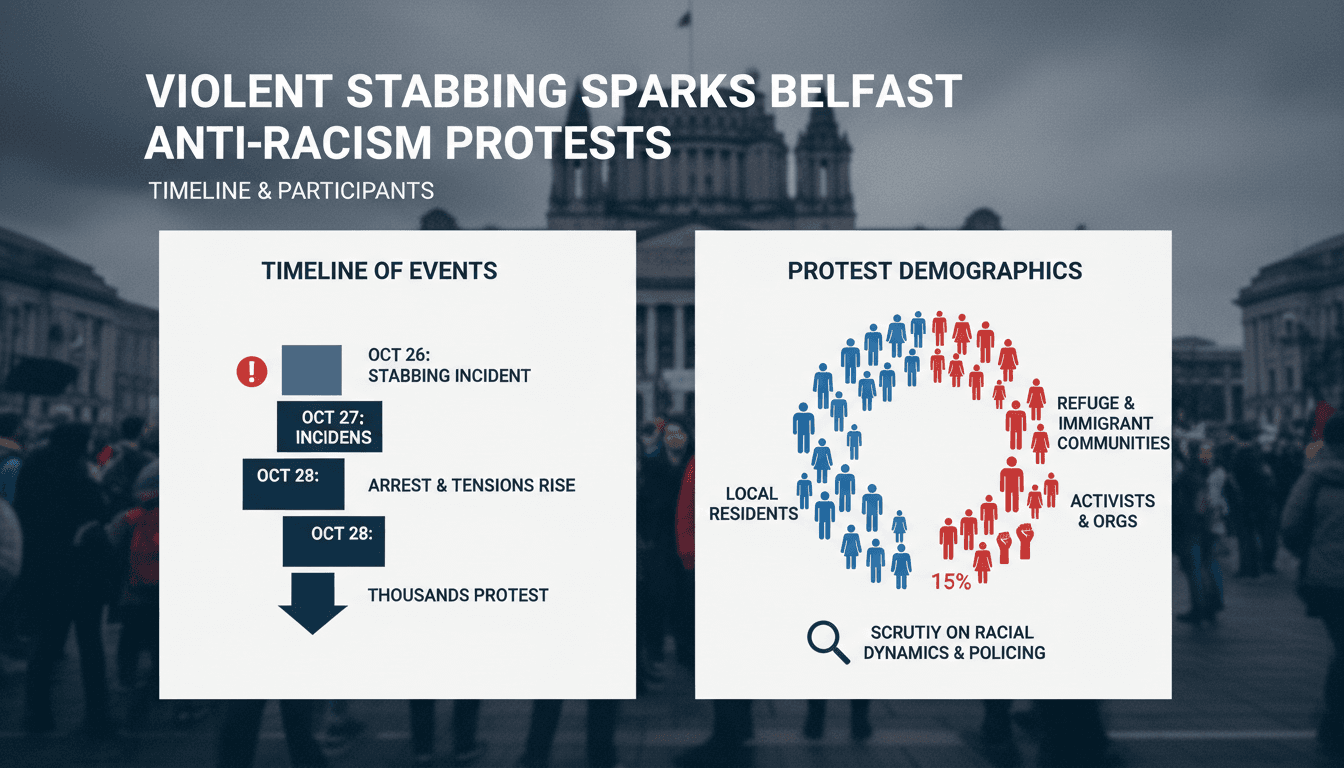
Here's what it means for you.
The violent stabbing incident in Belfast has ignited significant public unrest, highlighting the urgent need for dialogue on racial tensions and policing practices in Northern Ireland. Thousands gathered for an anti-racism rally, reflecting widespread concern over the implications of this event on community relations. The situation underscores the potential for increased scrutiny of law enforcement's handling of racial issues, which may influence future policy decisions.
What happened
A horrific stabbing incident occurred in Belfast, involving a Sudanese refugee, which led to riots and an anti-racism rally. The violence erupted on a Monday night and was widely shared on social media, drawing attention to the escalating tensions in the community. In response, thousands gathered on Saturday to protest against racism and demand accountability from law enforcement.
The stabbing involved a black assailant and a white victim, intensifying the racial dynamics at play. The unrest has persisted for three nights, indicating a significant escalation in violence and public outcry. This incident has sparked debates about the adequacy of policing and the treatment of immigrants in the UK.
The Context
The stabbing incident has highlighted deep societal divisions in Belfast, with claims of two-tier policing and immigration issues coming to the forefront. The protests reflect a growing frustration among community members regarding perceived injustices and the handling of racial tensions by authorities. The situation is further complicated by the historical context of racial relations in Northern Ireland.
As the unrest continues, it has been described as a modern-day pogrom, showcasing the urgent need for community dialogue and understanding. The involvement of a refugee in the incident has also raised questions about the treatment of immigrants and the broader implications for social cohesion in the region.
Takeaway
Looking ahead, the situation in Belfast may evolve, with the potential for further protests or community-led initiatives aimed at fostering dialogue. The events surrounding the stabbing could lead to increased scrutiny of racial dynamics and policing practices in Northern Ireland. Government and community responses will be crucial in addressing the underlying issues of racism and violence.
As tensions remain high, stakeholders must navigate the complexities of public sentiment and work towards solutions that promote understanding and inclusivity. The outcome of these events may shape future discussions on race relations and law enforcement in the UK.
24/7 international news from a French perspective in multiple languages.
"France 24 is viewed as a globally focused outlet with balanced coverage and a European perspective."
— A47 Editor
Thousands turn out for anti-racism rally after Belfast unrest
Thousands gathered in Belfast for an anti-racism rally on June 13, 2026, following unrest triggered by a violent stabbing incident that left a man in his 40s severely injured. The stabbing, which occurred on June 8, led to the arrest of a 30-year-old...
International coverage from The Guardian's global desks.
"The Guardian is known for its progressive editorial stance and in-depth analysis."
— A47 Editor
Riots and racism: why is the UK burning?
Riots erupted in Belfast following a brutal knife attack on June 8, 2026, which left a man in his 40s severely injured. The assailant, a 30-year-old Sudanese man, was arrested and charged with attempted murder, triggering widespread protests and viol...
United Kingdom-focused news including local politics, business, and social issues.
"BBC News is widely regarded as a reputable international news organization, known for its impartial tone and public service mandate."
— A47 Editor
What we know about how Northern Ireland's riots were organised
Northern Ireland has experienced three nights of violence following a brutal knife attack in Belfast on June 8, 2026, which left a man in his 40s severely injured. The incident led to the arrest of a 30-year-old Sudanese man charged with attempted mu...