
Swiss Voters Reject Population Cap Proposal in Recent Referendum
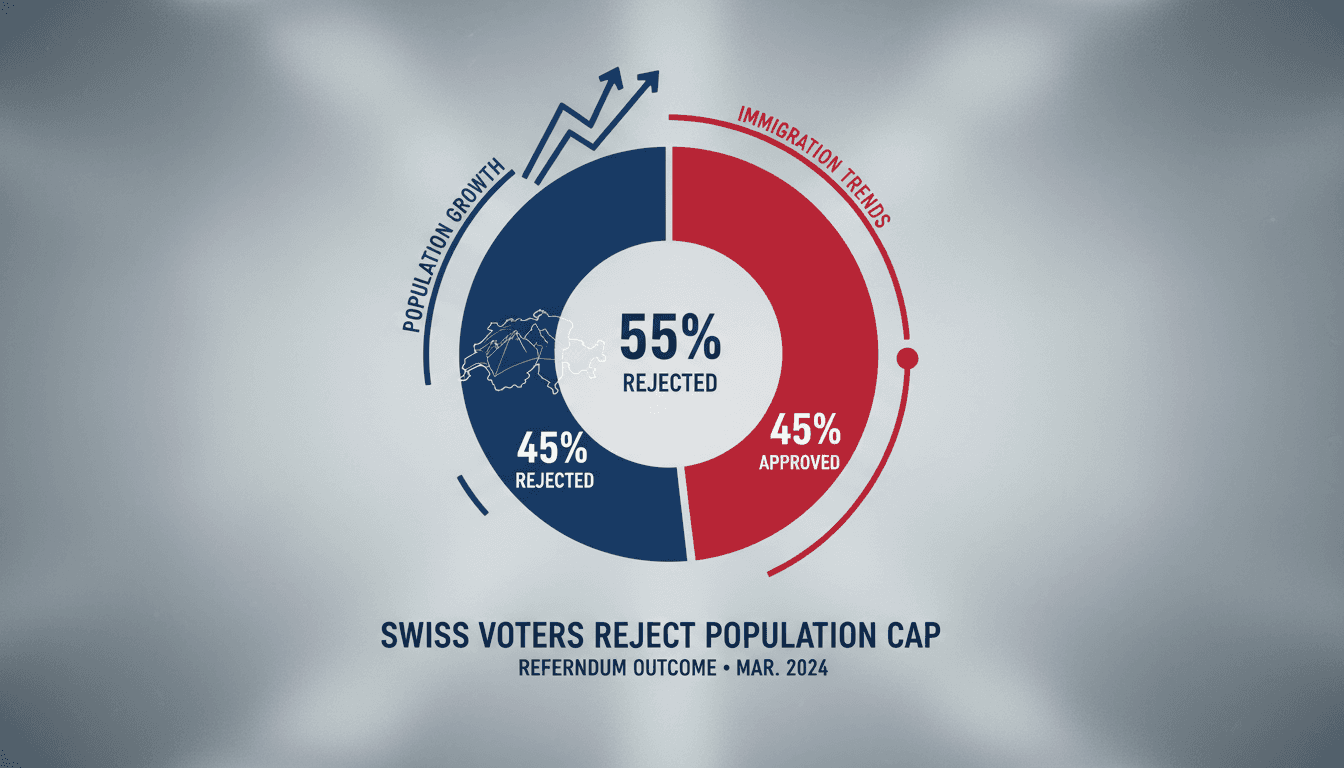
Here's what it means for you.
The recent referendum in Switzerland signals a strong public sentiment against limiting population growth, particularly in the context of rising anti-immigration sentiments. With nearly 55% of voters opposing the proposal, this outcome may reshape future discussions around immigration policies and demographic strategies. Stakeholders, including political parties and policymakers, will need to reassess their approaches to immigration in light of this decisive vote. This rejection reflects broader societal attitudes towards immigration and the complexities involved in managing population dynamics. As Switzerland navigates its demographic challenges, the implications of this referendum will likely resonate in future political discourse.
What happened
Swiss voters decisively rejected a proposal to cap the country's population at 10 million, with nearly 55% opposing the initiative. The vote, which took place on June 15, 2026, saw a margin of 55% to 45% against the population cap. This proposal was put forth by the right-wing Swiss People's Party, aiming to prevent the population from exceeding the threshold by 2050.
The current population of Switzerland stands at approximately 9.1 million, indicating that the proposal was not only ambitious but also reflective of growing concerns regarding immigration. The outcome of this referendum highlights the electorate's stance on immigration and population growth in the country.
The Context
The proposal was closely associated with rising anti-immigration sentiments, a hallmark of the Swiss People's Party's right-wing policies. As Switzerland grapples with demographic changes, the rejection of this initiative underscores the complexities of public opinion on immigration. The timing of the vote is significant, as it comes amid ongoing debates about how to manage population growth and immigration in a rapidly changing global landscape.
The Swiss People's Party, known for its strong stance on limiting immigration, will likely need to reconsider its strategies following this defeat. The referendum outcome reflects a broader societal attitude that may influence future political campaigns and policy discussions.
Takeaway
The rejection of the population cap proposal may have lasting implications for Switzerland's immigration policies and political discourse. As the country continues to navigate its demographic challenges, stakeholders will need to engage in meaningful discussions about immigration and population management.
Future political strategies may shift in response to this referendum, as parties reassess their positions on immigration in light of public sentiment. Observers should watch for potential changes in policy discussions and reactions from the Swiss People's Party and other political entities.
24/7 international news from a French perspective in multiple languages.
"France 24 is viewed as a globally focused outlet with balanced coverage and a European perspective."
— A47 Editor
Swiss reject proposal to cap population at 10 million
Swiss voters have narrowly rejected a proposal from the right-wing Swiss People's Party (SVP) to cap the country's population at 10 million by 2050, with nearly 55% voting against the initiative in a referendum that saw a turnout of 58.86%. The propo...
RT is a Russian state-funded network covering global events from a Russian perspective.
"RT is widely criticized for promoting pro-Kremlin narratives and is considered by many to be a state propaganda outlet."
— A47 Editor
Swiss reject population cap
Swiss voters have decisively rejected a proposal to cap the country's population at 10 million, with 55% opposing the measure and 45% in favor. This referendum reflects ongoing debates about immigration and population growth in Switzerland.
International stories from NPR’s global desk.
"NPR is an American public media organization known for thoughtful reporting and a slightly left-leaning editorial tone."
— A47 Editor
Swiss reject right-wing's bid to cap population at 10 million, early results show
Swiss voters have rejected a proposal from the right-wing Swiss People's Party to cap the country's population at 10 million by 2050, with nearly 55% voting against the initiative. The referendum, which saw a turnout of 58.86%, aimed to impose strict...