
IRGC Claims Mine Strikes on Two Oil Tankers in Strait of Hormuz as Traffic Falls 65 Percent
Why it matters
The formal enforcement of unilateral transit mandates across the world’s most critical hydrocarbon chokepoint drives direct cargo reallocation, sharp spikes in maritime risk pricing, and logistical bottlenecks across primary regional transshipment hubs.
What happened (in 30 seconds)
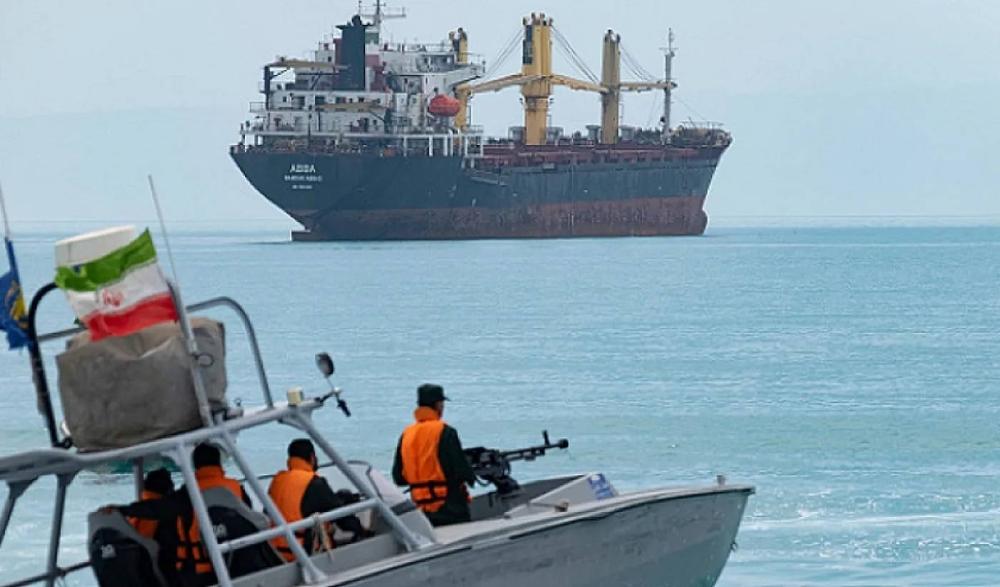
- Claimed mine detonations: On November 14, 2026, Iran’s Islamic Revolutionary Guard Corps (IRGC) Navy stated that two commercial oil tankers struck deployed naval mines after entering a designated southern corridor in the Strait of Hormuz.
- Transponder deactivations: The IRGC asserted that both targeted vessels were operating without prior passage clearance and had actively disabled their automatic identification systems (AIS) prior to the explosions.
- Traffic contraction: The announcement follows additional tanker fires reported in the prior 24-hour cycle, coinciding with an overall 65% decline in maritime volume through the waterway as tracked by the UK Maritime Trade Operations (UKMTO).
The context you actually need
- A multi-month escalation cycle: The November 14 claims represent the latest data points in a sustained campaign recorded since February 2026, during which the International Maritime Organization (IMO) has logged 136 maritime incidents and 25 seafarer deaths in regional waters.
- Diverging legal doctrines: Tehran maintains that vessels entering the strait must secure prior operational clearance, whereas the United States, partnered states, and international bodies classify these demands as unlawful curbs on freedom of navigation under international maritime law.
- High casualty rates for dark vessels: Monitoring from UKMTO shows that 42% of non-compliant commercial vessels—defined as those navigating unauthorized routes or masking their location signatures—have experienced maritime incidents along this transit corridor.
What's really happening
The operational friction in the Strait of Hormuz is driven by competing incentives over maritime transit governance. By linking naval mine claims to regulatory non-compliance—specifically identifying the vessels as operating without transit authorization and with identification systems disabled—the IRGC Navy is working to establish de facto sovereign control over deep-water navigation channels that have historically functioned under open transit regimes.
For international commercial shipping, this structural standoff alters operational risk calculations. Operating through the strait without adherence to local declarations carries a quantified 42% incident probability for non-compliant ships, according to UKMTO data. Conversely, formal compliance with unilateral authorization requests creates direct legal friction with Western maritime authorities and insurers, who reject the legitimacy of those clearance protocols.
Caught between conflicting regulatory regimes, commercial operators are opting out of the corridor entirely. The resulting 65% reduction in maritime transit volume shows that vessel owners view the route as uneconomic under current risk pricing. When commercial shipping avoids a channel responsible for roughly a fifth of global petroleum transit, the capacity loss cannot be easily absorbed by alternative infrastructure. Pipelines bypassing the waterway operate with fixed capacity ceilings, leaving a structural supply gap that translates directly into upward pressure on global benchmark oil prices.
At the same time, regional logistics networks are adapting to the supply chain squeeze. Transshipment centers that rely on predictable feeder networks from upper Gulf ports face extended dwell times and irregular vessel calls. Even where local waters remain physically stable, the broader network effect drives up transit times, forces inventory adjustments, and alters fuel procurement for industrial operators across trade corridors.
Ultimately, the deployment of naval mine threats targets the commercial economics of freedom of navigation. Rather than attempting a formal, total blockade—which would prompt immediate state military escalation—the strategy uses targeted maritime assertions against non-compliant tankers to raise commercial insurance barriers, prompt self-diversion by commercial carriers, and secure administrative leverage over the waterway.
Who feels it first (and how)
- Commercial tanker operators and charterers: Experience operational standstills, mandatory route deviations, and direct loss of access to primary loading terminals.
- Logistics and trade directors in Dubai: Face variable arrival windows, increased dwell times for sea-air cargo, and adjusted bunker fuel charges at regional distribution hubs.
- Energy procurement heads: Manage upward price pressure on crude feedstocks and petrochemical imports as regional supply continuity buffers thin out.
- Maritime underwriting syndicates: Must recalibrate regional hull and machinery war-risk premiums to account for untracked naval mine hazards and a 42% incident rate on non-compliant traffic.
What to watch next
- Independent corroboration of vessel damage: Commercial satellite imagery and UKMTO incident updates verifying the physical condition of the two tankers will confirm whether actual minefields have been laid in commercial sea lanes or if these statements serve primarily as administrative deterrence.
- Sustained variance in the 65% traffic benchmark: Weekly throughput reports from the IMO and UKMTO will demonstrate whether commercial fleets continue to bypass the strait or if convoy structures begin restoring baseline tonnage.
- Bunker and freight surcharges at regional ports: Tariff adjustments by major regional container and bulk terminals will signal how quickly elevated maritime operating costs are being passed down to midstream cargo owners.
The IRGC Navy claimed two tankers struck naval mines on November 14, 2026; maritime traffic across the Strait of Hormuz is down 65% from pre-crisis baselines; and the IMO has documented 136 maritime incidents and 25 seafarer deaths in the region since February 2026.
Energy trading desks will sustain risk premiums on Gulf-origin crude, while regional transshipment corridors face rolling scheduling revisions and extended inventory lead times.
The physical identities and flags of the targeted tankers remain unconfirmed by independent maritime tracking authorities, and it is unknown whether international naval forces will deploy operational mine-clearing assets to restore navigation in the southern transit channel.
Frequently Asked Questions
- Why it matters?
- The formal enforcement of unilateral transit mandates across the world’s most critical hydrocarbon chokepoint drives direct cargo reallocation, sharp spikes in maritime risk pricing, and logistical bottlenecks across primary regional transshipment hubs.
- What happened (in 30 seconds)?
- Claimed mine detonations: On November 14, 2026, Iran’s Islamic Revolutionary Guard Corps (IRGC) Navy stated that two commercial oil tankers struck deployed naval mines after entering a designated southern corridor in the Strait of Hormuz. Transponder deactivations: The IRGC asserted that both targeted vessels were operating without prior passage clearance and had actively disabled their automatic identification systems (AIS) prior to the explosions. Traffic contraction: The announcement follows
- What's really happening?
- The operational friction in the Strait of Hormuz is driven by competing incentives over maritime transit governance. By linking naval mine claims to regulatory non-compliance—specifically identifying the vessels as operating without transit authorization and with identification systems disabled—the IRGC Navy is working to establish de facto sovereign control over deep-water navigation channels that have historically functioned under open transit regimes. For international commercial shipping, t
- Who feels it first (and how)?
- Commercial tanker operators and charterers: Experience operational standstills, mandatory route deviations, and direct loss of access to primary loading terminals. Logistics and trade directors in Dubai: Face variable arrival windows, increased dwell times for sea-air cargo, and adjusted bunker fuel charges at regional distribution hubs. Energy procurement heads: Manage upward price pressure on crude feedstocks and petrochemical imports as regional supply continuity buffers thin out. Maritime un
- What to watch next?
- Independent corroboration of vessel damage: Commercial satellite imagery and UKMTO incident updates verifying the physical condition of the two tankers will confirm whether actual minefields have been laid in commercial sea lanes or if these statements serve primarily as administrative deterrence. Sustained variance in the 65% traffic benchmark: Weekly throughput reports from the IMO and UKMTO will demonstrate whether commercial fleets continue to bypass the strait or if convoy structures begin
Pan-Arab political news and analysis.
"Al-Quds Al-Arabi is a London-based Arabic newspaper known for political coverage."
— A47 Editor
إيران تعلن اصطدام ناقلتي نفط بألغام في مضيق هرمز وغرق إحداهما
Iran's Revolutionary Guards announced on Sunday that two oil tankers struck naval mines while attempting to transit an "unauthorized" route south of the Strait of Hormuz, causing fires on both vessels and the sinking of one of them. The Guards said t...
Coverage of political affairs and regional developments from a Saudi perspective.
"Al Watan political coverage typically follows a mainstream Saudi framing of regional and national issues."
— A47 Editor
تصعيد إيراني جديد.. ألغام هرمز تصيب ناقلتي نفط وتُربك الملاحة
Iran's Revolutionary Guard naval force announced that two oil tankers exploded and caught fire in the Strait of Hormuz after striking naval mines, further escalating military and political tensions with the United States in the region. The Guard clai...
Arabic-language coverage of Saudi, regional, and international affairs.
"Al Bilad offers mainstream Saudi newspaper coverage across domestic and broader Arab topics."
— A47 Editor
انفجارات في 3 ناقلات نفط إثر اصطدامها بألغام في مضيق هرمز
Iran's Islamic Revolutionary Guard Corps and Iranian Navy announced that explosions and fires broke out on three oil tankers after they struck mines in the Strait of Hormuz, according to a statement carried by Iranian state television early on Saturd...
Pan-Arab political news and analysis.
"Al-Quds Al-Arabi is a London-based Arabic newspaper known for political coverage."
— A47 Editor
الأمم المتحدة: التوتر في هرمز وباب المندب يهدد الأمن والاقتصاد العالمي
The United Nations has warned that ongoing tensions in the Strait of Hormuz and the Bab al-Mandab Strait pose serious risks to international peace and security, regional stability, and the global economy. The warning was delivered by Mohammed Khaled ...
Pan-Arab political news and analysis.
"Al-Quds Al-Arabi is a London-based Arabic newspaper known for political coverage."
— A47 Editor
إيران تعلن اصطدام ثلاث ناقلات نفط بألغام في مضيق هرمز
Iran's Revolutionary Guard and Iranian Navy announced that three oil tankers were hit by explosions and caught fire after striking mines in the Strait of Hormuz, where Tehran has imposed restrictions on navigation. A statement from the Revolutionary ...
Arabic-language coverage of political affairs and current events.
"Okaz political coverage typically follows mainstream Saudi framing on national and regional affairs."
— A47 Editor
هل يبقي ترمب على حالة «لاحرب ولاسلم» مع إيران؟
Donald Trump is reportedly weighing keeping the US-Iran standoff in a state of neither war nor peace, after negotiations stalled and prospects for a comprehensive nuclear deal faded. Tensions have escalated around the Strait of Hormuz, with Washingto...