
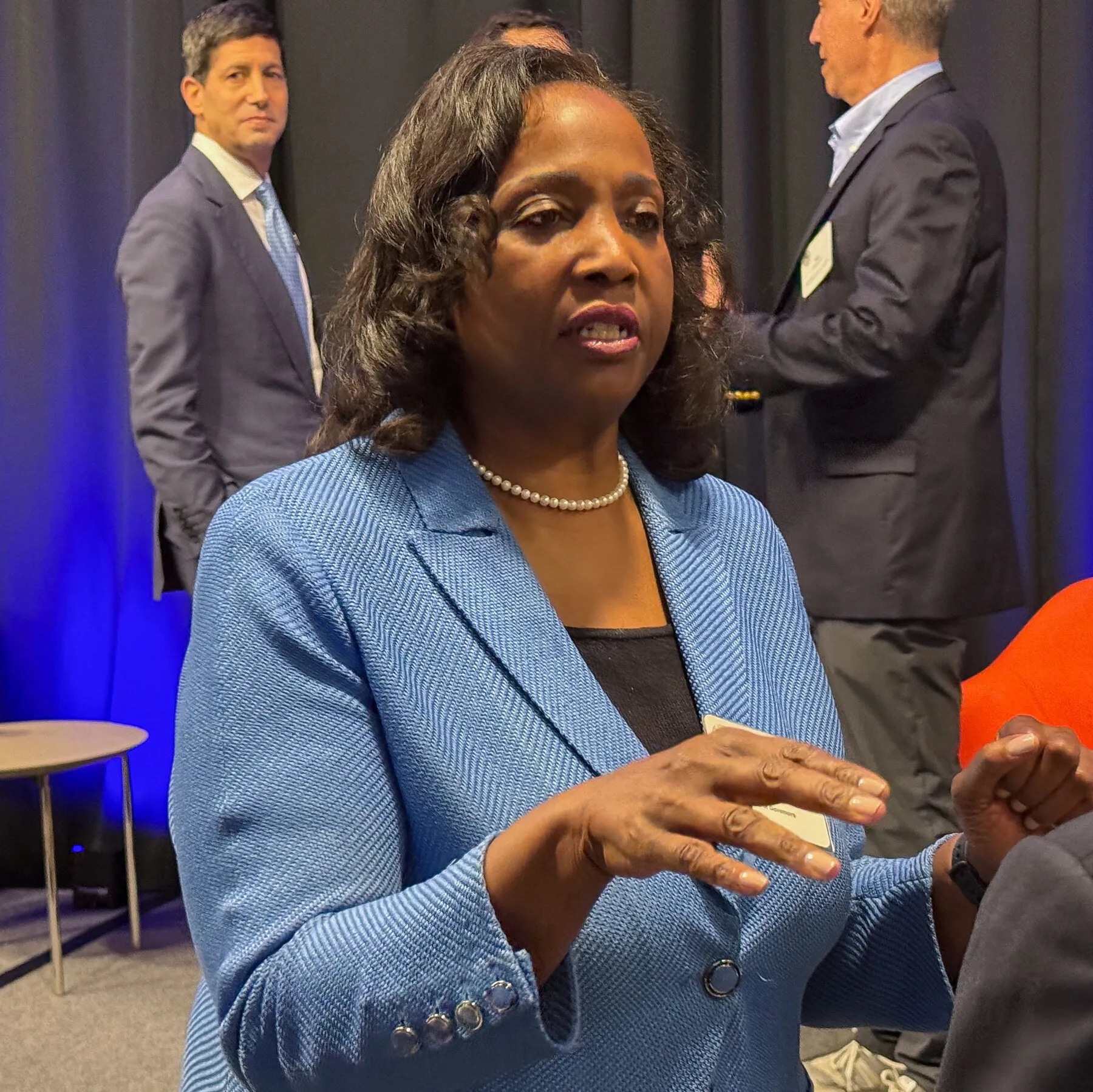
Fed Governor Lisa Cook Declines White House Removal Hearing Citing Procedural Bias
Why it matters
The formal clash over a governor’s removal tests the statutory boundary of Federal Reserve independence, establishing whether an administration can use administrative inquiry panels to create legal cause for dismissal.
What happened (in 30 seconds)
- Hearing declined: On November 17, 2026, Federal Reserve Governor Lisa Cook informed the White House through legal counsel that she will not participate in a December 14 administrative hearing without procedural reforms.
- Process challenged: Her attorney, Abbe Lowell, described the three-member administration panel as a predetermined effort designed to manufacture cause for removal or draw adverse inferences from her refusal to appear.
- Administration stance: The White House established the inquiry committee following allegations regarding Cook's 2021 mortgage applications and maintains the right to proceed with the inquiry in her absence.
The context you actually need
- A 113-year precedent: This dispute represents the first instance in the Federal Reserve's 113-year history where an active U.S. president has formally sought to remove a sitting member of the Board of Governors.
- Statutory protections: Under the Federal Reserve Act, governors are appointed to staggered 14-year terms and can only be dismissed by the executive branch prior to term expiration "for cause."
- Prior judicial intervention: An earlier attempt to remove Cook in August 2025 was halted by the U.S. Supreme Court in June 2026 on procedural due process grounds, prompting the administration to form an administrative committee of inquiry in October 2026.
What's really happening
The procedural dispute between Governor Lisa Cook and the White House is an institutional conflict over administrative authority and central bank autonomy. Cook, appointed by former President Joe Biden, has not been charged with any crime. The administration’s focus centers on allegations of false statements made on personal mortgage documentation in 2021, prior to her confirmation to the Board of Governors.
Because the Federal Reserve Act explicitly restricts presidential removal authority to "for cause" standards, the administration cannot dismiss a governor based on policy differences or macroeconomic preferences. To clear this legal threshold following the Supreme Court's June 2026 ruling, the executive branch created an internal three-member committee consisting of White House economic adviser Kevin Hassett, acting Office of Government Ethics director Keith Sonderling, and Equal Employment Opportunity Commission Chair Andrea Lucas.
The structure of this panel illustrates the core institutional incentives. For the executive branch, an internal administrative hearing serves as an empirical mechanism to establish an evidentiary record of cause, satisfying the procedural due process requirements highlighted by the judiciary. By scheduling formal proceedings—first for November 5 and then reset to December 14—the administration creates a venue to document findings. If the subject declines to participate, administrative bodies routinely reserve the right to draw adverse inferences, leveraging non-appearance as a factor to support removal recommendations.
For Cook and the Federal Reserve Board, the strategic incentive points in the opposite direction. Engaging with a panel composed entirely of political appointees who have already signaled support for her removal could legitimize an administrative process that central bank legal teams view as structurally biased. Lowell’s letter specified that Cook faces unequal access to the underlying evidence and that the adjudicators carry predetermined outcomes. Participating without procedural concessions—such as an independent presiding officer or reciprocal evidentiary discovery—risks establishing an administrative precedent where any sitting governor could be summoned before executive branch panels to justify their tenure. Consequently, Cook’s refusal forces the dispute back into constitutional and statutory territory, ensuring that any eventual termination order will face direct review in federal court rather than resting on an unchallenged administrative record.
Who feels it first (and how)
- Institutional fixed-income desks: Portfolio managers modeling long-term Treasury yields must evaluate risk premiums tied to potential governance changes within the Federal Open Market Committee.
- Corporate chief financial officers: Executive teams projecting borrowing costs face secondary uncertainty regarding whether future central bank policy will mirror historic independence or yield to executive branch influence.
- Federal Reserve leadership and staff: Sitting governors encounter structural questions over their personal legal exposure and the degree of due process granted under their statutory 14-year terms.
What to watch next
- The December 14 hearing disposition: Whether the White House committee convenes unilaterally to enter evidence into the record and formally register an adverse inference against Cook.
- Executive removal orders: Any formal presidential declaration terminating Cook’s appointment following the committee's findings, which would immediately trigger emergency federal litigation.
- Federal district court filings: Injunction requests from Cook's legal team seeking to halt administrative findings before they translate into an official vacancy on the Board of Governors.
The White House has scheduled an administrative hearing for December 14, 2026, with a three-member panel; Governor Cook has formally declined to attend absent significant procedural changes; Cook has not been charged with a criminal offense.
The administration will proceed with its internal inquiry process and assert procedural non-compliance if Cook maintains her non-appearance.
Whether federal courts will recognize pre-appointment mortgage application allegations as legally sufficient "cause" under the Federal Reserve Act to justify the removal of a confirmed governor.
Frequently Asked Questions
- Why it matters?
- The formal clash over a governor’s removal tests the statutory boundary of Federal Reserve independence, establishing whether an administration can use administrative inquiry panels to create legal cause for dismissal.
- What happened (in 30 seconds)?
- Hearing declined: On November 17, 2026, Federal Reserve Governor Lisa Cook informed the White House through legal counsel that she will not participate in a December 14 administrative hearing without procedural reforms. Process challenged: Her attorney, Abbe Lowell, described the three-member administration panel as a predetermined effort designed to manufacture cause for removal or draw adverse inferences from her refusal to appear. Administration stance: The White House established the inquiry
- What's really happening?
- The procedural dispute between Governor Lisa Cook and the White House is an institutional conflict over administrative authority and central bank autonomy. Cook, appointed by former President Joe Biden, has not been charged with any crime. The administration’s focus centers on allegations of false statements made on personal mortgage documentation in 2021, prior to her confirmation to the Board of Governors. Because the Federal Reserve Act explicitly restricts presidential removal authority to
- Who feels it first (and how)?
- Institutional fixed-income desks: Portfolio managers modeling long-term Treasury yields must evaluate risk premiums tied to potential governance changes within the Federal Open Market Committee. Corporate chief financial officers: Executive teams projecting borrowing costs face secondary uncertainty regarding whether future central bank policy will mirror historic independence or yield to executive branch influence. Federal Reserve leadership and staff: Sitting governors encounter structural que
- What to watch next?
- The December 14 hearing disposition: Whether the White House committee convenes unilaterally to enter evidence into the record and formally register an adverse inference against Cook. Executive removal orders: Any formal presidential declaration terminating Cook’s appointment following the committee's findings, which would immediately trigger emergency federal litigation. Federal district court filings: Injunction requests from Cook's legal team seeking to halt administrative findings before the
Global news coverage with extensive reporting on Middle Eastern conflicts and geopolitics.
"Al Jazeera is a Qatar-based broadcaster known for wide regional coverage and alternative perspectives."
— A47 Editor
US Fed’s Lisa Cook refuses to attend White House hearing
US Federal Reserve Governor Lisa Cook refused to attend a White House hearing, according to Al Jazeera. The refusal comes as US President Donald Trump has been trying to fire Cook since August 2025, placing the dispute over her position at the center...
Comprehensive coverage of Middle Eastern and global issues.
"Al Jazeera is a prominent voice from the Global South, especially the Middle East, with an emphasis on underreported stories."
— A47 Editor
US Fed’s Lisa Cook refuses to attend White House hearing
US Federal Reserve Governor Lisa Cook refused to attend a White House hearing, according to Al Jazeera. The refusal comes as US President Donald Trump has been trying to fire Cook since August 2025, placing the dispute over her position at the center...
Macro commentary, policy analysis, growth/inflation themes, and global outlooks.
"Contextual macro coverage that complements day-to-day market headlines."
— A47 Editor
Lawyer for Fed’s Cook says she may not participate in ’unfair’ White House hearing
Federal Reserve Governor Lisa Cook's lawyer has said she may not take part in a White House hearing on whether she should be fired, calling the process unfair. The lawyers' letter to White House counsel William Scharf says she will not attend unless ...
Global business headlines with AI angles.
"General business outlet that frequently covers AI."
— A47 Editor
'Unfair Hearing': Lisa Cook Threatens To Skip Trump's Fed Removal Inquiry. White House Faces Bias Allegations.
Federal Reserve governor Lisa Cook's attorney has said she may skip President Trump's inquiry into her removal, arguing the committee is biased and its evidence-sharing rules are unfair. Cook denies any wrongdoing, and the White House faces allegatio...
Right-of-center views on political news.
"The Washington Times is a conservative-leaning newspaper known for its political coverage and advocacy of right-of-center viewpoints."
— A47 Editor
Lisa Cook declines to participate in Trump administration meeting to discuss firing
Federal Reserve Governor Lisa Cook is declining to appear before a Trump White House panel that is weighing whether she should be fired. Her lawyer, writing to White House counsel William Scharf, has said she will not take part in the hearing, which ...
Editor-curated FT homepage stories spanning markets, business, world, and opinion.
"The Financial Times is a globally respected business publication with a centrist/center-left tone and strong markets focus."
— A47 Editor
Fed’s Lisa Cook refuses to attend hearing convened by Trump
Federal Reserve Governor Lisa Cook has refused to attend a hearing convened by the Trump administration on whether she should be fired from the central bank, according to the Financial Times. Her lawyers said in a letter to White House counsel Willia...
Markets, economy, and company analysis from NYT’s business desk.
"The New York Times is a globally recognized newspaper offering authoritative reporting with a center-left editorial stance."
— A47 Editor
Fed Governor Cook Won’t Attend White House Hearing Without Changes
Lawyers for Federal Reserve Governor Lisa Cook called the White House hearing process a "facade" and said she will not attend a hearing to discuss allegations against her unless changes are made, as President Donald Trump moves to fire her from the c...
Coverage of national news and issues shaping the United States, including politics, economy, and society.
"The Wall Street Journal is one of the most respected financial and news publications in the U.S., known for its rigorous reporting and center-right editorial perspective."
— A47 Editor
Fed’s Lisa Cook Rebuffs White House Hearing, Citing Biased Panel
Federal Reserve Governor Lisa Cook has refused to take part in a White House hearing, with her attorney writing to White House counsel William Scharf that she "has no legal obligation to participate in an unfair hearing," arguing the panel is biased.
Social/economic commentary and analysis relevant to business and markets.
"WSJ blends data-driven economic insight with commentary on policy and society."
— A47 Editor
A lawyer for Fed governor Lisa Cook said she won’t participate in a White House hearing on whether to fire her unless the Trump administration removes a senior economic adviser from the panel
A lawyer for Federal Reserve Governor Lisa Cook said in a letter to White House counsel William Scharf that she will not participate in a White House hearing on whether she should be fired unless the Trump administration removes a senior economic adv...
Insights and news on social issues, policy, and political movements across the United States.
"The Wall Street Journal is known for its deep political coverage, especially at the intersection of policy, regulation, and social dynamics."
— A47 Editor
A lawyer for Fed governor Lisa Cook said she won’t participate in a White House hearing on whether to fire her unless the Trump administration removes a senior economic adviser from the panel
A lawyer for Federal Reserve Governor Lisa Cook said in a letter to White House counsel William Scharf that she will not participate in a White House hearing on whether to fire her unless the Trump administration removes a senior economic adviser fro...