
Trump-Xi Shenzhen Summit Yields Procedural Dialogue Only as Nvidia Fallout and Internal Rifts Stall AI Cooperation
Why it matters
The world's two largest tech superpowers have shifted their frontier artificial intelligence engagement from market integration to structural damage control and operational de-risking.
What happened (in 30 seconds)
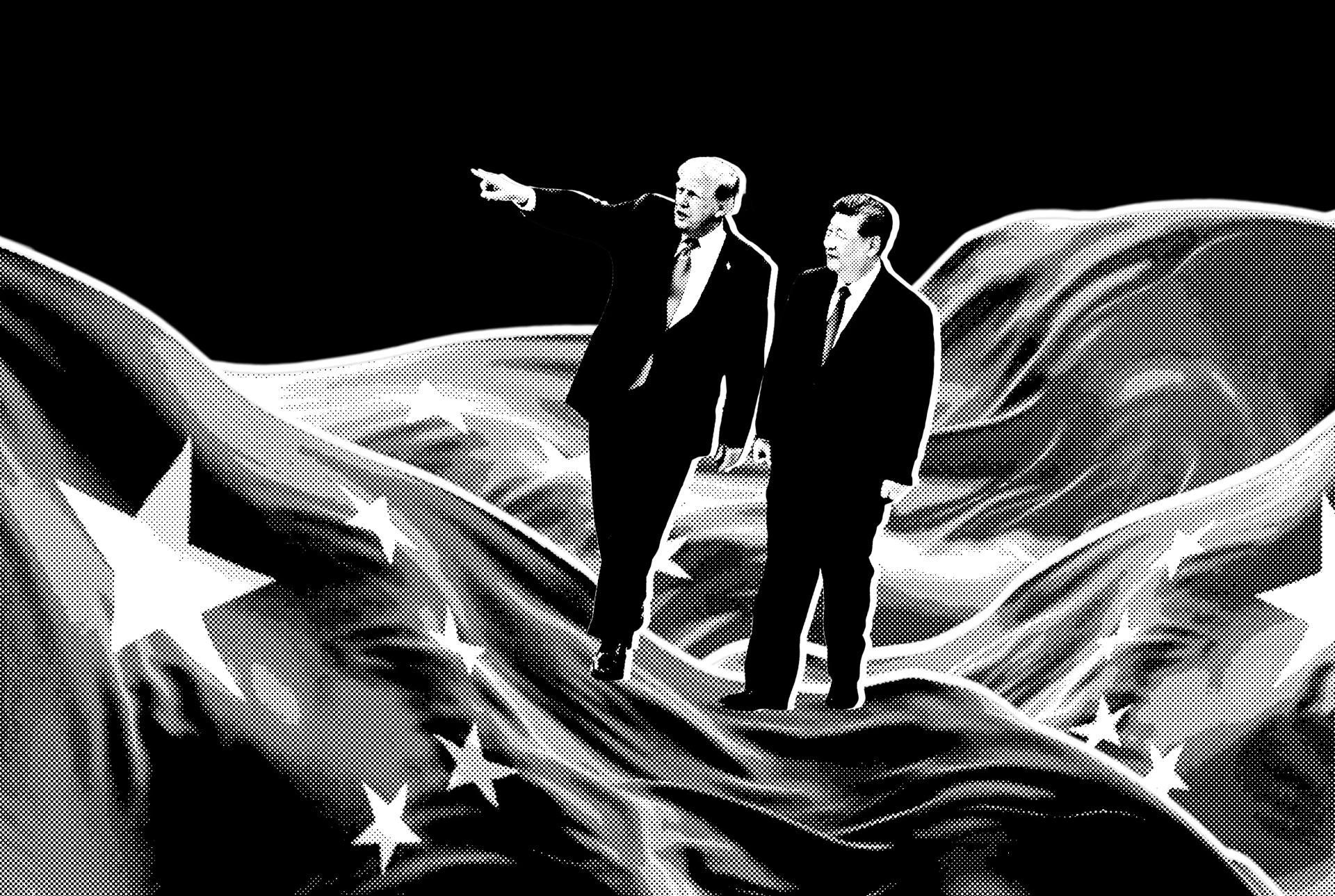
- A high-stakes bilateral encounter occurred on November 18–19, 2026: U.S. President Donald Trump and Chinese President Xi Jinping met in Shenzhen on the sidelines of the APEC summit for their third face-to-face meeting of 2026.
- Substantive agreements remained off the table: The discussions centered on procedural AI safety dialogues and maintaining communication channels rather than creating collaborative frameworks or expanding market access.
- Pre-summit restrictions framed the room: Days before the meeting, Washington introduced new interim trade rules limiting Chinese AI firms from remotely accessing American computing power, reinforcing a containment posture.
The context you actually need
- A temporary trade boundary holds until early 2027: The bilateral technology relationship operates under an extended trade truce scheduled to expire in January 2027, creating a short window for testing communication protocols.
- The bilateral framework relies on procedural incident lines: Agreements reached in September 2026 established an initial AI incident communication channel, prioritizing real-time crisis de-escalation over commercial alignment.
- The Nvidia scandal reshaped the negotiation table: Allegations of restricted chip smuggling and corporate personnel issues catalyzed intense scrutiny within Washington, leaving little room for concessions on advanced semiconductors.
What's really happening
The Shenzhen summit reflects an institutional pivot away from bilateral technology integration toward institutional containment. What appears on the surface as diplomatic paralysis is actually a deliberate incentive alignment driven by administrative friction and regulatory enforcement.
Inside the U.S. delegation, competing bureaucratic mandates dictated the summit’s boundaries. Treasury Secretary Scott Bessent championed tighter enforcement on advanced chip flows, viewing export controls as national security architecture that cannot be diluted for trade access. Conversely, other commercial factions led by Commerce Secretary Howard Lutnick sought to protect broad economic engagement and commercial leverage. Secretary of State Marco Rubio's presence underscored that diplomatic channels now prioritize strategic deterrence. These divergent internal priorities eliminated the possibility of an integrated negotiating position, ensuring that the U.S. side could only offer defensive procedural dialogue.
The Nvidia scandal altered the political calculus in real time. Accusations of restricted hardware smuggling bypassed existing export barriers, exposing vulnerabilities in unilateral enforcement mechanisms. For security-focused officials, agreeing to cooperative AI frameworks while active illicit supply chains were under investigation represented an unacceptable strategic liability. The response was institutional tightening: Washington introduced new interim rules specifically targeting remote compute access, shutting down cloud-based workarounds that Chinese AI laboratories utilized to access cutting-edge American infrastructure.
On the Chinese side, the incentive structure mirrored this defensive realism. Facing a unified baseline of American hardware containment, Beijing avoided offering concessions on domestic technology governance or industrial policy. Instead, Chinese negotiators focused on preserving existing dialogue mechanisms established in September 2026. For both administrations, the rational outcome of this summit was not a breakthrough, but the maintenance of communication corridors designed to prevent technological friction from triggering wider geopolitical escalation.
Consequently, the bilateral relationship has entered an era of risk management. Sovereign states are prioritizing compute containment and systemic resilience over cross-border commercial efficiency, cementing a fragmented global technological landscape that will shape hardware deployment for years to come.
Who feels it first (and how)
- Advanced semiconductor executives and distributors: Face intensified compliance hurdles and heightened scrutiny over secondary supply chains and offshore hardware transfers following the Nvidia fallout.
- Enterprise cloud and infrastructure providers: Must re-architect customer onboarding and regional compute access to comply with new interim rules restricting remote cross-border usage by Chinese entities.
- Venture capital and cross-border tech allocators: Must navigate prolonged regulatory friction and muted commercial integration between major innovation ecosystems, dampening dual-market software plays.
- Corporate risk and compliance officers: Need to build compliance playbooks around procedural crisis mechanisms and strict containment protocols rather than open bilateral trade standards.
What to watch next
- The January 2027 trade truce deadline: Serves as the critical operational inflection point where baseline tariffs and chip restrictions will either be renegotiated or allowed to snap back into aggressive escalation.
- Enforcement actions around remote compute access: New interim rules will reveal how strictly Washington monitors cloud-based processing infrastructure to stop offshore model training.
- Activation of the bilateral AI incident channel: Tests whether the September 2026 procedural communication lines can effectively manage real-world algorithmic or operational disputes between the two superpowers.
The Shenzhen summit between Donald Trump and Xi Jinping concluded without binding breakthroughs on artificial intelligence cooperation, maintaining the procedural mechanisms agreed upon in September 2026.
The January 2027 trade truce expiration will force another round of compressed negotiations, with hardware restrictions remaining a non-negotiable security baseline for Washington.
Whether internal divisions within the Trump administration between the Treasury and Commerce departments will settle into a unified long-term export control policy or continue to produce reactive interim regulations.
Frequently Asked Questions
- Why it matters?
- The world's two largest tech superpowers have shifted their frontier artificial intelligence engagement from market integration to structural damage control and operational de-risking.
- What happened (in 30 seconds)?
- A high-stakes bilateral encounter occurred on November 18–19, 2026: U.S. President Donald Trump and Chinese President Xi Jinping met in Shenzhen on the sidelines of the APEC summit for their third face-to-face meeting of 2026. Substantive agreements remained off the table: The discussions centered on procedural AI safety dialogues and maintaining communication channels rather than creating collaborative frameworks or expanding market access. Pre-summit restrictions framed the room: Days before t
- What's really happening?
- The Shenzhen summit reflects an institutional pivot away from bilateral technology integration toward institutional containment. What appears on the surface as diplomatic paralysis is actually a deliberate incentive alignment driven by administrative friction and regulatory enforcement. Inside the U.S. delegation, competing bureaucratic mandates dictated the summit’s boundaries. Treasury Secretary Scott Bessent championed tighter enforcement on advanced chip flows, viewing export controls as na
- Who feels it first (and how)?
- Advanced semiconductor executives and distributors: Face intensified compliance hurdles and heightened scrutiny over secondary supply chains and offshore hardware transfers following the Nvidia fallout. Enterprise cloud and infrastructure providers: Must re-architect customer onboarding and regional compute access to comply with new interim rules restricting remote cross-border usage by Chinese entities. Venture capital and cross-border tech allocators: Must navigate prolonged regulatory frictio
- What to watch next?
- The January 2027 trade truce deadline: Serves as the critical operational inflection point where baseline tariffs and chip restrictions will either be renegotiated or allowed to snap back into aggressive escalation. Enforcement actions around remote compute access: New interim rules will reveal how strictly Washington monitors cloud-based processing infrastructure to stop offshore model training. Activation of the bilateral AI incident channel: Tests whether the September 2026 procedural communi
Latest WIRED coverage of AI.
"WIRED covers AI at the intersection of tech, culture, and policy."
— A47 Editor
Even His Own Officials Don’t Think Trump’s China Trip Will Lead to Progress on AI
Even officials within the Trump administration reportedly doubt that the President's upcoming China trip will yield meaningful progress on artificial intelligence, as fallout from the Nvidia scandal has complicated any AI-related negotiations. The de...
Emerging technologies, digital transformation, IT, and cultural impact of tech.
"WIRED covers the intersection of technology, culture, and politics with a progressive, forward-looking editorial stance."
— A47 Editor
Even His Own Officials Don’t Think Trump’s China Trip Will Lead to Progress on AI
Even officials within the Trump administration reportedly doubt that the President's upcoming China trip will yield meaningful progress on artificial intelligence, as fallout from the Nvidia scandal has complicated any AI-related negotiations. The de...
Political, social, and economic news across Asia and the Pacific.
"France 24 is viewed as a globally focused outlet with balanced coverage and a European perspective."
— A47 Editor
Xi welcomes Trump: Does Nvidia scandal upend US-China AI race?
Nvidia co-founder and CEO Jensen Huang, who was set to accompany U.S. President Donald Trump to the APEC summit, is no longer with the company after reports of an extramarital relationship with Alice Huang, a Singapore-based Chinese executive whom U....
Capitol Hill news, legislation, and policy insight.
"The Hill specializes in U.S. politics and policy, with a focus on Capitol Hill developments and a reputation for insider reporting."
— A47 Editor
Trump, Xi meet in the wake of Nvidia scandal
The Hill reports that a scandal involving Nvidia and its ousted CEO Jensen Huang, who resigned after an independent board investigation into his personal relationships, including reports of an extramarital affair with a Chinese businesswoman U.S. int...
Technology business and AI-related headlines.
"Data-driven tech newsroom with global scope."
— A47 Editor
Nvidia Fallout Adds New Tension to US-China AI Race
Bloomberg Technology reports that the US-China technology rivalry is in focus as President Donald Trump travels to China for talks with Xi Jinping, with AI chips, export controls and rare earths among the key issues. Michelle Giuda of the Krach Insti...
Technology business news, market impacts, and innovation trends.
"Bloomberg is a premier financial and tech news provider, respected for its in-depth reporting and analytical rigor."
— A47 Editor
Nvidia Fallout Adds New Tension to US-China AI Race
Bloomberg Technology reports that the US-China technology rivalry is in focus as President Donald Trump travels to China for talks with Xi Jinping, with AI chips, export controls and rare earths among the key issues. Michelle Giuda of the Krach Insti...
Global political, business, and cultural coverage from WSJ international desks.
"The Wall Street Journal offers extensive international reporting with a reputation for financial insight and a center-right editorial stance."
— A47 Editor
Nvidia Scandal Threatens China’s Charm Offensive Ahead of Trump Summit
The Nvidia espionage scandal has strained relations between China and Washington just as President Donald Trump and Russian President Vladimir Putin prepare for a high-profile gathering, the Wall Street Journal reported. U.S. intelligence reportedly ...