
Iraqi Forces Deploy in Jurf al-Sakhar as State Moves Against Kataib Hezbollah Oil Smuggling Networks
Why it matters
Reclaiming sovereign enforcement over pipeline nodes limits non-state extraction of energy revenues, dampening localized infrastructure risk across broader Middle East supply chains.
What happened (in 30 seconds)
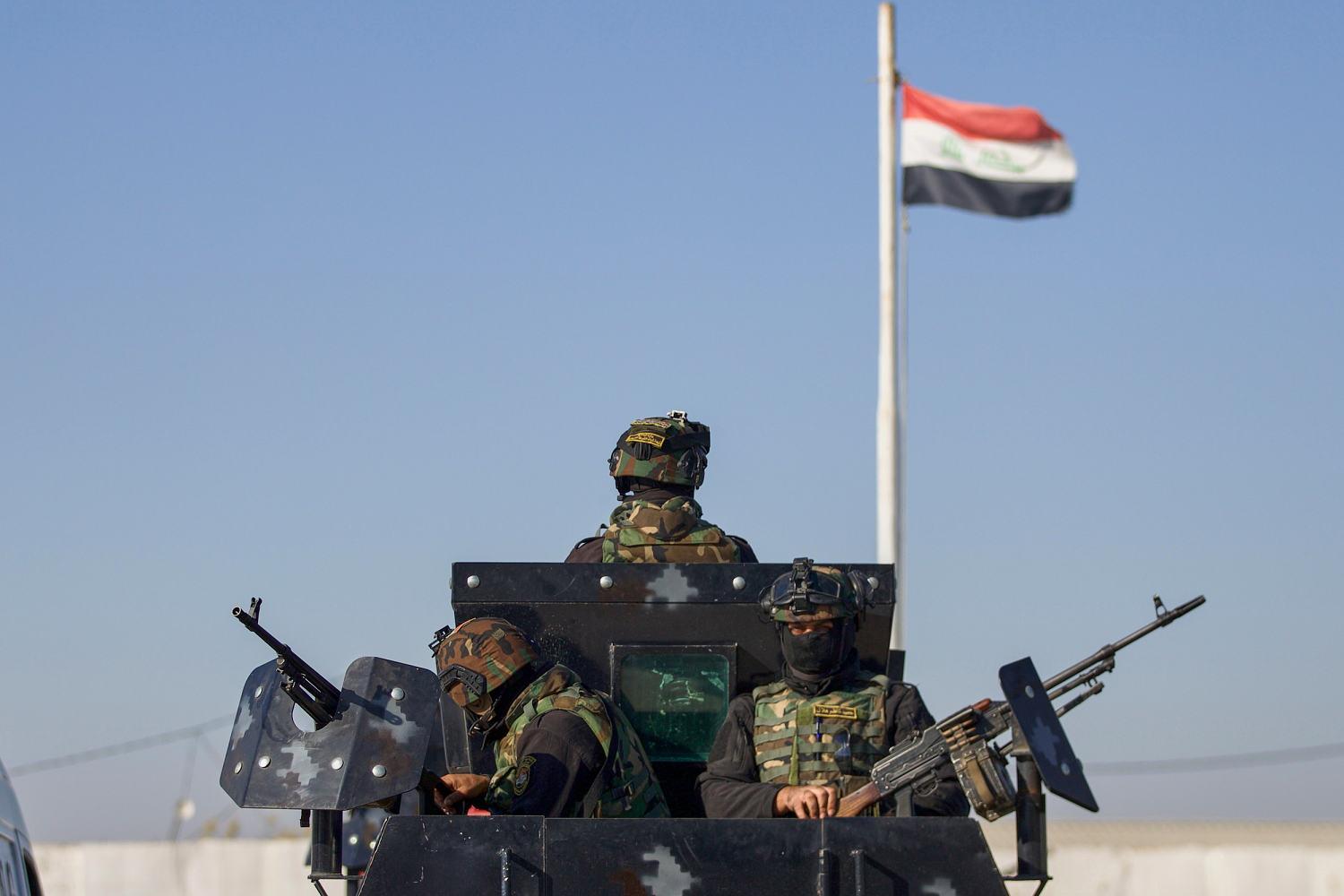
- Federal forces re-entered Jurf al-Sakhar: On November 20, 2026, Iraqi army units, federal police, and energy police deployed to the strategic Babil province town, marking their first presence in approximately 12 years.
- A negotiated drawdown averted kinetic conflict: Brokered by local political figures and Iranian Quds Force Commander Esmail Qaani, the entry established a joint command framework rather than an armed clash with Kataib Hezbollah.
- Enforcement targeted illicit energy flows: The deployment immediately transitioned pipeline monitoring to formal energy police following an investigation into tampered infrastructure that diverted hundreds of millions of dollars in crude.
The context you actually need
- A decade of territorial exclusion: Jurf al-Sakhar, located 50 kilometers south of Baghdad, operated without federal military or media access since 2014, serving as an autonomous logistical core for Kataib Hezbollah.
- High-level administrative dismissals: The operation coincided with Prime Minister Ali al-Zaidi ordering the removal of nine senior security and oil officials tied to regulatory oversight failures.
- External structural leverage: The enforcement push unfolded against sustained external scrutiny, including diplomatic pressure from U.S. President Donald Trump urging the disarmament of groups targeting regional interests.
What's really happening
The operation in Jurf al-Sakhar represents an incentive-driven renegotiation of authority rather than a purely military conquest. For over a decade, Kataib Hezbollah maintained undisputed physical control over this transit corridor. That autonomy allowed the consolidation of an illicit extraction economy, primarily through the systematic tapping of state pipelines traversing Babil province. Officials calculate that these operations drained hundreds of millions of dollars directly from sovereign revenues.
By framing the intervention around energy security and revenue integrity, the Iraqi government targeted the financial mechanics of non-state power without initiating an active urban conflict. An uncoordinated military assault carried the risk of severe asymmetrical retaliation, potentially threatening critical refining capacity and energy transport lines nationwide. Instead, the administration leveraged targeted administrative accountability—manifested in the dismissal of nine senior security and oil officials—to disrupt the domestic protection networks shielding the operation.
The diplomatic intervention involving regional stakeholders, specifically Esmail Qaani, underscores the structural incentives at play. A direct confrontation between Iraqi security forces and armed factions would introduce high-level instability into Iraq's political architecture and jeopardize critical revenue streams for both domestic institutions and regional partners. The negotiated settlement allowed federal energy police to physically secure pipeline infrastructure while offering the militia a face-saving transition into a shared command posture alongside the Popular Mobilization Forces.
For global commodity operators and regional logistics planners, the primary variable is baseline stability. When sovereign entities reassert oversight over bypassed transit sectors, they diminish unmetered crude volumes that complicate OPEC+ compliance metrics and regional market visibility. Furthermore, reducing autonomous armed presence along central transit corridors systematically reduces the likelihood of localized kinetic disruption that can inflate shipping margins and transit insurance across nearby maritime hubs.
The trade-off, however, remains structural. The compromise leaves militia elements physically present near their installations under an integrated command center, preventing complete disarmament while establishing baseline regulatory verification. The move demonstrates how modern resource sovereignty is reclaimed: not through immediate demilitarization, but by methodically severing illicit logistical rent extraction and asserting institutional dominance over physical energy pipes.
Who feels it first (and how)
- Gulf energy trading desks: Experience reduced volatility margins as unmetered Iraqi crude leakages diminish, leading to tighter tracking of verified sovereign production volumes.
- Iraqi state energy regulators: Gain physical oversight of previously inaccessible pipeline infrastructure, initiating structural audits across central transport junctions.
- Regional maritime logistics firms: Register a marginal decline in transit risk calculations near northern Gulf access routes as localized militia leverage over strategic corridors is formalized.
- Commercial operators in Dubai: Note enhanced overall operational predictability, as stabilized sovereign administration in central Iraq reduces secondary security spillover into wider Middle Eastern trade lanes.
What to watch next
- Joint command center execution: Monitor whether the scheduled coordination facility integrates federal police, army units, and Popular Mobilization Forces without command friction.
- Pipeline flow reconciliation: Track upcoming sovereign export and refining audits to quantify how much previously diverted volume returns to state-recorded pipelines.
- Enforcement perimeter expansion: Watch for subsequent regulatory moves against adjacent transit corridors that could test the endurance of the negotiated political truce.
Iraqi regular forces and energy police entered Jurf al-Sakhar on November 20, 2026, ending a 12-year absence without active kinetic confrontation; nine officials were dismissed in connection with the smuggling inquiry.
State energy infrastructure will see higher physical monitoring in Babil province, dampening unauthorized tapping of transit pipelines in the medium term.
Whether the integrated security command can permanently phase out the parallel political and territorial influence of Kataib Hezbollah in the area.
Frequently Asked Questions
- Why it matters?
- Reclaiming sovereign enforcement over pipeline nodes limits non-state extraction of energy revenues, dampening localized infrastructure risk across broader Middle East supply chains.
- What happened (in 30 seconds)?
- Federal forces re-entered Jurf al-Sakhar: On November 20, 2026, Iraqi army units, federal police, and energy police deployed to the strategic Babil province town, marking their first presence in approximately 12 years. A negotiated drawdown averted kinetic conflict: Brokered by local political figures and Iranian Quds Force Commander Esmail Qaani, the entry established a joint command framework rather than an armed clash with Kataib Hezbollah. Enforcement targeted illicit energy flows: The deplo
- What's really happening?
- The operation in Jurf al-Sakhar represents an incentive-driven renegotiation of authority rather than a purely military conquest. For over a decade, Kataib Hezbollah maintained undisputed physical control over this transit corridor. That autonomy allowed the consolidation of an illicit extraction economy, primarily through the systematic tapping of state pipelines traversing Babil province. Officials calculate that these operations drained hundreds of millions of dollars directly from sovereign
- Who feels it first (and how)?
- Gulf energy trading desks: Experience reduced volatility margins as unmetered Iraqi crude leakages diminish, leading to tighter tracking of verified sovereign production volumes. Iraqi state energy regulators: Gain physical oversight of previously inaccessible pipeline infrastructure, initiating structural audits across central transport junctions. Regional maritime logistics firms: Register a marginal decline in transit risk calculations near northern Gulf access routes as localized militia lev
- What to watch next?
- Joint command center execution: Monitor whether the scheduled coordination facility integrates federal police, army units, and Popular Mobilization Forces without command friction. Pipeline flow reconciliation: Track upcoming sovereign export and refining audits to quantify how much previously diverted volume returns to state-recorded pipelines. Enforcement perimeter expansion: Watch for subsequent regulatory moves against adjacent transit corridors that could test the endurance of the negotiate
Global news coverage with extensive reporting on Middle Eastern conflicts and geopolitics.
"Al Jazeera is a Qatar-based broadcaster known for wide regional coverage and alternative perspectives."
— A47 Editor
What next for Iraq’s push against militias following Jurf al-Sakhar deal?
Iraq's government under Prime Minister Ali al-Zaidi has moved to bring Jurf al-Sakhar, a stronghold of the Iran-backed Kataib Hezbollah militia, under state control, with Iraqi security forces deploying under a compromise deal brokered by Shi'ite pol...
Comprehensive coverage of Middle Eastern and global issues.
"Al Jazeera is a prominent voice from the Global South, especially the Middle East, with an emphasis on underreported stories."
— A47 Editor
What next for Iraq’s push against militias following Jurf al-Sakhar deal?
Iraq's government under Prime Minister Ali al-Zaidi has moved to bring Jurf al-Sakhar, a stronghold of the Iran-backed Kataib Hezbollah militia, under state control, with Iraqi security forces deploying under a compromise deal brokered by Shi'ite pol...
Comprehensive coverage of global events, politics, and international issues.
"NBC News is a mainstream outlet known for comprehensive national and international coverage with a centrist to slightly left-leaning editorial tone."
— A47 Editor
Iraqi security forces deploy in Iran-backed militia stronghold
Iraqi security forces deployed in Jurf al-Sakhar, a stronghold of the Iran-backed Kataib Hezbollah armed group, on Friday under a deal aimed at limiting the militia's reach in the area without provoking a confrontation, according to NBC News.
National headlines across the United States including breaking stories and societal issues.
"NBC News is a mainstream media outlet known for comprehensive national and international news coverage with a centrist to slightly left-leaning editorial tone."
— A47 Editor
Iraqi security forces deploy in Iran-backed militia stronghold
Iraqi security forces deployed in Jurf al-Sakhar, a stronghold of the Iran-backed Kataib Hezbollah armed group, on Friday under a deal aimed at limiting the militia's reach in the area without provoking a confrontation, according to NBC News.
Global news coverage with extensive reporting on Middle Eastern conflicts and geopolitics.
"Al Jazeera is a Qatar-based broadcaster known for wide regional coverage and alternative perspectives."
— A47 Editor
Iraq PM targets militia stronghold in bid to assert state control
Iraqi Prime Minister Ali al-Zaidi ordered security forces into Jurf al-Sakhar, a stronghold of the Iran-backed Kataib Hezbollah militia, as part of a push to assert state control. Iraqi forces deployed under a compromise deal brokered by Shi'ite poli...
Comprehensive coverage of Middle Eastern and global issues.
"Al Jazeera is a prominent voice from the Global South, especially the Middle East, with an emphasis on underreported stories."
— A47 Editor
Iraqi forces deploy to Jurf al-Sakhar after deal with Iran-backed group
Iraqi forces are deploying to Jurf al-Sakhar, a stronghold of the Iran-backed Kataib Hezbollah militia, following a compromise deal brokered by Shi'ite politicians. Federal Police are due to assume control of the town's newly established control head...
Global news coverage with extensive reporting on Middle Eastern conflicts and geopolitics.
"Al Jazeera is a Qatar-based broadcaster known for wide regional coverage and alternative perspectives."
— A47 Editor
Iraqi forces deploy to Jurf al-Sakhar after deal with Iran-backed group
Iraqi forces are deploying to Jurf al-Sakhar, a stronghold of the Iran-backed Kataib Hezbollah militia, following a compromise deal brokered by Shi'ite politicians. Federal Police are due to assume control of the town's newly established control head...
UAE-based English-language newspaper covering regional politics, economics, and global affairs.
"The National reflects Emirati policy perspectives while maintaining international editorial standards."
— A47 Editor
Iraq's Ali Al Zaidi says Jurf Al Sakhar is start of state asserting control
Iraqi Prime Minister Ali al-Zaidi ordered security forces into Jurf al-Sakhar, a stronghold of the Iran-backed Kataib Hezbollah militia, which Baghdad is presenting as the start of the state asserting control over the area. Iraqi forces deployed unde...
European coverage of Middle East politics and security issues.
"France 24 offers international reporting with a European editorial perspective."
— A47 Editor
Iraqi security forces deploy in Hezbollah stronghold under compromise deal
Iraqi security forces deployed in Jurf al-Sakhar, a stronghold of the Iran-backed Kataib Hezbollah militia, on Friday, according to state media, under a compromise deal brokered by Shi'ite politicians. Prime Minister Ali al-Zaidi had ordered the inte...
24/7 international news from a French perspective in multiple languages.
"France 24 is viewed as a globally focused outlet with balanced coverage and a European perspective."
— A47 Editor
Iraqi security forces deploy in Hezbollah stronghold under compromise deal
Iraqi security forces deployed in Jurf al-Sakhar, a Kataib Hezbollah stronghold, state media said on Friday, under a compromise deal brokered by Shi'ite politicians. Prime Minister al-Zaidi had ordered the intervention after accusing the Iran-backed ...
Regional coverage and analysis focused on politics, diplomacy, and business across the Middle East.
"Al-Monitor is known for analytical reporting on Middle East politics and policy developments."
— A47 Editor
Iraqi security forces to deploy in Iran-backed militia stronghold, security officials say
Iraqi security forces are scheduled to deploy in Jurf al-Sakhar, a stronghold of the Iran-backed Kataib Hezbollah militia, on Friday, according to security officials who spoke at a news conference. The move follows a compromise deal intended to ease ...