
U.S. Army Detonates 9,700 Pounds of Degraded Lead Azide at Iowa Ammunition Plant Amid Court-Cleared Safety Operation
Why it matters
The forced in-place destruction of unstable primary explosives demonstrates how legacy ordnance management suddenly disrupts downstream food supply corridors and elevates operational compliance scrutiny across industrial jurisdictions.
What happened (in 30 seconds)
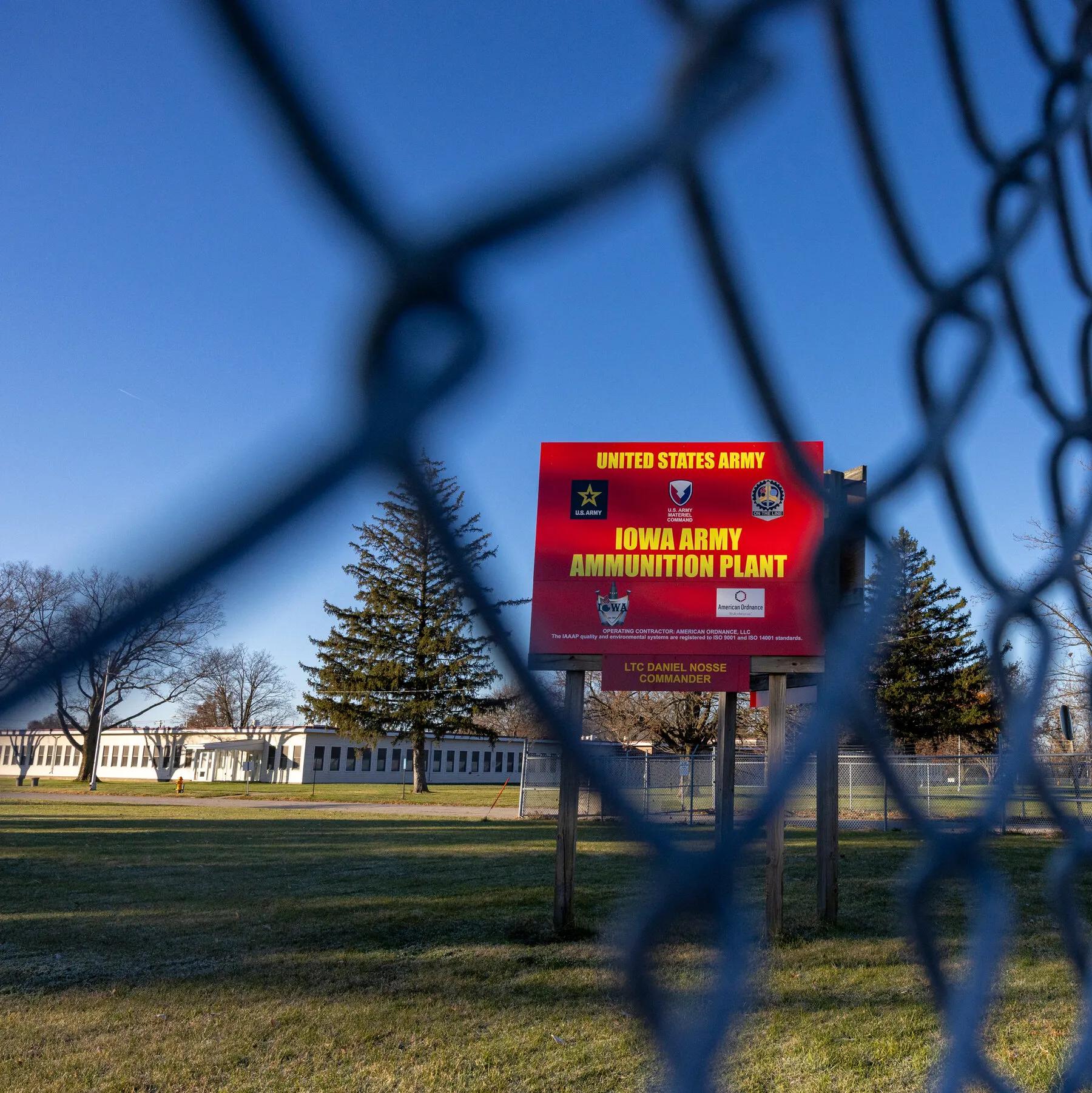
- The controlled blast proceeded: On November 25, 2026, the U.S. Army executed an in-place demolition targeting 68 drums containing roughly 9,700 pounds of degraded lead azide at the Iowa Army Ammunition Plant in Middletown, Iowa.
- Degradation prompted immediate intervention: Routine inspections in March 2026 revealed crystallization across 58 of the 68 submerged barrels, rendering the primary explosive hypersensitive to friction, heat, and movement, thereby eliminating off-site transport options.
- Legal challenges failed to halt the operation: Following pushback from local communities, the Sierra Club, and the Iowa Environmental Council over potential airborne toxic plumes, a federal court confirmed safety protocol compliance and permitted the detonation at 9 a.m. local time.
The context you actually need
- Two decades of submerged storage failed: Lead azide requires submersion in ethanol and water to remain inert; over twenty years, chemical drying and crystallization elevated the compound into an unpredictable shock-sensitive state.
- Emergency permitting bypassed standard review: The U.S. Environmental Protection Agency issued emergency disposal permits based on blast hazards, overriding conventional atmospheric discharge review timelines and sparking swift administrative friction.
- The geographical footprint spans state lines: Modeling of the potential lead dust dispersal prompted precautionary shelter-in-place advisories, temporary school shutdowns, and agricultural halts across hundreds of square miles in both Iowa and Illinois.
What's really happening
The incident at Middletown reflects an acute breakdown in legacy ordnance lifecycle management. Lead azide serves as an indispensable primary explosive, initiating secondary charges within artillery shells and standard munitions. Its chemical design prioritizes high detonation velocity and sensitivity, qualities that necessitate uninterrupted submerged storage in ethanol-water baths. When routine March 2026 surveillance discovered that 58 of 68 barrels had dried out and crystallized, the facility faced a binary failure state. Crystallized lead azide reacts violently to microscopic mechanical friction; moving the drums over public infrastructure presented a high probability of spontaneous detonation.
This left in-place destruction within reinforced underground bunkers as the sole operational choice. However, the physical containment of the concussive force does not neutralize the heavy metal byproduct. Detonating 9,700 pounds of lead-based compounds vaporizes the material into airborne lead particulates. In regulatory terms, this created an irreconcilable conflict between immediate occupational safety—protecting facility technicians and adjacent municipal zones from an uncontrolled blast—and environmental statutes designed to prevent heavy metal contamination across working agricultural acreage.
The response architecture illustrates how risk is transferred rather than eliminated. To execute the detonation, the U.S. Army secured an emergency disposal variance from the EPA. That decision subordinated regional soil preservation and clean air baselines to immediate hazard mitigation. For operators across industrial chemicals, defense manufacturing, and environmental compliance, this sequence exposes the fragility of long-term hazardous storage programs. Facilities holding aging military chemical inventories operate on finite containment horizons. When maintenance routines fail to catch slow drying mechanisms before crystallization occurs, remediation pivots from controlled chemical neutralization to blunt kinetic disposal, shifting the financial and ecological consequences directly onto nearby communities and downstream supply chain nodes.
Who feels it first (and how)
- Midwestern agricultural producers: Grain and livestock operations within downwind zones face immediate testing mandates and shipment pauses while soil and forage lead deposition baselines are assessed.
- Regional logistics and freight operators: Transport corridors across eastern Iowa and western Illinois experienced temporary reroutes and access suspensions during the 9 a.m. blast window.
- Defense remediation contractors: Industrial teams managing aging ammunition storage facilities will see stricter monitoring protocols and accelerated audit cycles for submerged chemical compounds.
- Burlington and Middletown residents: Surrounding populations absorbed the direct operational externalities, navigating shelter-in-place directives, civic facility closures, and ongoing concerns regarding heavy metal accumulation.
What to watch next
- Post-blast atmospheric soil sampling: Independent environmental monitoring results will determine whether particulate plumes exceeded EPA thresholds across regional farmlands.
- Storage protocol overhauls: Defense logistical directives will likely mandate digitized, real-time hydration sensors inside all long-term primary explosive containment units.
- Remediation litigation discovery: Ongoing filings from environmental organizations may compel public disclosure of previous inspection records and maintenance gaps preceding the March 2026 findings.
The U.S. Army destroyed 68 drums totaling 9,700 pounds of lead azide on November 25, 2026, after federal courts dismissed emergency injunctions.
Heightened environmental scrutiny will trigger additional cleanup obligations and targeted soil remediation liabilities for the Middletown installation.
The full territorial distribution of airborne lead particulates across Iowa and Illinois croplands remains unverified pending comprehensive post-detonation field testing.
Frequently Asked Questions
- Why it matters?
- The forced in-place destruction of unstable primary explosives demonstrates how legacy ordnance management suddenly disrupts downstream food supply corridors and elevates operational compliance scrutiny across industrial jurisdictions.
- What happened (in 30 seconds)?
- The controlled blast proceeded: On November 25, 2026, the U.S. Army executed an in-place demolition targeting 68 drums containing roughly 9,700 pounds of degraded lead azide at the Iowa Army Ammunition Plant in Middletown, Iowa. Degradation prompted immediate intervention: Routine inspections in March 2026 revealed crystallization across 58 of the 68 submerged barrels, rendering the primary explosive hypersensitive to friction, heat, and movement, thereby eliminating off-site transport options.
- What's really happening?
- The incident at Middletown reflects an acute breakdown in legacy ordnance lifecycle management. Lead azide serves as an indispensable primary explosive, initiating secondary charges within artillery shells and standard munitions. Its chemical design prioritizes high detonation velocity and sensitivity, qualities that necessitate uninterrupted submerged storage in ethanol-water baths. When routine March 2026 surveillance discovered that 58 of 68 barrels had dried out and crystallized, the facilit
- Who feels it first (and how)?
- Midwestern agricultural producers: Grain and livestock operations within downwind zones face immediate testing mandates and shipment pauses while soil and forage lead deposition baselines are assessed. Regional logistics and freight operators: Transport corridors across eastern Iowa and western Illinois experienced temporary reroutes and access suspensions during the 9 a.m. blast window. Defense remediation contractors: Industrial teams managing aging ammunition storage facilities will see stric
- What to watch next?
- Post-blast atmospheric soil sampling: Independent environmental monitoring results will determine whether particulate plumes exceeded EPA thresholds across regional farmlands. Storage protocol overhauls: Defense logistical directives will likely mandate digitized, real-time hydration sensors inside all long-term primary explosive containment units. Remediation litigation discovery: Ongoing filings from environmental organizations may compel public disclosure of previous inspection records and ma
Scientific research, space, environment, and health coverage.
"The New York Times is a globally recognized newspaper offering authoritative reporting with a center-left editorial stance."
— A47 Editor
Iowa’s Toxic Explosion
The U.S. Army is scheduled to detonate thousands of pounds of explosives at the Iowa Army Ammunition Plant in Middletown, Iowa, a process that could disperse toxic lead dust over a wide area. The planned Wednesday detonation involves lead azide, a co...
Celebrity news, photo galleries, and Hollywood updates.
"Wonderwall covers celebrity gossip, Hollywood rumors, and pop culture photo galleries."
— A47 Editor
U.S. Army moves forward with plan to detonate five tons of unstable explosives despite toxic lead dust cloud concerns after getting the go-ahead from President Donald Trump with ‘death or destruction’ warning
The U.S. Army plans to carry out a controlled detonation of 68 barrels of degraded lead azide, roughly five tons of unstable explosives, at the Iowa Army Ammunition Plant in Middletown on November 25. The operation was cleared by a federal appeals co...
Capitol Hill news, legislation, and policy insight.
"The Hill specializes in U.S. politics and policy, with a focus on Capitol Hill developments and a reputation for insider reporting."
— A47 Editor
Iowa governor backs Army's lead detonation even as safety questions remain
The U.S. Army is moving forward with a controlled detonation of about five tons of degraded lead azide, a sensitive bomb-making compound, at the Iowa Army Ammunition Plant in Middletown, Iowa, after a federal appeals court lifted an administrative st...
Global news coverage with extensive reporting on Middle Eastern conflicts and geopolitics.
"Al Jazeera is a Qatar-based broadcaster known for wide regional coverage and alternative perspectives."
— A47 Editor
Five tonnes of explosives set to blow up in Iowa
The U.S. Army is preparing to detonate about five tonnes of degraded lead azide, a sensitive bomb-making compound stored at the Iowa Army Ammunition Plant in Middletown, Iowa, with the blast reported as scheduled for Wednesday. The plan has been repe...
Comprehensive coverage of Middle Eastern and global issues.
"Al Jazeera is a prominent voice from the Global South, especially the Middle East, with an emphasis on underreported stories."
— A47 Editor
Five tonnes of explosives set to blow up in Iowa
The U.S. Army is preparing to detonate about five tonnes of degraded lead azide, a sensitive bomb-making compound stored at the Iowa Army Ammunition Plant in Middletown, Iowa, with the blast reported as scheduled for Wednesday. The plan has been repe...
Business, investment, entrepreneurship, leadership, and innovation.
"Forbes is known for its coverage of business leaders, market trends, and entrepreneurial ventures with a pro-business editorial stance."
— A47 Editor
Army Schedules Detonation Of Toxic Bomb-Making Materials In Iowa For Wednesday
The U.S. Army has scheduled the detonation of nearly five tons of lead azide, a toxic bomb-making material, at a site in Iowa for Wednesday, after a federal appeals court cleared the path for the operation following an earlier pause on the relevant E...