
India's Delhi High Court Upholds Ban on Telegram Amid Exam Leak Controversy
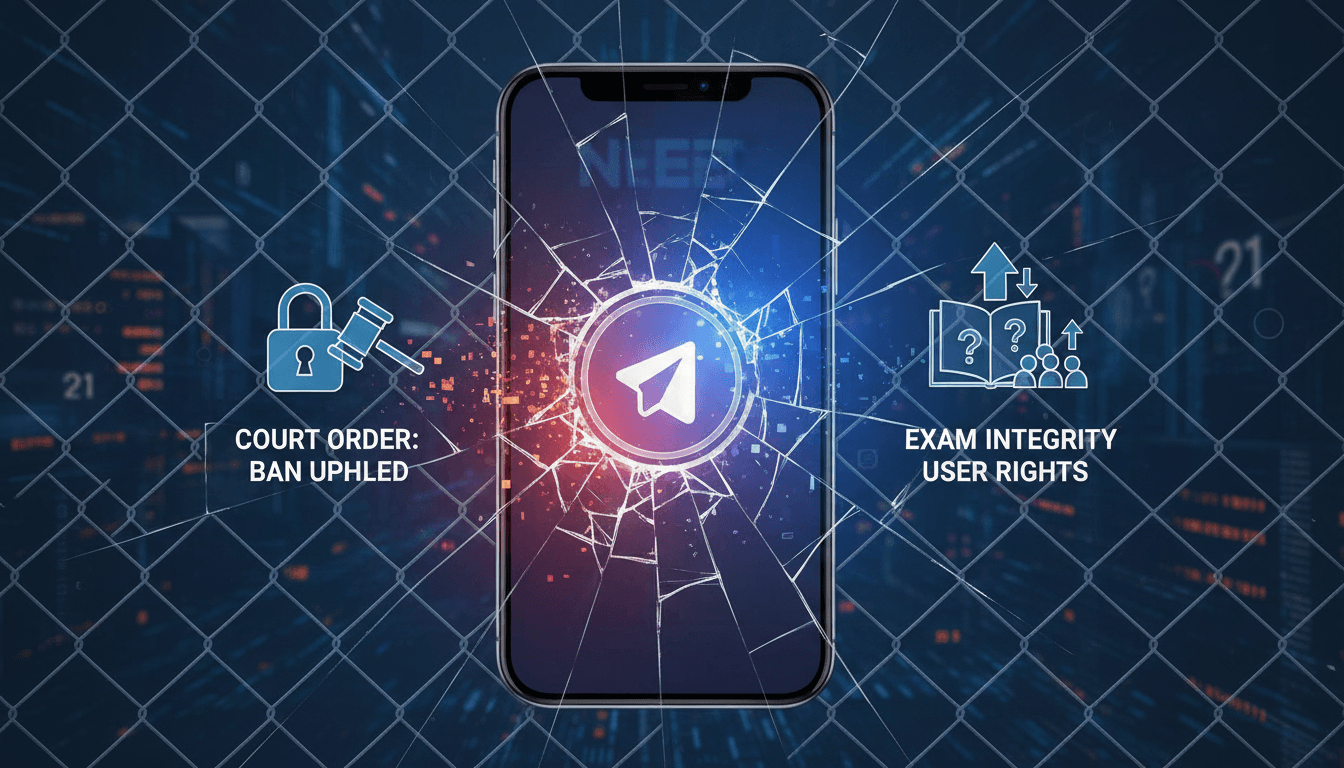
Here's what it means for you.
The Delhi High Court's decision to uphold the ban on Telegram underscores the increasing scrutiny digital platforms face regarding content moderation. This ruling may influence how tech companies operate in India, particularly concerning user rights and government regulations. As the legal landscape evolves, stakeholders must navigate the balance between free speech and the integrity of educational assessments.
What happened
India's Delhi High Court has upheld a ban on the Telegram messaging app, which was implemented due to concerns over the platform's role in facilitating the sale of leaked exam questions for the NEET medical entrance test. The Indian government took this action following the cancellation of NEET results due to suspected leaks, raising alarms about the integrity of the examination process. Telegram has challenged the ban, arguing that it undermines free speech and that specific content should be targeted rather than banning the entire platform.
The ban was enacted using emergency powers, with the government blocking Telegram until June 22. This decision has significant implications for the app's 150 million users in India, its largest market. Telegram's founder criticized the ban as a mistake that harms users rather than addressing the issue of leaked content effectively.
The Context
The controversy surrounding Telegram's ban is rooted in the broader concerns about exam integrity in India, particularly regarding the NEET exam, which is taken by over 2 million students annually. The political backlash following the cancellation of NEET results has intensified scrutiny on digital platforms and their responsibilities in content moderation. Telegram's argument emphasizes that a blanket ban punishes all users and fails to tackle the specific issue of leaked exam papers.
The Indian government's decision to invoke emergency powers reflects a growing trend of regulatory actions against digital platforms in response to perceived threats to public integrity. As the legal battle unfolds, it may set a precedent for how similar cases are handled in the future, impacting both users and platform operators.
Takeaway
The ongoing legal battle between Telegram and the Indian government may significantly influence future regulations on digital platforms in India. As the court's decision stands, it raises questions about the balance between user rights and the government's role in ensuring the integrity of educational assessments. Stakeholders will be closely monitoring potential changes in India's digital content regulation policies and how other messaging platforms respond to similar challenges.
As the situation develops, the outcome could reshape interactions between tech companies and government authorities, particularly regarding content moderation practices and user rights. The implications of this ruling may extend beyond Telegram, affecting the broader landscape of digital communication in India.
Global news coverage with extensive reporting on Middle Eastern conflicts and geopolitics.
"Al Jazeera is a Qatar-based broadcaster known for wide regional coverage and alternative perspectives."
— A47 Editor
Indian court rejects appeal over ban on Telegram app
An Indian court has upheld a government ban on the Telegram messaging app, which was implemented due to allegations that channels on the platform were selling leaked questions for undergraduate entrance exams. This ruling reinforces the government's ...
Comprehensive coverage of Middle Eastern and global issues.
"Al Jazeera is a prominent voice from the Global South, especially the Middle East, with an emphasis on underreported stories."
— A47 Editor
Indian court rejects appeal over ban on Telegram app
An Indian court has upheld a government ban on the Telegram messaging app, which was implemented due to allegations that channels on the platform were selling leaked questions for undergraduate entrance exams. This ruling reinforces the government's ...
Business and economy coverage focused on Dubai, the UAE, Saudi Arabia, and the wider Middle East.
"Arabian Business is a well-known regional business outlet with strong focus on Gulf markets, leadership, and investment stories."
— A47 Editor
Telegram banned: UAE users still barred as court rejects appeal
The Delhi High Court has upheld a ban on the messaging platform Telegram for users in the UAE, rejecting the company's appeal to overturn the ruling. This decision follows concerns regarding Telegram's role in facilitating fraud during the National E...
Startup news with frequent AI coverage.
"Covers launches, funding, and product updates in AI."
— A47 Editor
Telegram ban in India sparks a rush to VPNs, rival apps
India has temporarily banned the messaging app Telegram, citing its use by various groups, including those involved in cheating during medical entrance exams. The ban is set to last until June 22, 2026, as authorities aim to curb fraudulent activitie...
International news coverage curated for readers in the UAE and Gulf region.
"Emirates 24|7 world coverage presents global developments through a UAE-facing and Gulf-relevant editorial lens."
— A47 Editor
How India sparred with Telegram over NEET paper leak ahead of app ban
The Indian government has temporarily banned the messaging platform Telegram until June 22, 2026, due to concerns that it facilitated fraud during the National Eligibility cum Entrance Test (NEET). This decision follows the cancellation of exam resul...