
Israeli government defies Supreme Court ruling on media regulation
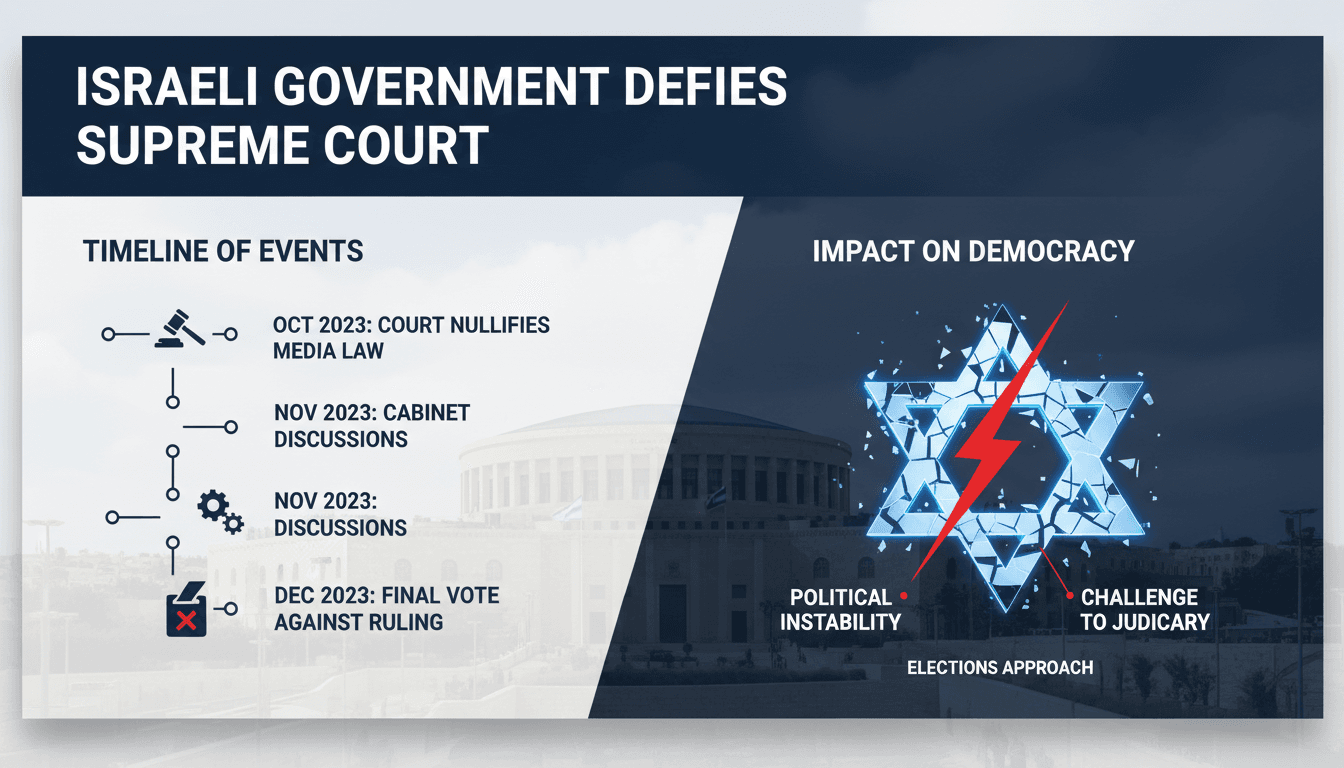
Here's what it means for you.
The Israeli government's rejection of a Supreme Court ruling raises significant concerns regarding the stability of democratic institutions in Israel. As tensions escalate between the executive and judiciary branches, the implications for media regulation and public trust are profound. Stakeholders in the political and legal arenas will need to navigate this evolving landscape carefully, particularly with national elections on the horizon. This unprecedented move could lead to increased political instability, affecting not only governance but also public sentiment towards the judiciary. Observers will be closely monitoring the reactions from both the legal community and the public as this situation unfolds.
What happened
The Israeli cabinet, led by Prime Minister Benjamin Netanyahu, voted to defy a Supreme Court ruling concerning the Second Authority for Television and Radio. This decision marks a significant escalation in the ongoing tensions between the government and the judiciary, particularly as national elections approach. The ruling in question was issued on June 17, 2026, and the cabinet's decision to reject it came on July 5, 2026.
This is the first instance of Netanyahu's government openly flouting a Supreme Court ruling, indicating a notable shift in the relationship between the executive and judicial branches. The government's action has been characterized by its members as judicial overreach, further complicating the political landscape.
The Context
Tensions between the Israeli government and judiciary have been escalating since the 2022 elections, creating a backdrop of conflict that has now reached a critical point. The rejection of the Supreme Court ruling is seen as part of a broader pattern of confrontation between the Netanyahu administration and the judiciary. As the country gears up for national elections expected by late October 2026, the implications of this defiance could have lasting effects on Israel's democratic institutions.
The decision has sparked fears of a constitutional crisis, raising questions about the future of media regulation in Israel. With the judiciary's authority being challenged, the potential for public backlash and protests against the government's actions looms large.
Takeaway
The government's defiance of the Supreme Court could lead to increased political instability in Israel as elections approach. Observers will be watching closely for potential responses from the Supreme Court and the legal community, as well as public reactions to this unprecedented move. The situation remains fluid, and the evolving political landscape will be critical to monitor in the coming weeks.
As the government faces potential backlash, the implications for Israel's democratic framework and public trust in institutions will be significant. The reactions from both the judiciary and citizens will shape the narrative as the country navigates this contentious period.
UAE-based English-language newspaper covering regional politics, economics, and global affairs.
"The National reflects Emirati policy perspectives while maintaining international editorial standards."
— A47 Editor
Israeli government's vow to defy Supreme Court ruling causes alarm
The Israeli government has announced its intention to defy a Supreme Court ruling, which has raised significant concerns regarding the balance of power between the executive and judiciary branches. This decision follows a series of contentious ruling...
Regional coverage and analysis focused on politics, diplomacy, and business across the Middle East.
"Al-Monitor is known for analytical reporting on Middle East politics and policy developments."
— A47 Editor
Explainer-Netanyahu government challenge to Supreme Court reignites judicial row
Prime Minister Benjamin Netanyahu's government has announced plans to challenge a Supreme Court ruling regarding the media regulator, reigniting tensions between the executive and judiciary branches in Israel. This decision follows a ruling from June...
Pan-Arab news coverage spanning politics, business, sports, and regional affairs.
"Asharq Al-Awsat reflects a broad Arab editorial perspective with strong attention to regional geopolitics."
— A47 Editor
الحكومة الإسرائيلية ترفض حكم المحكمة العليا بشأن هيئة تنظيم وسائل الإعلام
The Israeli government has rejected a ruling from the Supreme Court regarding the broadcasting regulatory authority, raising concerns about a potential constitutional crisis. This decision reflects ongoing tensions between the government and judicial...
Regional coverage and analysis focused on politics, diplomacy, and business across the Middle East.
"Al-Monitor is known for analytical reporting on Middle East politics and policy developments."
— A47 Editor
Israel government says it will defy Supreme Court ruling on media regulator
The Israeli cabinet has voted to defy a Supreme Court ruling regarding the country's broadcast regulator, marking a significant moment in the ongoing tensions between the government and the judiciary. This decision raises concerns about a potential c...
Editor-curated FT homepage stories spanning markets, business, world, and opinion.
"The Financial Times is a globally respected business publication with a centrist/center-left tone and strong markets focus."
— A47 Editor
Netanyahu government defies Israel’s top court over TV regulation
The Israeli government, led by Prime Minister Benjamin Netanyahu, has formally rejected a ruling from the Supreme Court regarding television regulation, raising concerns about a potential constitutional crisis in Israel. This defiance marks a signifi...