
Vice President JD Vance Faces Backlash Over Iran Nuclear Deal Negotiations
Here's what it means for you.
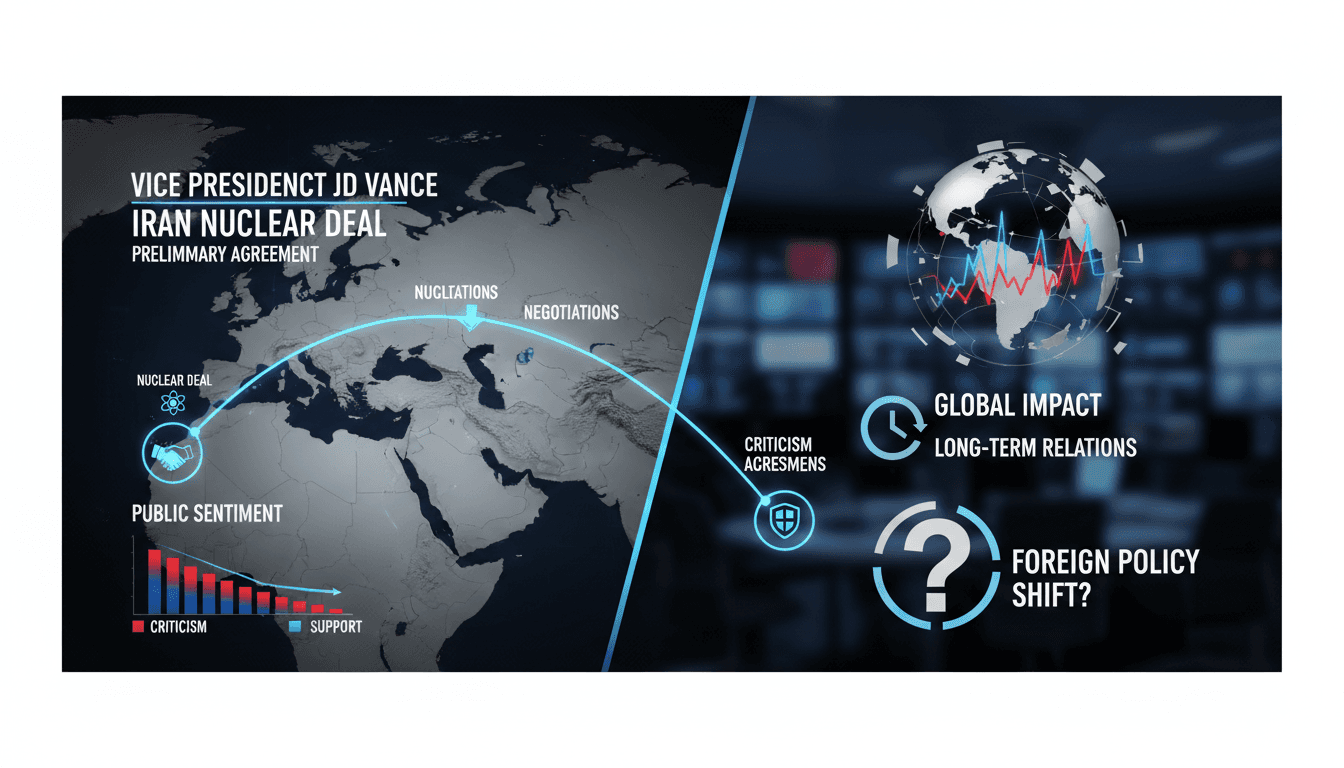
The ongoing negotiations for a preliminary nuclear deal with Iran led by Vice President JD Vance are stirring significant public and political discourse. The perceived lack of substantial concessions from Tehran raises concerns about the effectiveness of the agreement. As Vance works to defend the deal, the outcome will have lasting implications for U.S.-Iran relations and the Biden administration's foreign policy strategy. Public sentiment and political opposition will play a crucial role in shaping the future of these negotiations. The administration's ability to navigate this backlash could influence broader geopolitical dynamics.
What happened
Vice President JD Vance is currently engaged in negotiations for a preliminary nuclear deal with Iran, which has drawn considerable criticism from political opponents. Critics, including allies of former President Trump, argue that the agreement fails to secure significant concessions from Tehran. In response to this backlash, Vance is actively defending the merits of the deal to a skeptical American public.
The preliminary agreement was announced recently, marking a pivotal moment in U.S.-Iran relations. Vance's role as the public face of these negotiations has been solidified, placing him at the center of the controversy.
The Context
The negotiations come at a time when U.S.-Iran relations are particularly strained, making the stakes of this deal exceptionally high. Vance's efforts to gain public support for the agreement are critical, as the Biden administration seeks to reshape its foreign policy agenda. The timing of these negotiations coincides with increasing scrutiny from Congress and the public, which adds pressure on Vance to deliver a convincing argument for the deal's benefits.
As Vance steps into the White House briefing to address concerns, the political landscape surrounding the negotiations is fraught with tension. The outcome of these discussions will not only impact U.S.-Iran relations but also set the tone for future diplomatic efforts in the region.
Takeaway
Looking ahead, the success of the negotiations will largely depend on Vance's ability to address public skepticism and political opposition. Observers should monitor potential reactions from Congress regarding the deal, as well as public opinion polls that gauge acceptance of the agreement. The administration's strategy in managing these challenges will be pivotal in determining the future of U.S.-Iran relations.
As negotiations progress, the effectiveness of Vance's outreach efforts will be crucial in shaping the broader geopolitical landscape. The administration's handling of this situation could have lasting implications for its foreign policy direction.
Capitol Hill news, legislation, and policy insight.
"The Hill specializes in U.S. politics and policy, with a focus on Capitol Hill developments and a reputation for insider reporting."
— A47 Editor
Vance on the clock with Iran deal under fire
Vice President JD Vance is under pressure to negotiate a nuclear deal with Iran, following a memorandum of understanding that has drawn criticism for not securing substantial concessions from Tehran. His role as the primary negotiator was highlighted...
Focused political reporting and governmental affairs.
"NBC News is a mainstream media outlet known for comprehensive national and international news coverage with a centrist to slightly left-leaning editorial tone."
— A47 Editor
White House defends Iran deal amid criticism
The White House, represented by Vice President JD Vance, defended a preliminary agreement with Iran amidst criticism from some Trump allies. This memorandum of understanding aims to limit Iran's nuclear ambitions and facilitate the reopening of the S...
UAE-based English-language newspaper covering regional politics, economics, and global affairs.
"The National reflects Emirati policy perspectives while maintaining international editorial standards."
— A47 Editor
Vance tries to sell sceptical American public on new Iran deal
U.S. Vice President JD Vance is actively promoting a new agreement with Iran, aimed at reducing hostilities and facilitating the return of nuclear inspectors, amidst skepticism from the American public regarding its effectiveness. This initiative fol...