
Trump announces preliminary deal with Iran to end war and reopen Strait of Hormuz
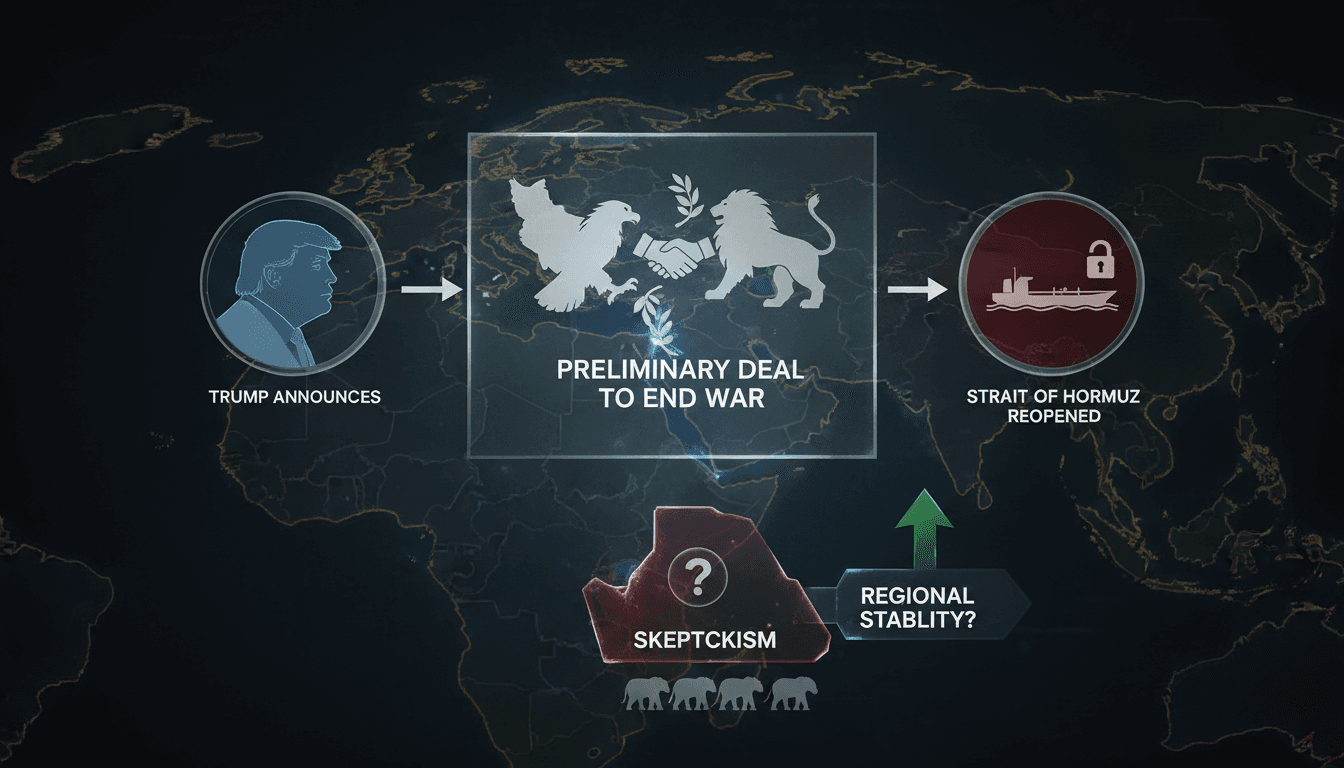
Here's what it means for you.
President Trump's announcement of a preliminary deal with Iran could mark a pivotal moment in U.S.-Iran relations, potentially reshaping the geopolitical landscape in the Middle East. The agreement aims to end ongoing hostilities and reopen the vital Strait of Hormuz, a key shipping route for global oil supplies. However, skepticism from Republican lawmakers raises questions about the deal's transparency and the implications for U.S. foreign policy. The success of this deal hinges on Iran's compliance and the ability of the U.S. government to maintain bipartisan support. As the situation unfolds, stakeholders will closely monitor both Iran's actions and the reactions from Congress.
What happened
President Trump has revealed a preliminary deal with Iran that seeks to end the ongoing war and reopen the critical Strait of Hormuz. This announcement comes ahead of a ceremonial signing scheduled for Friday in Geneva, where the memorandum of understanding will be formally endorsed. The deal includes provisions for lifting the U.S. naval blockade and offering financial incentives to Iran, contingent upon its compliance with the agreement.
Despite the potential for a diplomatic breakthrough, skepticism looms among Republican lawmakers, including JD Vance, who are demanding more transparency regarding the deal's terms. The announcement is part of Trump's broader strategy amid ongoing pressures related to the Russia-Ukraine conflict, highlighting the complexities of international diplomacy.
The Context
The deal represents a significant diplomatic effort to resolve long-standing tensions between the U.S. and Iran. The Strait of Hormuz is a critical maritime passage for global oil shipments, making its reopening vital for regional stability and international trade. The agreement's timing is crucial, as it comes at a moment when geopolitical tensions are heightened, particularly due to the ongoing Russia-Ukraine conflict.
Republican lawmakers have expressed concerns about the financial incentives included in the deal, emphasizing the need for clarity and accountability. Their skepticism underscores the challenges that lie ahead in ensuring compliance and maintaining bipartisan support for the agreement, which could have far-reaching implications for U.S. foreign policy.
Takeaway
As the deal progresses, attention will shift to Iran's adherence to its commitments and the political ramifications within the U.S. The reactions from Congress will be pivotal in determining the deal's future, especially given the demands for transparency from skeptical lawmakers. Observers will also be keen to see how Iran responds to the agreement and what it means for regional stability.
The success of this diplomatic initiative could reshape U.S.-Iran relations and influence broader geopolitical dynamics in the Middle East. However, the path forward remains fraught with challenges, particularly in securing bipartisan support and ensuring compliance from Iran.
Right-of-center views on political news.
"The Washington Times is a conservative-leaning newspaper known for its political coverage and advocacy of right-of-center viewpoints."
— A47 Editor
Trump starts to fill in details, dispel rumors as Congress demands text of U.S.-Iran deal
President Trump on Tuesday said second-stage talks over Iran's nuclear program will unfold rapidly after a preliminary deal is inked Friday and that "all hell will rain down" if Tehran violates its commitments.
News from the United States including domestic politics, society, and culture.
"The Guardian is known for its progressive editorial stance and in-depth analysis, often advocating for social justice, environmental issues, and liberal values."
— A47 Editor
Skeptical Republicans demand details of US-Iran outline peace deal
<p>JD Vance says specifics to be worked out as Senate Republicans say there are many unanswered questions </p><p>Republicans have expressed tentative skepticism of the agreement Donald Trump has<strong> </strong>reached with Iran, and urged the Whi...
International coverage from The Guardian's global desks.
"The Guardian is known for its progressive editorial stance and in-depth analysis."
— A47 Editor
Skeptical Republicans demand details of US-Iran outline peace deal
<p>JD Vance says specifics to be worked out as Senate Republicans say there are many unanswered questions </p><p>Republicans have expressed tentative skepticism of the agreement Donald Trump has<strong> </strong>reached with Iran, and urged the Whi...
Focused political reporting and governmental affairs.
"NBC News is a mainstream media outlet known for comprehensive national and international news coverage with a centrist to slightly left-leaning editorial tone."
— A47 Editor
New Details Emerge About Terms of US-Iran Deal to End War
President Donald Trump arrived at the G7 summit in Geneva touting his newly-signed deal with Iran to potentially end the war and reopen the Strait of Hormuz. It comes as he faces pressure from allies to re-engage with the conflict between Russia and ...