
White House Requests $87.6 Billion in Supplemental Funding for National Security Initiatives
Here's what it means for you.
The White House's request for $87.6 billion in supplemental funding signals a significant shift in U.S. national security strategy, particularly concerning Iran. This funding aims to bolster efforts to prevent nuclear proliferation and enhance military readiness. Stakeholders in both the public and private sectors should prepare for potential changes in foreign policy that could impact international relations and market stability. As Congress deliberates on this request, the outcome will likely influence U.S. diplomatic efforts and military engagements in the Middle East. The implications of this funding could resonate across various sectors, from defense contractors to agricultural support initiatives.
What happened
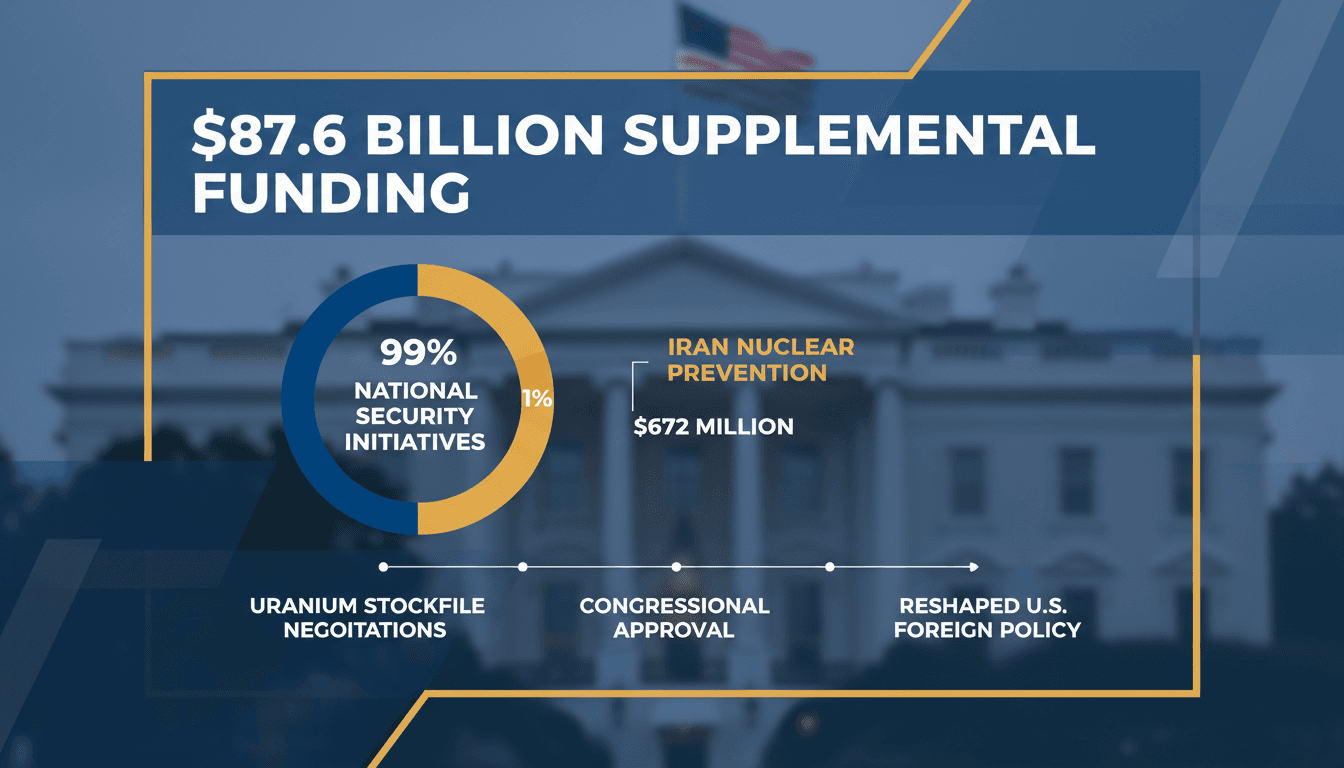
The White House has submitted a supplemental funding request to Congress totaling $87.6 billion. This request includes $672 million specifically earmarked to prevent Iran from acquiring nuclear weapons. The funding is part of a broader strategy to address national security concerns amid ongoing negotiations regarding Iran's uranium stockpile.
The request highlights the urgency of the U.S. response to nuclear proliferation threats. It reflects a commitment to both military and diplomatic efforts in dealing with Iran's actions.
The Context
This funding request is set against a backdrop of escalating tensions regarding Iran's nuclear capabilities. Ongoing negotiations about Iran's uranium stockpile are influencing the funding priorities, making this request particularly timely. The political landscape in Congress presents challenges, indicating potential hurdles in securing the necessary approvals.
The allocation of funds not only addresses military needs but also includes provisions for agricultural support, showcasing a multifaceted approach to national security. The outcome of this request could reshape U.S. foreign policy and security measures regarding Iran in the long term.
Takeaway
As Congress considers the funding request, the political dynamics surrounding U.S.-Iran relations will be closely monitored. Key developments in negotiations over Iran's nuclear program will likely influence the final decision on the funding. Stakeholders should watch for potential amendments to the request that could alter its scope or focus.
The implications of this funding could extend beyond immediate security concerns, affecting broader geopolitical strategies and economic interests. The administration's commitment to addressing both military and diplomatic challenges will be crucial in shaping future U.S. policy.
Market-moving headlines impacting equities, bonds, and related risk assets.
"Real-time catalysts and volatility drivers across indices and sectors."
— A47 Editor
White House seeks $87.6 bln from Congress for Iran war and farm aid
The White House has requested $87.6 billion from Congress to fund military operations related to the ongoing conflict with Iran and to provide aid for farmers. This request highlights the administration's focus on addressing both national security an...
Capitol Hill news, legislation, and policy insight.
"The Hill specializes in U.S. politics and policy, with a focus on Capitol Hill developments and a reputation for insider reporting."
— A47 Editor
The Iran supplemental has dropped
The White House has formally requested $87.6 billion in supplemental funding from Congress to support ongoing military operations in Iran, assist U.S. farmers, and respond to the Ebola outbreak. This request highlights the financial demands of the Ir...
Conservative-leaning coverage of current events.
"Fox News is a highly influential conservative news outlet known for right-leaning political commentary and coverage."
— A47 Editor
Trump seeks $672M to stop Iranian nukes as negotiators weigh fate of uranium stockpile
The White House has submitted an $80 billion supplemental funding request to Congress, which includes $672 million aimed at preventing Iran from developing nuclear weapons amid ongoing negotiations regarding its uranium stockpile. This request highli...