
Trump Claims Iran is Ready to Negotiate Amid Congressional Pushback
Here's what it means for you.
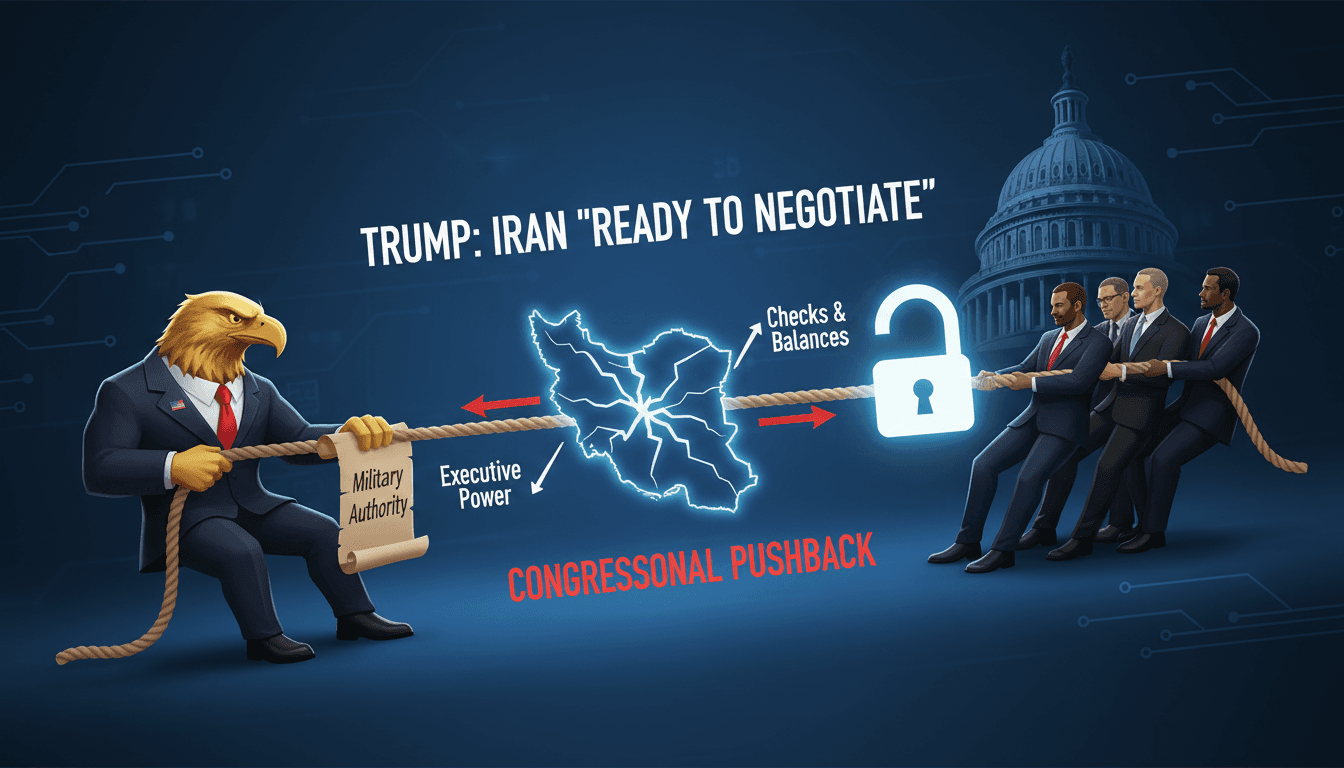
President Trump's assertion that Iran is on the verge of collapse and willing to negotiate could significantly impact U.S. foreign policy in the Middle East. This claim comes at a time when Congress is increasingly concerned about the administration's military authority, reflecting a growing bipartisan push for oversight. The interplay between the executive branch and Congress may complicate negotiations and influence the broader geopolitical landscape. As the situation unfolds, stakeholders in both the public and private sectors should monitor how these developments affect market stability and international relations. The outcome of negotiations with Iran could have far-reaching implications for energy markets and regional security.
What happened
President Donald Trump announced that Iran is close to defeat and ready to negotiate extensively with the United States. He criticized a recent Senate vote aimed at limiting his military powers regarding Iran, claiming it undermines his negotiation efforts. Trump emphasized that he would not accept any agreement that imposes shipping fees, labeling such terms as unacceptable.
The Senate voted narrowly, 50-48, to restrict Trump's military actions in Iran, reflecting bipartisan concerns about the ongoing conflict. This vote marks a significant moment, as Congress has not previously mandated a president to withdraw military forces under the War Powers Act.
The Context
The recent Senate vote indicates a shift in congressional support regarding military engagement in Iran, with all Democrats and four Republicans backing the measure. Trump's comments suggest he believes Iran is showing unprecedented respect for the U.S. and its president, which could influence future negotiations. The White House has labeled the Senate's decision as unconstitutional and non-binding, highlighting the tension between the executive and legislative branches.
As negotiations progress, the dynamics between Trump's administration and Congress will be crucial in shaping U.S. foreign policy and military strategy in the region. The ongoing conflict and the potential for diplomatic resolution underscore the complexities of U.S.-Iran relations.
Takeaway
The ongoing negotiations with Iran may face challenges due to congressional actions and Trump's firm stance on terms. Observers should monitor the outcome of these negotiations closely, as they could significantly impact U.S. foreign policy in the Middle East. Additionally, further congressional actions regarding military powers will be critical to watch, as they may alter the administration's approach to Iran.
As the situation develops, the balance of power between the executive branch and Congress will play a pivotal role in determining the future of U.S.-Iran relations and regional stability.
Arabic-language coverage of international news and geopolitics.
"RT Arabic is a Russian state-funded outlet often criticized for promoting Kremlin-aligned narratives."
— A47 Editor
ترامب: التصويت في الكونغرس لن يؤثر على المفاوضات.. هناك تقدم ممتاز وأداء رائع مع إيران
أكد الرئيس الأمريكي دونالد ترامب أنه لن يقبل أي اتفاق نهائي مع إيران يتضمن فرض رسوم على حركة الشحن، معتبرا أن مثل هذا البند سيكون "غير مقبول" بالنسبة له.
Arabic-language political and world news coverage for UAE readers.
"Emarat Al Youm world coverage usually presents international developments through a UAE and Arab audience lens."
— A47 Editor
ترامب: إيران تقدم تنازلات كبيرة للغاية ترامب: إيران تقدم تنازلات كبيرة للغاية
On Wednesday, U.S. President Donald Trump stated that Iran is making significant concessions. He made these remarks during a press conference, highlighting a shift in the dynamics of U.S.-Iran relations.
Arabic-language coverage of political affairs and current events.
"Okaz political coverage typically follows mainstream Saudi framing on national and regional affairs."
— A47 Editor
ترمب: إيران على شفا الانهيار ومستعدة لتقديم تنازلات شاملة
U.S. President Donald Trump stated that Iran is on the brink of collapse and is willing to make significant concessions to the United States. In a post on his platform Truth Social, he criticized the U.S. Senate for a poorly timed vote on war powers ...