
Ruth Ellis Granted Conditional Pardon Over 70 Years After Execution
Here's what it means for you.
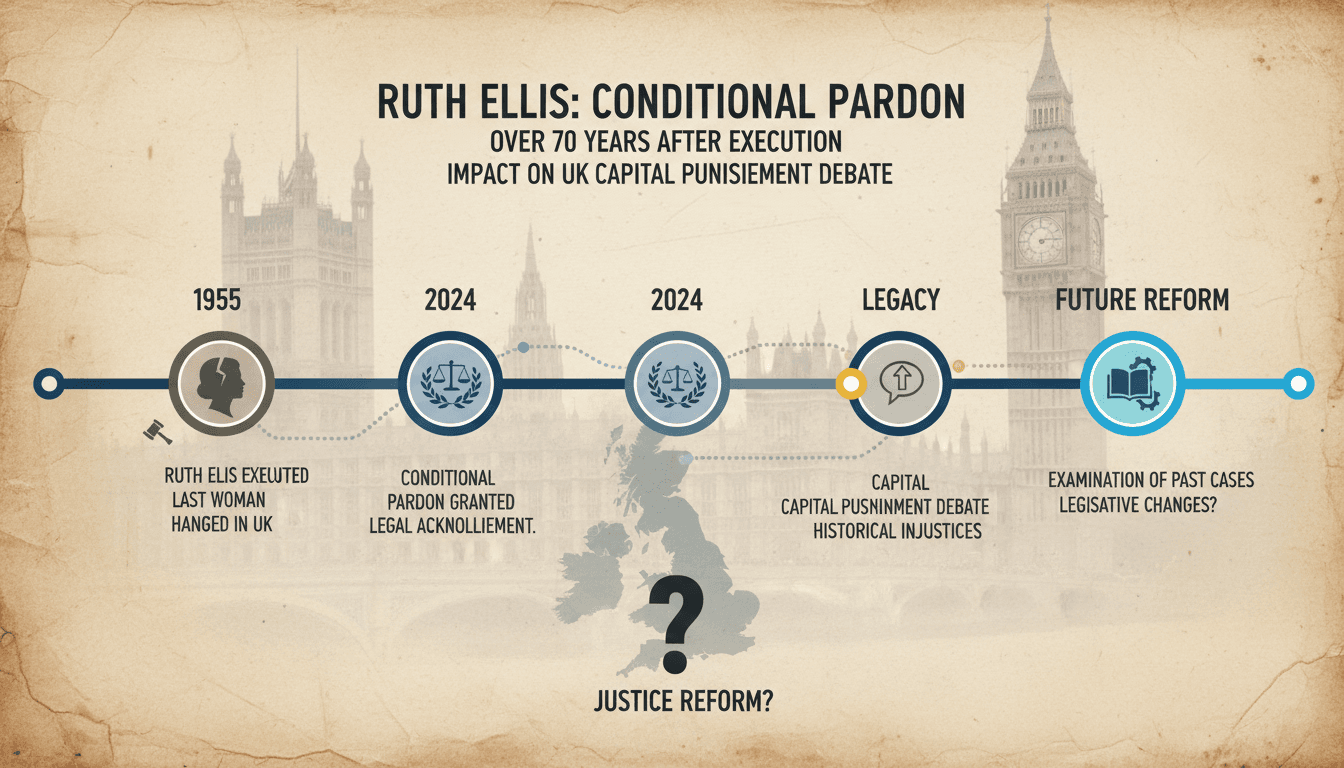
The posthumous conditional pardon granted to Ruth Ellis marks a pivotal moment in the ongoing discourse surrounding capital punishment in the UK. This decision not only acknowledges historical injustices but also sets a precedent for future legislative discussions regarding similar cases. As society reflects on the implications of past executions, this pardon may influence public sentiment and policy reform related to justice. The case of Ruth Ellis, the last woman executed in Britain, serves as a reminder of the complexities and moral dilemmas associated with capital punishment. The pardon could catalyze further examination of historical executions and their relevance in contemporary legal contexts.
What happened
Ruth Ellis has been granted a conditional pardon posthumously for her execution in 1955. This decision comes more than 70 years after she was convicted of murdering her lover, David Blakely. Ellis was executed at Holloway Prison on July 13, 1955, marking a significant moment in British legal history.
Her case has long been a focal point in discussions about the death penalty in the UK, symbolizing the ongoing debate over justice and capital punishment. The recent pardon reflects a shift in societal attitudes towards historical legal decisions and their implications.
The Context
Ruth Ellis was 28 years old at the time of her execution, and her case has remained a significant part of British legal history. The pardon highlights the long-standing impact of her case on discussions about justice and capital punishment, particularly as the UK continues to grapple with its legacy.
The timing of this decision is crucial, as it coincides with broader conversations about the morality and efficacy of capital punishment. Stakeholders, including legal experts and human rights advocates, are likely to engage in renewed discussions about the implications of this pardon and its potential influence on future legislative changes regarding historical pardons.
Takeaway
The conditional pardon granted to Ruth Ellis may prompt further examination of historical executions and their implications in modern legal contexts. As society continues to reflect on the legacy of capital punishment, this case could influence future discussions on justice reform in the UK.
Public reactions and ongoing debates surrounding capital punishment will likely shape the narrative moving forward. Observers should watch for potential legislative changes regarding historical pardons as the implications of this decision unfold.
Political developments, policy debates, elections, and government affairs in the UK.
"BBC News is widely regarded as a reputable international news organization, known for its impartial tone and public service mandate."
— A47 Editor
Conditional pardon granted for Ruth Ellis, last woman executed in UK
Ruth Ellis, the last woman to be hanged in the UK, has been granted a conditional posthumous pardon, marking a significant moment in the history of capital punishment in the country. Ellis was executed on July 13, 1955, at Holloway Prison in London a...
Pan-Arab news coverage spanning politics, business, sports, and regional affairs.
"Asharq Al-Awsat reflects a broad Arab editorial perspective with strong attention to regional geopolitics."
— A47 Editor
بعد أكثر من 70 عاماً... عفو ملكي عن آخر امرأة أُعدمت في بريطانيا
Ruth Ellis, the last woman executed in the United Kingdom, has been granted a posthumous royal pardon more than 70 years after her execution. This decision highlights the ongoing discussions surrounding capital punishment and its historical implicati...
UK politics, business, and social stories.
"Sky News is a UK-based 24-hour channel known for fast-breaking news and political coverage."
— A47 Editor
<a href='https://news.sky.com/story/politics-latest-burnham-starmer-labour-tories-badenoch-farage-12593360?postid=12020517#liveblog-body'>Last woman in the UK granted conditional pardon</a>
Ruth Ellis, the last woman to be hanged in the UK, was granted a conditional pardon. Ellis was executed on July 13, 1955, at Holloway Prison in London for the murder of her lover, racing driver David Blakely. This pardon marks a significant moment in...