
U.S. Senate passes war powers resolution limiting Trump's military authority on Iran
Here's what it means for you.
The U.S. Senate's recent vote to pass a war powers resolution signals a growing concern among lawmakers regarding military engagements, particularly in Iran. This bipartisan effort reflects a shift towards increased congressional oversight of executive military authority, which may reshape future foreign policy decisions. As public discontent with the Iran conflict rises, this resolution could influence how military actions are approached moving forward. The resolution's passage, while largely symbolic, underscores the urgency for lawmakers to assert their role in military decision-making. This development may lead to more robust debates in Congress about the balance of power between the legislative and executive branches.
What happened
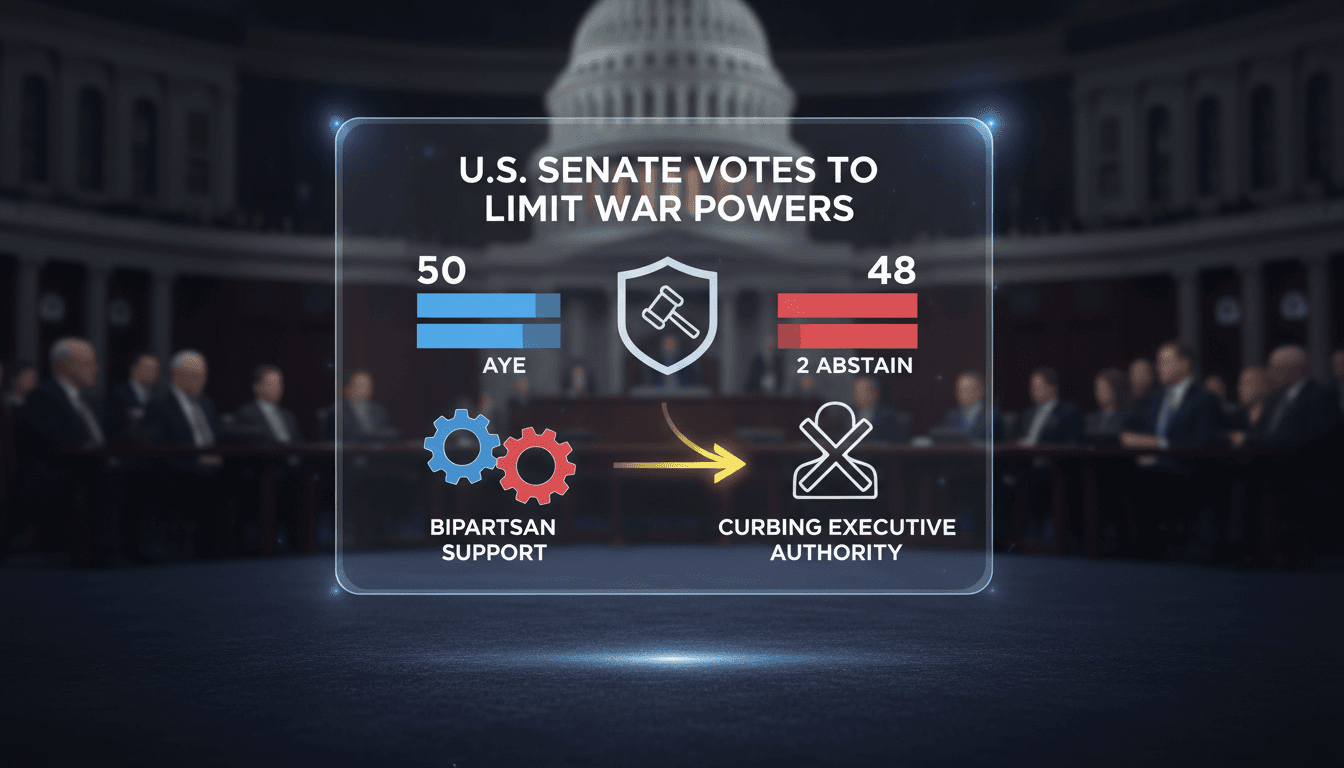
The U.S. Senate voted 50-48 to approve a war powers resolution aimed at restricting military action against Iran. This legislative action marks a significant moment, as it is the first of its kind to pass Congress in this context. Four Republican senators joined Democrats in supporting the measure, highlighting a rare moment of bipartisan agreement on military authority.
Despite its passage, the resolution does not require the president's signature and lacks the force of law. This limitation raises questions about its practical implications and whether it will be heeded by the executive branch.
The Context
The resolution reflects bipartisan frustration over ongoing hostilities in Iran and the broader implications of military engagement. As tensions in the region persist, lawmakers are increasingly concerned about the executive branch's unilateral military actions. The vote margin of 50-48 indicates a closely divided Senate, emphasizing the contentious nature of military authority in U.S. politics.
Public discontent with the Iran conflict has played a significant role in shaping this legislative action. The resolution serves as a response to calls for greater accountability and oversight of military decisions, which have historically been dominated by the presidency.
Takeaway
The passage of this war powers resolution may signal a shift towards increased congressional assertiveness regarding military engagements. As lawmakers continue to grapple with the implications of military authority, future congressional actions could further define the boundaries of executive power. Observers will be keen to see how President Trump responds to this resolution and whether it influences his military strategy in Iran.
As discussions around military authority evolve, the resolution may pave the way for more comprehensive debates in Congress about the role of the executive branch in foreign conflicts.
International coverage of politics, culture, and current affairs.
"BBC News is widely regarded as a reputable international news organization, known for its impartial tone and public service mandate."
— A47 Editor
Congress passes war powers measure for first time, breaking with Trump over Iran
The U.S. Congress has passed a war powers measure aimed at limiting President Trump's military authority regarding Iran, marking the first time such a measure has been enacted. This resolution, which received bipartisan support, calls for an end to m...
News from the United States including domestic politics, society, and culture.
"Global News is a mainstream Canadian media outlet generally considered to have a centrist editorial stance, covering news with a focus on factual reporting and national interest."
— A47 Editor
U.S. Senate votes to block military action against Iran for 1st time
The U.S. Senate has voted to block military action against Iran for the first time, following a similar resolution passed by the House of Representatives earlier this month. This measure, while largely symbolic and lacking legal binding, reflects a s...
Global business headlines with AI angles.
"General business outlet that frequently covers AI."
— A47 Editor
Senate Passes War Powers Resolution On Iran For The First Time With The Support Of Four Republicans
The Senate has passed a war powers resolution concerning Iran for the first time, with support from four Republican senators. This legislative action aims to limit the President's ability to engage in military action against Iran without congressiona...
Policy, elections, and government reporting.
"NPR is an American public media organization known for thoughtful reporting and a slightly left-leaning editorial tone."
— A47 Editor
In symbolic vote, Congress directs Trump to remove forces from Iran war
In a significant move, Congress has directed President Trump to withdraw U.S. forces from hostilities with Iran through a largely symbolic vote that does not require the president's signature. This measure reflects bipartisan frustration with the ong...
News from the United States including domestic politics, society, and culture.
"The Guardian is known for its progressive editorial stance and in-depth analysis, often advocating for social justice, environmental issues, and liberal values."
— A47 Editor
US Senate passes war powers resolution challenging Trump’s Iran war authority
The US Senate has passed a war powers resolution aimed at limiting President Donald Trump's military authority regarding Iran, with a vote of 50-48. This measure received bipartisan support, including four Republican senators, marking a significant r...
International coverage from The Guardian's global desks.
"The Guardian is known for its progressive editorial stance and in-depth analysis."
— A47 Editor
US Senate passes war powers resolution challenging Trump’s Iran war authority
The US Senate has passed a war powers resolution aimed at limiting President Donald Trump's military authority regarding Iran, with a vote of 50-48. This measure received bipartisan support, including four Republican senators, marking a significant r...