
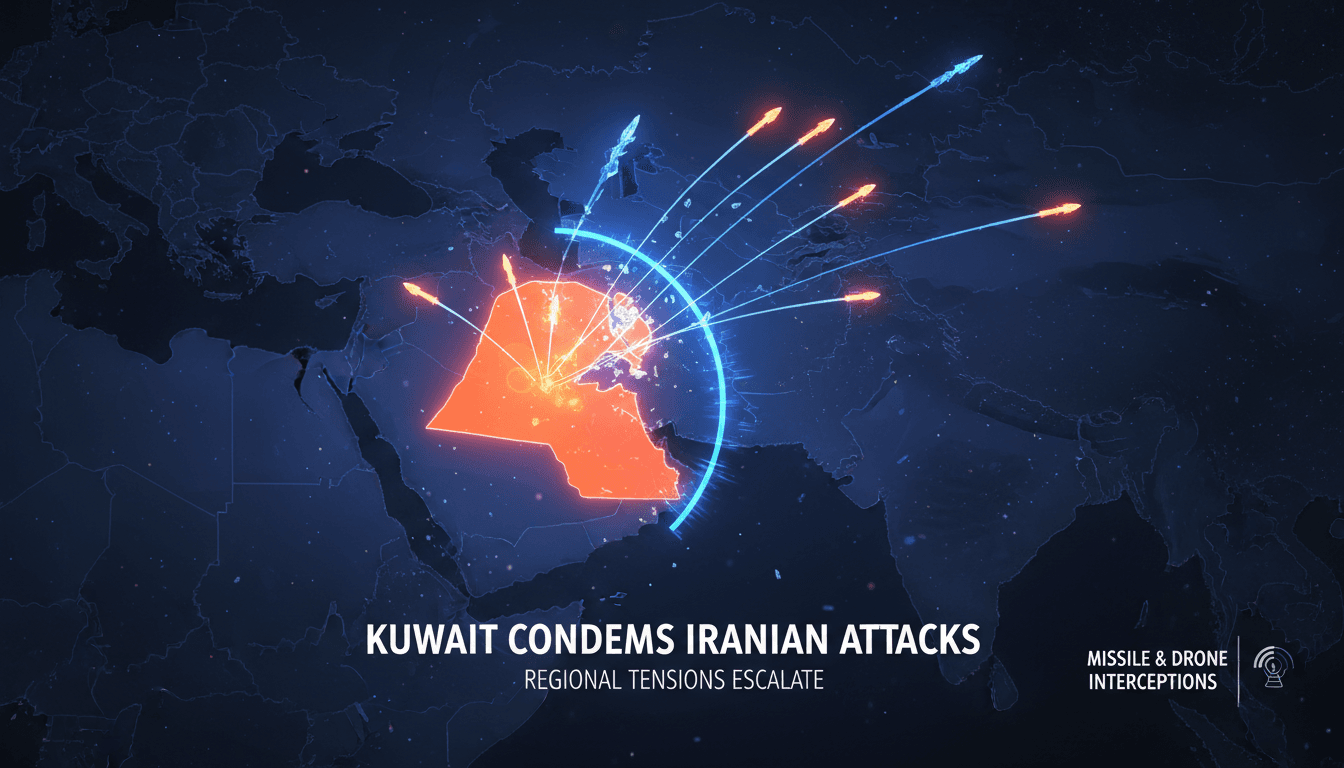
Kuwait condemns Iranian missile and drone attacks as regional tensions escalate
Here's what it means for you.
Kuwait's condemnation of Iranian attacks signals a critical moment in Gulf regional security, emphasizing the fragility of peace in the area. The successful interception of missiles and drones by Kuwaiti forces highlights the immediate threat posed by Iranian aggression. This incident may prompt increased military readiness among Gulf nations, potentially reshaping diplomatic relations in the region. As tensions escalate, stakeholders must closely monitor the responses from neighboring countries, which could influence future stability and security dynamics.
What happened
Iranian forces recently launched missile and drone attacks targeting Kuwait, which were successfully intercepted by the Kuwaiti military. This incident resulted in injuries and material damage, prompting a strong condemnation from Kuwait's government. The Kuwaiti military reported intercepting three ballistic missiles and ten drones during this latest assault.
The attacks are viewed as a violation of international law and Kuwait's sovereignty, further escalating regional tensions. In response, Kuwait's foreign ministry has issued statements asserting the nation's right to defend itself against such aggressions.
The Context
The ongoing tensions between Iran and Gulf nations reflect broader regional conflicts that have persisted for years. Kuwait's condemnation of the attacks underscores its commitment to maintaining sovereignty and regional stability. The situation is particularly precarious, as the potential for escalation remains high if diplomatic efforts fail.
With 386 missiles intercepted by Kuwaiti defense forces since the onset of Iranian aggression, the threat level is significant. The reactions from other Gulf states will be crucial in shaping the future of regional security and diplomatic relations.
Takeaway
As the situation unfolds, it is essential to monitor the responses from other Gulf states regarding their stance on Iranian aggression. Kuwait's military readiness and potential diplomatic actions will play a pivotal role in determining the region's stability. Continued Iranian hostility may lead to further military engagements or diplomatic fallout, impacting not only Kuwait but the entire Gulf region.
The fragility of regional security is underscored by this incident, highlighting the need for effective diplomatic channels to prevent escalation.
Pan-Arab news coverage spanning politics, business, sports, and regional affairs.
"Asharq Al-Awsat reflects a broad Arab editorial perspective with strong attention to regional geopolitics."
— A47 Editor
تواصل الإدانات الخليجية والعربية للهجمات الإيرانية على الكويت والبحرين وقطر والأردن
Gulf and Arab nations have condemned Iranian attacks targeting Qatar, Bahrain, Kuwait, and Jordan, asserting that these assaults represent a blatant violation of national sovereignty. The statements reflect a unified regional response to perceived th...
Arabic-language coverage of political affairs and current events.
"Okaz political coverage typically follows mainstream Saudi framing on national and regional affairs."
— A47 Editor
الكويت تدين الهجمات الإيرانية: سيادتنا خط أحمر ونحتفظ بحق الرد
The Kuwaiti Ministry of Foreign Affairs has condemned the ongoing Iranian attacks targeting its territory, the latest of which occurred early Thursday. The ministry's statement highlighted that these attacks represent a recurring hostile approach, vi...
Arabic-language coverage of political affairs and current events.
"Okaz political coverage typically follows mainstream Saudi framing on national and regional affairs."
— A47 Editor
الكويت تدين تكرار الاعتداءات الإيرانية على أراضيها
The Kuwaiti Ministry of Foreign Affairs has strongly condemned the repeated Iranian attacks on its territory, the latest occurring this morning, which it describes as a blatant violation of its sovereignty and a direct threat to the security and stab...