
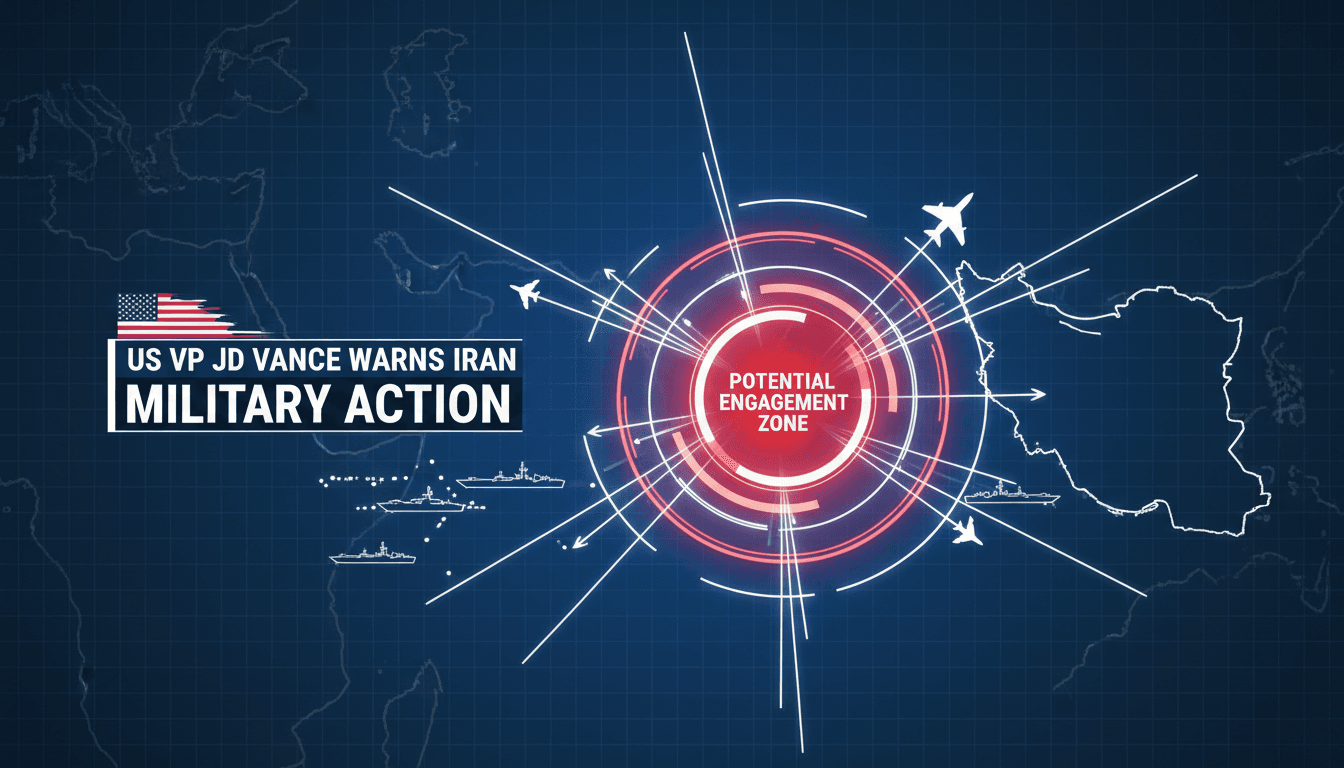
US Vice President JD Vance warns Iran of military action over Strait of Hormuz attacks
Here's what it means for you.
The recent warning from Vice President JD Vance signals a significant escalation in U.S. military posture regarding Iran's actions in the Strait of Hormuz. This development could impact global shipping routes and energy markets, as the Strait is a critical passage for oil and gas shipments. Stakeholders in international trade and energy sectors should prepare for potential disruptions if tensions escalate further. The U.S. administration's firm stance may also influence diplomatic negotiations, as the threat of military action looms over Iran's maritime behavior. Observers will be closely monitoring the situation for any shifts that could affect regional stability and international relations.
What happened
Vice President JD Vance announced that the United States will respond militarily if Iran continues its attacks on commercial vessels in the Strait of Hormuz. This warning comes as Iran has resumed targeting ships, despite having previously improved its behavior. Vance emphasized that the U.S. has options available and will respond forcefully to any further aggression.
The U.S. military presence in the region remains strong, aimed at ensuring the safety of maritime routes. Vance's comments reflect a commitment to maintaining open shipping lanes and pressuring Iran to comply with existing agreements regarding maritime safety.
The Context
The situation in the Strait of Hormuz is critical, as it serves as a vital passage for a significant portion of the world's oil supply. The U.S. has an agreement with Iran that sanctions would be lifted if Iran ceased its attacks on vessels. However, the recent resurgence of aggression from Iran has prompted the U.S. to reassess its military readiness.
Vance's remarks underscore the delicate balance of power in the region and the potential for increased military engagement. The international community is watching closely, as any escalation could have far-reaching implications for global trade and security.
Takeaway
As tensions rise, the potential for military engagement remains high unless diplomatic solutions are pursued. The U.S. administration's readiness to respond militarily could lead to further conflict if Iran does not alter its course. Observers should monitor Iran's military actions in the Strait of Hormuz and any potential diplomatic efforts aimed at de-escalating tensions.
The situation is fluid, and developments in the coming days will be crucial in determining the trajectory of U.S.-Iran relations and regional stability.
English-language news from Qatar covering domestic and regional affairs.
"Gulf Times reflects Qatari perspectives on regional developments."
— A47 Editor
US Vice President: Iran must abide by agreement or face consequences
US Vice President JD Vance emphasized that Iran must adhere to the terms of the Trump administration's agreement, which stipulates that sanctions would be lifted if Tehran ceases its attacks on commercial vessels in the Strait of Hormuz. This stateme...
Arabic-language coverage of political affairs and current events.
"Okaz political coverage typically follows mainstream Saudi framing on national and regional affairs."
— A47 Editor
فانس لإيران: وقف العمليات العسكرية مرهون بإنهاء استهداف السفن
U.S. Vice President J.D. Vance announced that military action against Iran will continue unless the country ceases its attacks on ships. During a press conference, Vance emphasized that Iran must adhere to its commitments or face consequences similar...
Arabic-language coverage of international news and geopolitics.
"RT Arabic is a Russian state-funded outlet often criticized for promoting Kremlin-aligned narratives."
— A47 Editor
نائب الرئيس الأمريكي: سنرد بقوة إذا استهدفت إيران السفن في هرمز.. ولن أخبركم بما سيحدث الليلة تحديدا
U.S. Vice President J.D. Vance stated that the United States would respond 'strongly' if Iran targeted ships in the Strait of Hormuz. This statement underscores the heightened tensions in the region and the U.S. commitment to protecting maritime secu...