
US and Iran sign preliminary agreement to halt war and reopen Strait of Hormuz
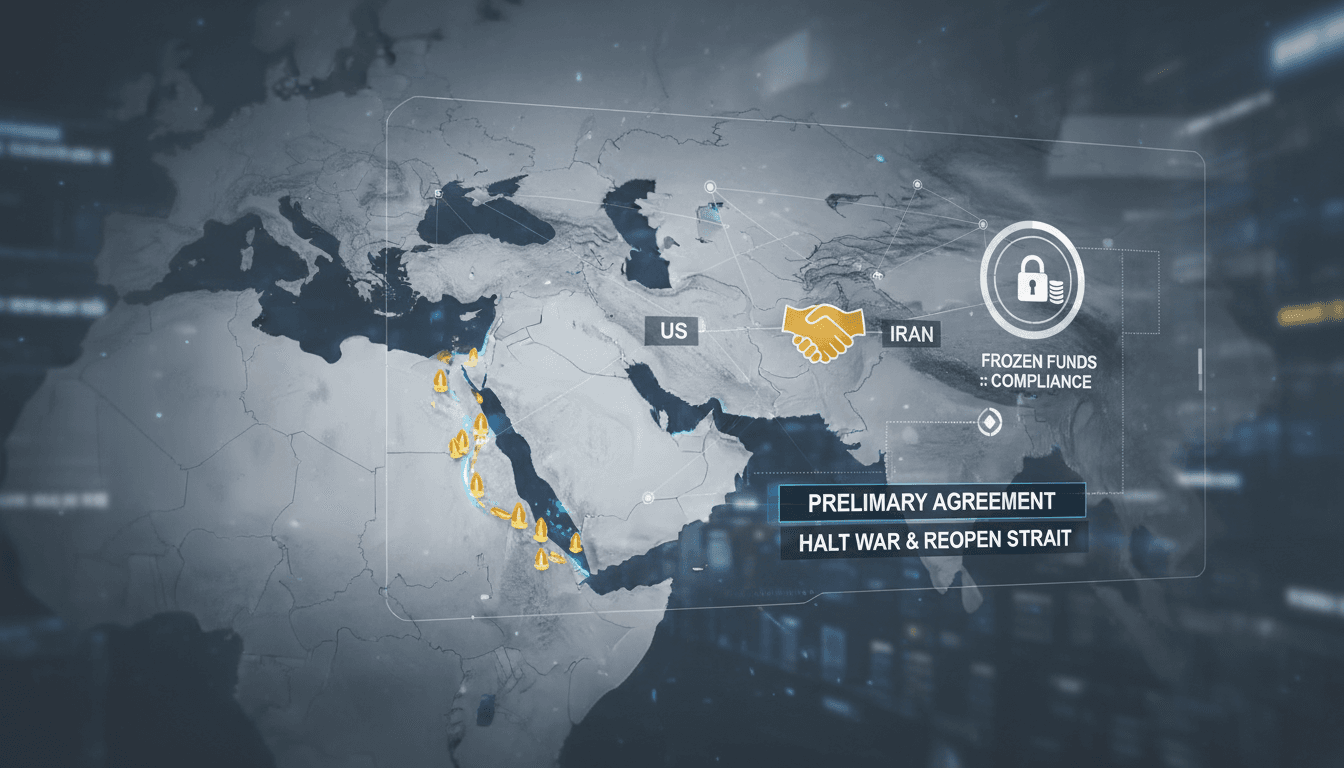
Here's what it means for you.
The recent preliminary agreement between the U.S. and Iran marks a significant step towards de-escalating tensions in the region. This development could reshape U.S.-Iran relations and influence market stability, particularly in oil prices due to the strategic importance of the Strait of Hormuz. Stakeholders in international trade and energy sectors should closely monitor the outcomes of the upcoming negotiations in Switzerland. The agreement's success hinges on Iran's compliance with the terms, which will determine its access to previously frozen funds. As negotiations progress, the implications for regional security and the nuclear program will be critical for policymakers and investors alike.
What happened
The U.S. has signed a preliminary agreement with Iran aimed at halting the ongoing war and reopening the vital Strait of Hormuz. This agreement was officially signed electronically on June 15, 2026, and is expected to pave the way for further discussions. Vice President Vance announced that the text of the deal will be released soon, emphasizing that Iran will not receive any funds until it complies with the agreement's terms.
The agreement consists of a 14-point draft that defers more complex issues for future negotiations. Iranian officials are anticipated to represent their country in the upcoming talks, which will focus on technical details. The negotiations are set to continue in Switzerland, where the framework for future discussions will be established.
The Context
This agreement comes at a crucial time as tensions between the U.S. and Iran have escalated in recent years, particularly concerning Iran's nuclear ambitions. The Strait of Hormuz is a critical maritime route for global oil shipments, making its reopening essential for international trade. The 14-point draft outlines a framework that allows for the deferral of difficult issues, indicating a willingness from both sides to engage in dialogue.
The negotiations in Switzerland will be pivotal in determining the future of U.S.-Iran relations and regional stability. Iran's access to frozen funds is contingent upon its adherence to the agreement, which adds a layer of complexity to the discussions. The outcome of these negotiations could have far-reaching implications for the geopolitical landscape.
Takeaway
The success of the preliminary agreement will depend heavily on Iran's adherence to the terms set forth by the U.S. As negotiations in Switzerland begin, stakeholders should watch for details regarding compliance measures and the release of funds. The upcoming discussions will address technical aspects that could influence the broader context of U.S.-Iran relations.
In the coming weeks, the release of the agreement's text and the outcomes of the negotiations will be critical to understanding the potential for lasting peace in the region. The implications for Iran's nuclear program and regional stability will be closely monitored by international observers.
Regional coverage and analysis focused on politics, diplomacy, and business across the Middle East.
"Al-Monitor is known for analytical reporting on Middle East politics and policy developments."
— A47 Editor
Factbox-The 14-point draft of the U.S.-Iran deal
The United States and Iran have reached a preliminary 14-point draft agreement aimed at halting hostilities and reopening the strategically vital Strait of Hormuz, with a formal signing scheduled in Switzerland. This draft defers complex issues, such...
Arabic-language coverage of political affairs and current events.
"Okaz political coverage typically follows mainstream Saudi framing on national and regional affairs."
— A47 Editor
فانس: الاتفاق مع إيران وُقّع إلكترونياً.. وتجميد الأموال مرهون بالالتزام
U.S. Vice President J.D. Vance announced that an electronic agreement with Iran was signed on Sunday, emphasizing that Washington will not release frozen Iranian funds until Tehran adheres to the terms of the agreement. He indicated that some provisi...
Regional and international reporting focused on Middle Eastern politics, diplomacy, and economics.
"Asharq Al-Awsat is a Saudi-owned international newspaper reflecting mainstream Gulf political perspectives."
— A47 Editor
Vance Says Funds Won’t Be Transferred to Iran in Exchange for Signing Deal to Halt War
U.S. Vice President JD Vance stated that no funds will be transferred to Iran in exchange for signing a deal aimed at halting the ongoing conflict. This announcement comes amid a 60-day negotiation period initiated with Iran, which includes provision...
Capitol Hill news, legislation, and policy insight.
"The Hill specializes in U.S. politics and policy, with a focus on Capitol Hill developments and a reputation for insider reporting."
— A47 Editor
Vance says US signed Iran deal Sunday; hopes to release text this week
Vice President JD Vance announced that the United States has signed a preliminary agreement with Iran to facilitate the reopening of the Strait of Hormuz, with the text of the deal expected to be released this week. Vance emphasized that Iran will no...