
Court Rulings Block Trump's Mail-in Voting Restrictions
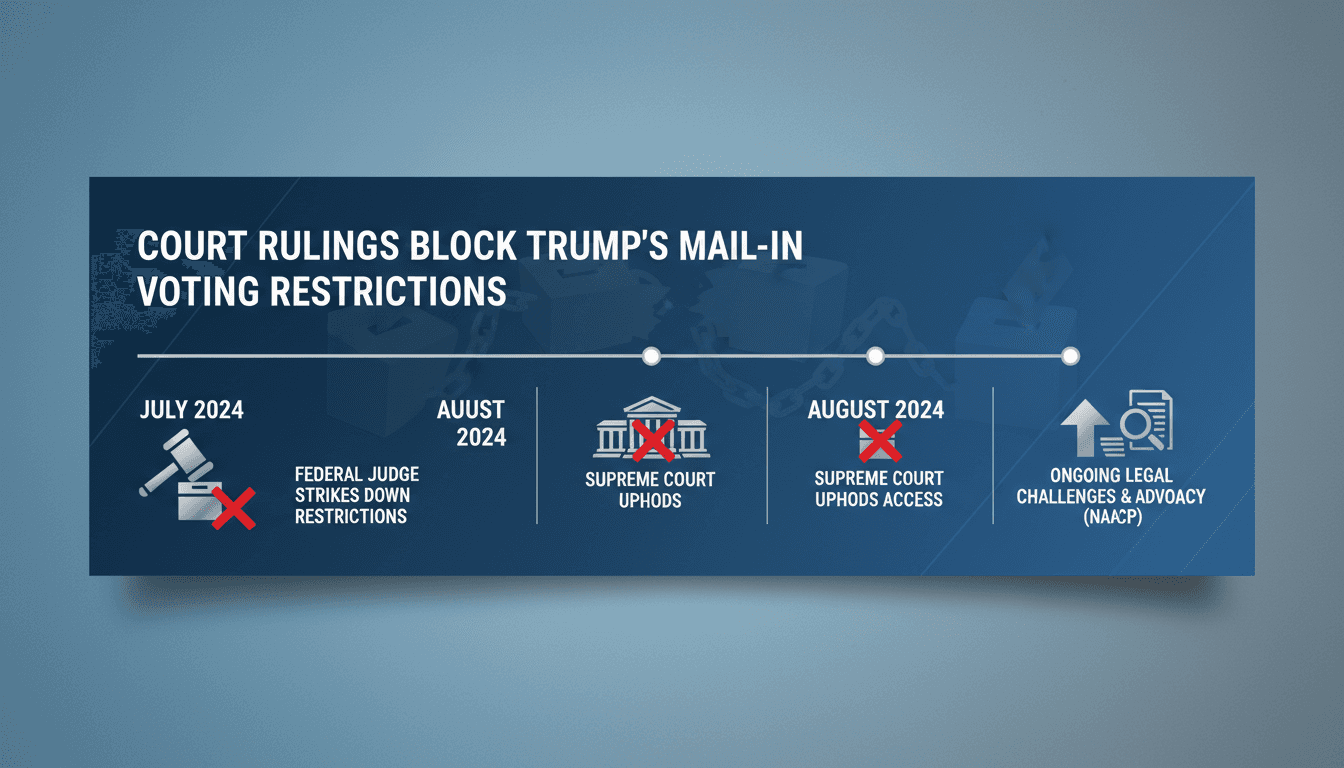
Here's what it means for you.
Recent court decisions have significant implications for the future of mail-in voting in the United States. With both a federal judge and the Supreme Court ruling against President Trump's restrictions, the legal landscape surrounding voting rights is becoming increasingly complex. This ongoing legal battle highlights the importance of advocacy from civil rights organizations, which are actively opposing these restrictions. As these rulings unfold, they may influence public perception and policy regarding mail-in voting, potentially shaping the electoral process in upcoming elections. The resistance to limiting voter access underscores a broader commitment to maintaining democratic participation.
What happened
Recent court rulings have dealt significant blows to President Trump's efforts to restrict mail-in voting across the United States. A federal judge blocked a USPS plan that aimed to deny ballots in certain states, while the Supreme Court rejected a challenge to tighten mail ballot deadlines in Mississippi. These decisions reflect a growing judicial opposition to the administration's attempts to impose voting restrictions.
The rulings come amid ongoing legal challenges and opposition from civil rights organizations like the NAACP, which have been actively fighting against these proposed restrictions. The outcomes of these cases signal a potential shift in the legal landscape surrounding voting rights.
The Context
President Trump's administration has sought to limit mail-in voting as part of a broader crackdown on elections. This effort has faced significant pushback from various stakeholders, including civil rights organizations that advocate for voter access and equity. The NAACP has been particularly vocal in opposing these restrictions, emphasizing the importance of maintaining accessible voting options for all citizens.
These rulings mark a continuation of legal challenges against Trump's voting policies, reflecting the ongoing tensions surrounding voting rights in the United States. As the legal battles unfold, the implications for future elections and voter access remain uncertain, with advocacy efforts likely to intensify.
Takeaway
The ongoing legal challenges suggest that efforts to limit mail-in voting may continue to face significant opposition. Potential further legal actions from Trump's administration regarding voting regulations could emerge, but the recent court decisions indicate a strong judicial stance against such restrictions. Responses from civil rights organizations will also play a crucial role in shaping the future of voting rights.
As the landscape evolves, stakeholders will need to remain vigilant and engaged in the ongoing discourse surrounding voter access and election integrity. The outcomes of these legal battles will likely have lasting implications for the electoral process in the United States.
Comprehensive coverage of Middle Eastern and global issues.
"Al Jazeera is a prominent voice from the Global South, especially the Middle East, with an emphasis on underreported stories."
— A47 Editor
US judge sides with NAACP over proposed mail-in ballot restrictions
A U.S. judge has ruled in favor of the NAACP, blocking proposed restrictions on mail-in voting that were sought by President Trump. This decision is seen as a significant victory for voting rights advocates amid ongoing debates about electoral access...
News from the United States including domestic politics, society, and culture.
"The Guardian is known for its progressive editorial stance and in-depth analysis, often advocating for social justice, environmental issues, and liberal values."
— A47 Editor
US judge blocks Trump bid to limit mail-in voting in latest setback for president
A federal judge has blocked a proposed restriction on mail-in voting across the United States, marking the second legal setback for former President Donald Trump regarding his efforts to limit mail ballots. Judge Emmet Sullivan ruled against a plan b...
RT is a Russian state-funded network covering global events from a Russian perspective.
"RT is widely criticized for promoting pro-Kremlin narratives and is considered by many to be a state propaganda outlet."
— A47 Editor
US Supreme Court rejects Trump mail ballot challenge
The US Supreme Court has rejected a challenge backed by former President Donald Trump aimed at tightening mail-in ballot deadlines in Mississippi, marking a significant legal decision regarding voting rights. This ruling reinforces the existing frame...