
Trump's Refusal to Sign Housing Bill Allows CBDC Ban to Take Effect
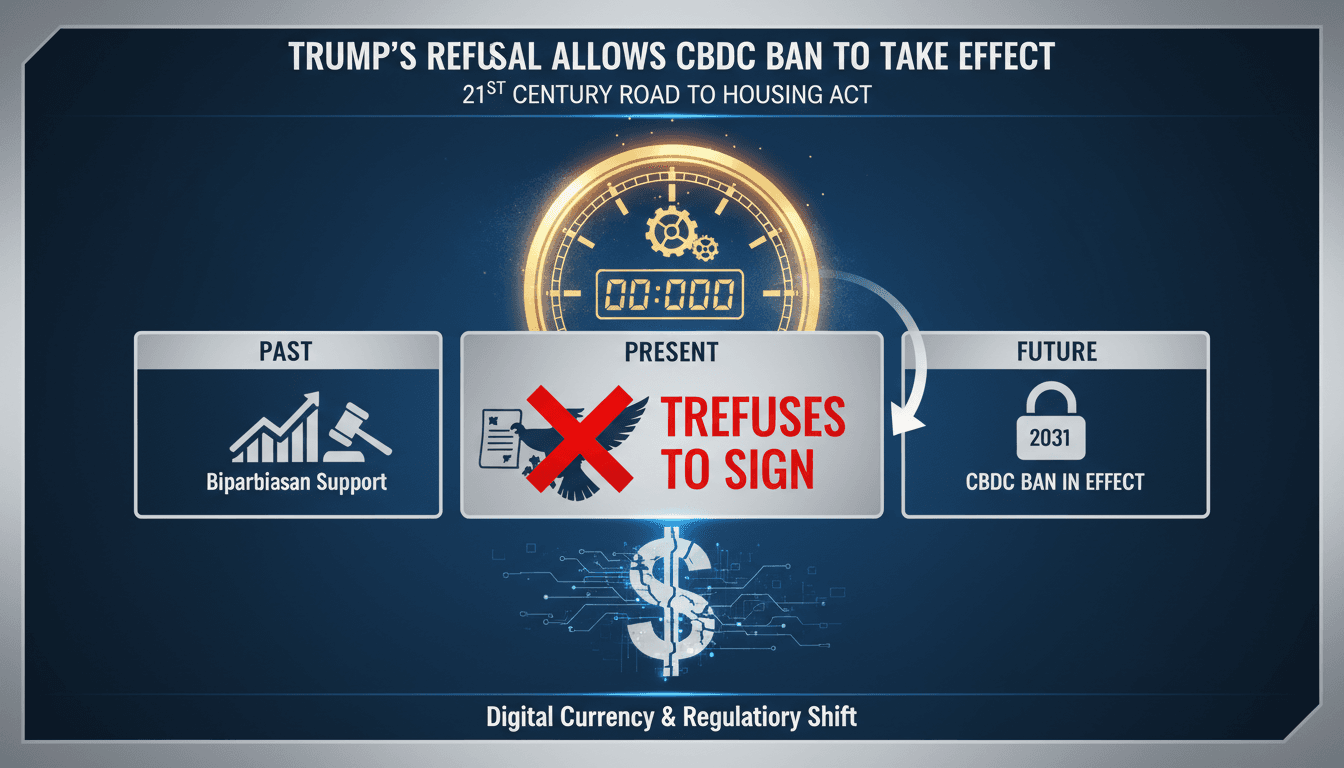
Here's what it means for you.
President Donald Trump's decision not to sign the 21st Century ROAD to Housing Act has immediate implications for the future of digital currencies in the U.S. The act includes a significant provision that bans the establishment of a central bank digital currency (CBDC) until 2031. This legislative move, despite bipartisan support, reflects ongoing tensions in U.S. monetary policy and could shape the regulatory landscape for digital currencies moving forward. As the CBDC ban takes effect, financial institutions and policymakers will need to navigate the implications of this prohibition. Stakeholders in the digital currency space will likely reassess their strategies in light of this new regulatory environment.
What happened
President Trump has officially declined to sign the 21st Century ROAD to Housing Act, which includes a provision that bans a U.S. central bank digital currency until 2031. His refusal allows the CBDC ban to take effect at midnight, despite the bill's bipartisan support. This means that the prohibition on the digital dollar will be enforced, marking a significant moment in U.S. monetary policy.
The act is set to become law, and the CBDC ban will remain in effect until the end of 2031. Trump's confirmation of his refusal to sign the bill was communicated via social media, highlighting his stance on the matter.
The Context
The 21st Century ROAD to Housing Act is a bipartisan housing bill that has garnered support from various political factions. The inclusion of the CBDC ban reflects broader concerns about the implications of digital currencies on the U.S. economy and financial system. As the digital dollar debate continues, this legislative move may influence future discussions on regulatory frameworks.
The timing of this ban is crucial, as it coincides with increasing interest in digital currencies globally. Stakeholders, including financial institutions and policymakers, will need to consider the ramifications of this ban on their operations and strategies.
Takeaway
As the CBDC ban takes effect, it is essential to monitor potential legal challenges to the housing bill's provisions. Reactions from financial institutions regarding the implications of the CBDC ban will also be critical to watch. This legislative development may set the stage for future discussions on digital currencies and their role in the U.S. economy.
The implementation of the CBDC ban could significantly influence how digital currencies are perceived and regulated in the coming years. Stakeholders will likely assess the impact of this prohibition on their plans for digital currency development and regulatory compliance.
Covers blockchain, cryptocurrency news, project analysis, and market insights.
"Cointelegraph is a leading crypto-focused media outlet known for timely news, analysis, and educational content related to blockchain and digital assets."
— A47 Editor
US CBDC ban to go into effect without Trump signoff on housing bill
Former President Donald Trump has confirmed via social media that he will not sign the 21st Century ROAD to Housing Act, which includes a ban on the issuance of Central Bank Digital Currencies (CBDCs) by the Federal Reserve until 2030. This decision ...
Real-time updates, analysis, and reports on the blockchain and cryptocurrency sectors.
"Crypto News delivers real-time updates, analysis, and reports on the blockchain and cryptocurrency sectors."
— A47 Editor
Trump refuses housing bill as CBDC ban moves toward becoming law
President Donald Trump has declined to sign the 21st Century ROAD to Housing Act, which includes a provision that would block the U.S. Federal Reserve from issuing a central bank digital currency (CBDC) until 2031. This refusal comes as the bill is o...
Covers blockchain, cryptocurrency news, project analysis, and market insights.
"CoinDesk is a well-established cryptocurrency and blockchain news provider, offering comprehensive insights, market data, and industry research."
— A47 Editor
U.S. government digital dollar set to be banned tonight under housing law's CBDC limit
The U.S. government is set to implement a temporary ban on Central Bank Digital Currencies (CBDCs) as part of a housing bill that will take effect at midnight, despite President Donald Trump's refusal to sign it. This legislation prohibits the Federa...