
U.S. escalates military action against Iran with airstrikes on military targets
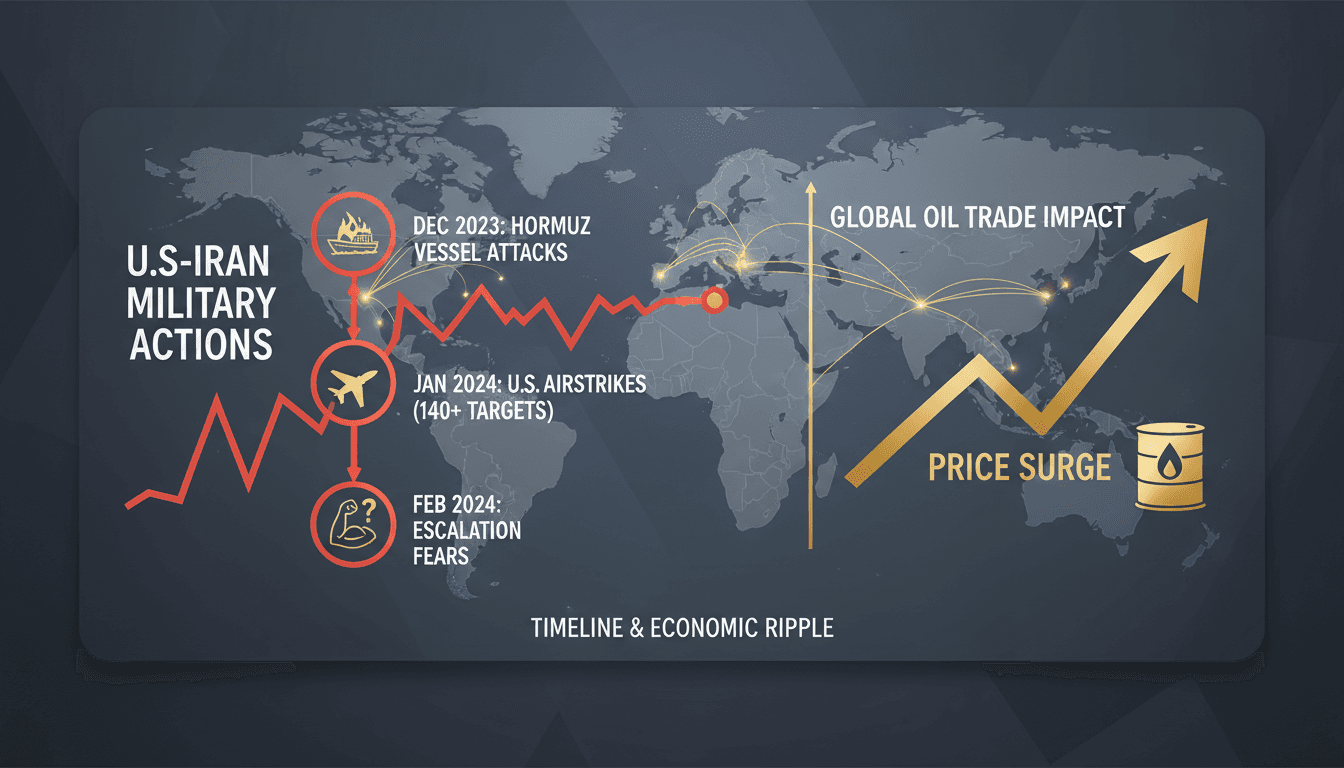
Here's what it means for you.
The recent escalation in U.S.-Iran military tensions could have significant implications for global markets, particularly in the oil sector. With the Strait of Hormuz being a critical passage for oil trade, disruptions could lead to increased prices and volatility. Policymakers will need to navigate these developments carefully to avoid further escalation that could destabilize the region. As military exchanges continue, businesses operating in or near the Middle East should prepare for potential disruptions. The situation underscores the importance of monitoring geopolitical risks that could impact supply chains and international trade.
What happened
The U.S. has conducted airstrikes on over 140 Iranian military targets in a significant military response to Iranian attacks on commercial vessels in the Strait of Hormuz. This marks the third round of airstrikes, as U.S. Defense Secretary Pete Hegseth emphasized that Iran would face consequences for its aggressive actions. The airstrikes are part of a broader strategy to deter further Iranian aggression in the region.
These military actions come amid rising tensions, with Iran retaliating by targeting U.S. interests and neighboring countries. The ongoing conflict has raised concerns about the potential for a broader military confrontation in the Middle East, complicating diplomatic efforts to resolve the situation.
The Context
The backdrop of this military escalation involves a series of Iranian attacks that have threatened international shipping and caused significant damage to vessels. The U.S. has positioned itself as a defender of maritime security, particularly in the strategically vital Strait of Hormuz, through which approximately one-fifth of the world's oil trade passes. Iran's retaliatory actions have included targeting countries like Qatar, Bahrain, Kuwait, and the UAE, further complicating the regional dynamics.
As both nations engage in a cycle of retaliation, the risk of a larger conflict looms. The situation is not only a matter of military strategy but also one of international diplomacy, as stakeholders from various nations watch closely. The potential for further escalation raises alarms about regional stability and the safety of international shipping routes.
Takeaway
The ongoing military exchanges between the U.S. and Iran suggest a precarious situation that could lead to further escalation in their relations. Observers should monitor developments in U.S. military operations in the region, as well as responses from Iran and its allies. The current trajectory indicates that both sides are entrenched in their positions, making diplomatic resolutions increasingly challenging.
As tensions rise, the implications for international shipping and regional stability will be significant. Stakeholders must remain vigilant as the situation unfolds, with the potential for broader conflict impacting global markets and security.
Arabic-language coverage of Saudi, regional, and international affairs.
"Al Bilad offers mainstream Saudi newspaper coverage across domestic and broader Arab topics."
— A47 Editor
قاليباف: حذرنا من عدم الالتزام.. وهيغسيث: طهران في المسار الخطأ وستدفع الثمن
The United States and Iran have escalated military tensions, with the U.S. announcing the conclusion of its third round of strikes against Iranian targets. U.S. Defense Secretary Pete Hegseth warned Tehran that it would 'pay the price' as Iran expand...
Arabic-language coverage of political affairs and current events.
"Okaz political coverage typically follows mainstream Saudi framing on national and regional affairs."
— A47 Editor
أكد أنها اتخذت خياراً خاطئاً.. وزير الحرب الأمريكي يتوعّد إيران: ستدفع الثمن
U.S. Secretary of Defense Pete Hegseth has intensified his rhetoric against Iran, warning that the country will pay a price for making a 'bad choice' following the announcement by U.S. Central Command of the completion of a third round of airstrikes ...
Arabic-language political and world news coverage for UAE readers.
"Emarat Al Youm world coverage usually presents international developments through a UAE and Arab audience lens."
— A47 Editor
وزير الحرب الأميركي: إيران اتخذت قراراً سيئاً بالعدوان على الملاحة في هرمز.. وهي تدفع الآن الثمن وزير الحرب الأميركي: إيران اتخذت قراراً سيئاً بالعدوان على الملاحة في هرمز.. وهي تدفع الآن الثمن
U.S. Secretary of Defense Pete Hegseth warned Iran of severe consequences following its attack on a commercial vessel while it was transiting through the Strait of Hormuz. This incident marks a significant escalation in tensions in a critical maritim...
Arabic-language coverage of international news and geopolitics.
"RT Arabic is a Russian state-funded outlet often criticized for promoting Kremlin-aligned narratives."
— A47 Editor
وزير الحرب الأمريكي: إيران تدفع الثمن
U.S. Secretary of War Pete Hegseth commented on the third round of American strikes against Iran that occurred early Sunday morning. This escalation reflects ongoing tensions between the U.S. and Iran, highlighting the military's stance on Iran's act...