
U.S. House Passes Sunshine Protection Act to Make Daylight Saving Time Permanent
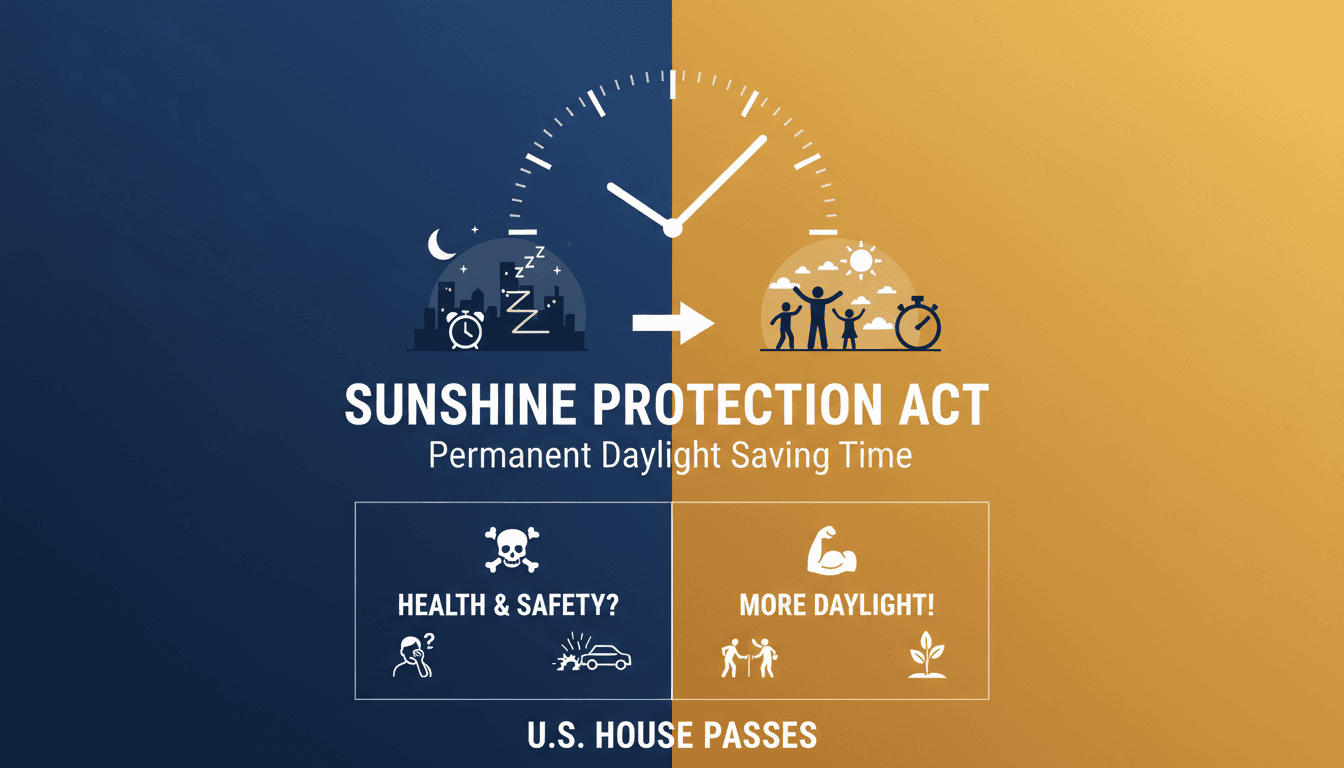
Here's what it means for you.
The passage of the Sunshine Protection Act by the U.S. House of Representatives signifies a potential shift in American timekeeping practices. If the Senate approves the bill, it would eliminate the need for biannual clock changes, impacting millions of Americans. This legislative move, backed by bipartisan support and former President Trump, raises questions about the implications for public health and safety. The decision to make daylight saving time permanent could streamline daily routines and enhance productivity. However, it also invites scrutiny regarding its effects on circadian rhythms and overall well-being.
What happened
The U.S. House of Representatives has passed the Sunshine Protection Act, a bill aimed at making daylight saving time permanent. This legislation seeks to eliminate the biannual clock changes that require Americans to reset their clocks twice a year. The House vote reflects a growing consensus among lawmakers to simplify timekeeping practices across the nation.
The bill received bipartisan support, indicating a rare moment of agreement in a polarized political landscape. Former President Trump has also expressed his backing for the legislation, further bolstering its momentum. However, the bill now faces skepticism in the Senate, where concerns about its health and safety implications are being raised.
The Context
The Sunshine Protection Act is designed to end the practice of changing clocks twice a year, a routine that affects millions of Americans. Support for the bill spans both major political parties, highlighting its broad appeal. Despite this, the Senate's deliberations will likely focus on the potential consequences of permanent daylight saving time on public health and safety.
Concerns have been voiced regarding how this change might impact circadian rhythms, which regulate sleep patterns and overall health. Additionally, road safety implications are being debated, as studies suggest that the transition into and out of daylight saving time can lead to increased accidents. The outcome of this legislation could reshape how Americans experience time throughout the year.
Takeaway
The future of the Sunshine Protection Act hinges on Senate approval and the resolution of health and safety concerns. As discussions unfold, public response to the potential end of clock changes will also be crucial. Observers will be watching closely to see how lawmakers address the implications of this significant shift in timekeeping practices.
If the Senate passes the bill, it could lead to a fundamental change in American life, affecting everything from work schedules to leisure activities. The ongoing dialogue surrounding this legislation will likely influence future policy decisions related to timekeeping.
Oil, metals, and agriculture: supply/demand headlines, OPEC chatter, inventories, and price action.
"Solid tape for energy and metals traders tracking macro and micro catalysts."
— A47 Editor
US House passes bill to make daylight saving time permanent
The US House of Representatives has passed a bill to make daylight saving time permanent, eliminating the need for biannual clock changes that many Americans find disruptive. This decision reflects ongoing discussions about time management and its im...
International coverage of politics, culture, and current affairs.
"BBC News is widely regarded as a reputable international news organization, known for its impartial tone and public service mandate."
— A47 Editor
US Congress takes next step to make daylight saving time permanent
The House of Representatives has passed a bill supported by former President Trump aimed at making daylight saving time permanent, thereby eliminating the need for Americans to adjust their clocks twice a year. This legislative move marks a significa...
U.S. political news and right-leaning commentary.
"Fox News is a highly influential conservative news outlet known for right-leaning political commentary and coverage."
— A47 Editor
House passes daylight saving time reform as Trump signals support for ending clock change
The U.S. House of Representatives has passed the Sunshine Protection Act, a bill aimed at making daylight saving time permanent across the country, with bipartisan support and backing from former President Donald Trump. This legislative move is now s...